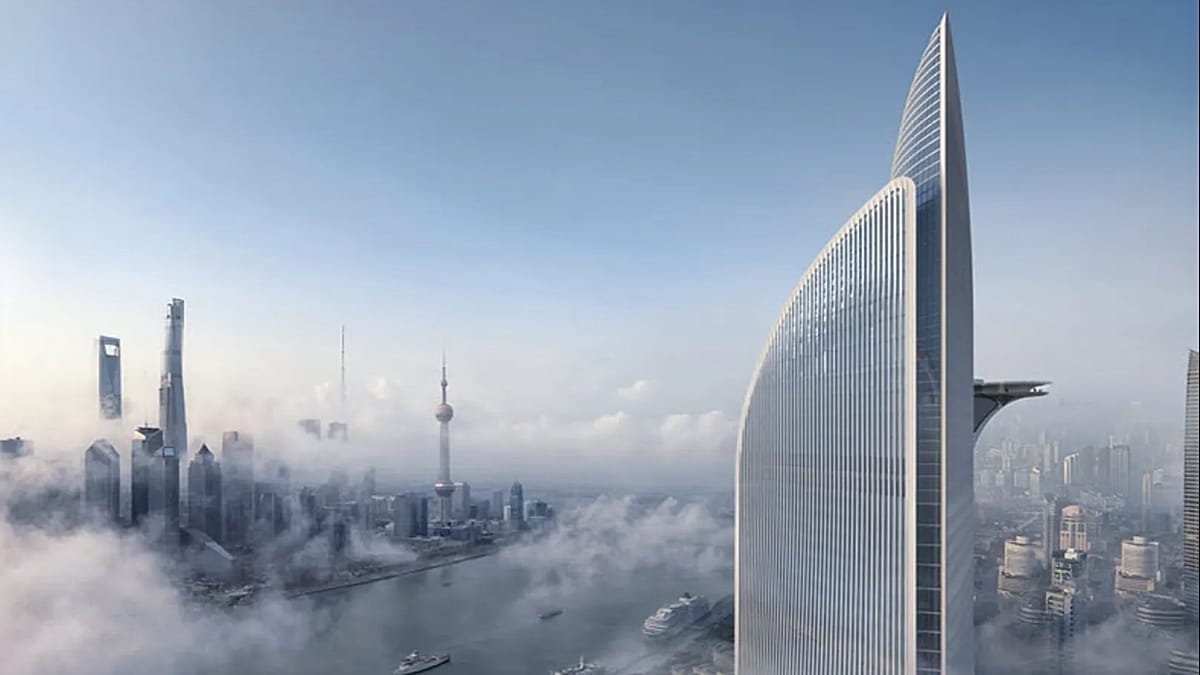
For years, Ritz-Carlton Reserve has been the quiet escape for travelers seeking something more than a standard luxury hotel stay. Unlike the brand's classic city properties, Reserves have been deliberately placed in remote, scenic locations—from the Thai coast to the Mexican Riviera—offering immersive, culturally rooted experiences. That is about to change.
Marriott International has announced that the first urban Ritz-Carlton Reserve will open in Shanghai in 2030, on the city's North Bund. The property will occupy a skyscraper's upper floors, with 110 guest rooms and suites spread across 103 levels. It is designed to function as a "sanctuary within the city," according to the company, featuring a spa and wellness retreat, an indoor pool, a gym, and several restaurants and bars.
A new chapter for the Reserve brand
Tina Edmundson, president of luxury at Marriott International, framed the Shanghai project as a natural evolution. "Ritz-Carlton Reserve has always been about creating rare, deeply personal experiences that could only exist in their destination," she said in a statement. "There is an intimacy to Reserve—an extraordinary level of personalisation, a deep connection to local culture, and a sense of discovery and wellbeing that allows guests to experience a place in an entirely different way."
Edmundson added: "Bringing that philosophy to Shanghai for our first urban Reserve is an incredibly exciting evolution for the brand. Shanghai is a city unlike any other, where extraordinary heritage and culture exist alongside incredible creativity, energy and global influence."
The move signals a broader strategy: Marriott plans to open more urban Reserves in "world's leading global gateway cities," though details on those locations remain under wraps. For now, Shanghai will be the test case for whether the Reserve concept can translate from beachfront hideaways to high-rise city living.
From Phulay Bay to Shanghai
The first Ritz-Carlton Reserve opened in 2009 at Phulay Bay in Thailand. Since then, the portfolio has grown to just nine properties, each deliberately distinct. At Mandapa in Bali, guests can book traditional Javanese palm reading or numerology sessions. The latest addition, Siari on Mexico's Riviera Nayarit, welcomed its first guests in November 2025.
The Shanghai property will be the first to break the mold of remote locations. It remains to be seen how the brand's signature personalization—often built around local nature and indigenous culture—will adapt to a dense urban environment. But Marriott is betting that Shanghai's mix of heritage and hyper-modernity offers enough depth for a Reserve experience.
For European travelers, the news may prompt a rethink of city breaks. While the Reserve brand has long been associated with far-flung escapes, its arrival in a global financial hub could signal a shift in how luxury hospitality defines exclusivity. As cities like Paris, London, and Berlin continue to attract high-end hotel investment, the Shanghai project might set a precedent for urban Reserves closer to home.
Until then, the brand's existing properties—from the Red Sea coast of Saudi Arabia to the jungles of Southeast Asia—remain the only places to experience a Reserve. But with Shanghai's opening now on the horizon, the definition of "reserve" is about to get a lot more metropolitan.