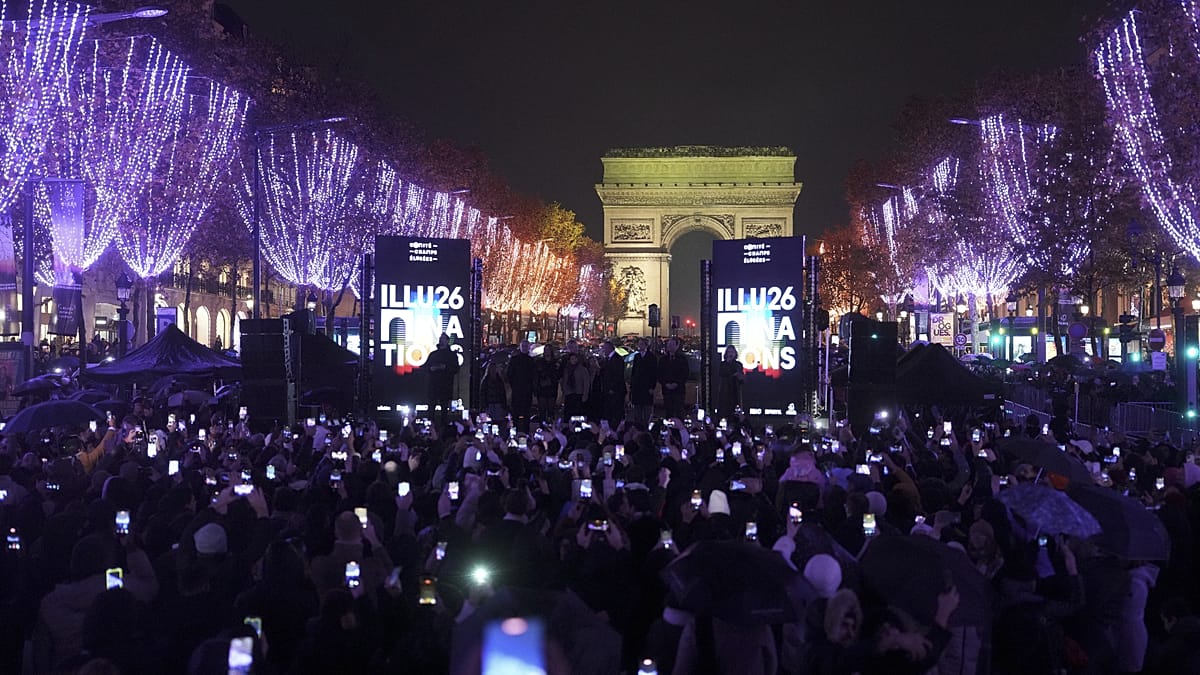
On the evening of 22 November, the Avenue des Champs-Élysées in Paris switched on its annual Christmas lights, officially opening the festive season in the French capital. The display, which runs until 4 January 2027, features 400 trees adorned with two million LEDs spread over 1.2 kilometres, creating a luminous canopy between the Arc de Triomphe and the Place de la Concorde.
The inauguration was attended by Paris's deputy mayor Emmanuel Grégoire and Australian actor Cate Blanchett, who serves as patron for the 2026 edition. Visitors can now enjoy a five-minute light show every quarter of an hour from 5 p.m. to 1 a.m., divided into three scenes: the cool tones of Awakening of Nature, the warm hues of Arrival of Winter, and the shooting stars of Starry Night. At the top of each hour, the avenue shimmers in silver, synchronised with the Eiffel Tower across the Seine.
A market returns after a decade
This year also marks the comeback of the Champs-Élysées Christmas market, absent for ten years. Around 200 wooden chalets now line the avenue between the Rond-Point and the Place de la Concorde, offering food, crafts, and seasonal gifts. The organisers have imposed strict criteria: organic flour, French meat, mulled wine, and at least one vegetarian option in every food stall. Marc-Antoine Jamet, secretary general of LVMH and president of the Comité des Champs-Élysées, told RMC that “80% of what is on offer will be made in France.” A new Fabriqué à Paris label has been introduced for the craft section.
Beyond the market, the avenue hosts a skating rink, a fairground ride, Santa's House, a monumental reindeer, and around twenty scenographic installations. The aim, according to Jamet, is to send “a signal of joy, appeasement, calm, tranquillity between the obelisk and the Arc de Triomphe.” Gone are the days of loudspeakers blasting Christmas carols; instead, visitors are encouraged to listen to the show's music on their smartphones.
The return of the market resolves a long-running dispute. In 2017, fairground operator Marcel Campion was permanently barred from running the event after Paris City Hall cited the “poor quality of the entertainment and products sold.” The family-run company 2A from Nantes has now taken over, ending a decade of legal battles and uncertainty.
For the avenue's retailers, the lights and market are vital. In 2025, 14.3 million people visited the Champs-Élysées during the festive period. “It's about image, reputation, renown, and attractiveness,” Jamet said.
However, the festive calm may be tested by France's broader social climate. Since mid-October, demonstrations have taken place across the country over high school conditions and the cost of living. While the Paris prefecture has so far not authorised marches on the Champs-Élysées, the avenue is a symbolic site often used during protests. The Comité des Champs-Élysées says it remains in regular contact with the prefect and is optimistic that the season will proceed peacefully.
For those planning a visit, the Champs-Élysées is just one of many festive attractions across Europe this winter. From top Christmas markets and rail trips to the Vatican's towering tree, the continent offers plenty of seasonal cheer. Even unconventional holiday dishes are making headlines in Germany.