Two Romanian nationals were sentenced to lengthy prison terms on Friday for a knife attack on an Iranian journalist outside his London home, an assault a British judge determined was carried out on behalf of the Iranian state.
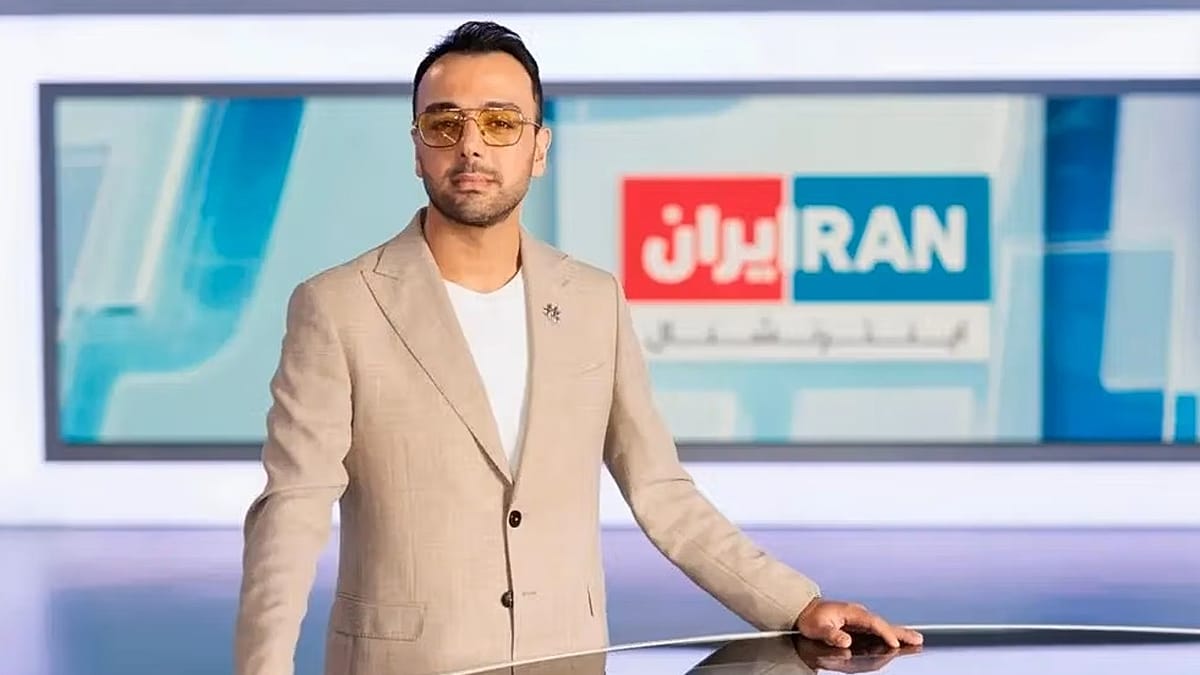
George Stana, 25, received a 12-year sentence, while Nandito Badea, 21, was jailed for eight years at the Old Bailey court in London. Both men were convicted last month of wounding with intent over the March 2024 stabbing of Pouria Zeraati, a news presenter for the Persian-language broadcaster Iran International.
Judge Bobbie Cheema-Grubb said the evidence “overwhelmingly points” to the attack being orchestrated by the Iranian government. “I am sure that this was an attack carried out for and for the benefit of a foreign power,” she added. “Pouria Zeraati was a well-known critic of the regime and he had previously been subjected to threats, as had members of his family.”
Stana, the judge noted, “ought to have known” that the “targeted and serious” assault was on Iran’s behalf. Badea, who was involved in the conspiracy for a shorter period, received a reduced term.
Attack and Aftermath
Zeraati was stabbed several times in the leg outside his home in Wimbledon, southwest London, requiring emergency medical treatment. Despite the trauma, he returned to work at the dissident broadcaster the following month, insisting that “the show must go on.” In a victim impact statement, he told police the attack left him “scared and anxious,” forcing him to relocate abroad out of fear of further reprisals.
During the trial, prosecutors revealed that Badea and another man had surveilled Zeraati’s property on eight occasions across five dates, having flown into the United Kingdom “expressly” for the attack. The two men were arrested in Romania in December 2024 and extradited to Britain. A third suspect remains in Romania, facing separate charges there, according to police.
Responding to the sentences, UK Security Minister Angela Eagle described the “abhorrent attack” as “carried out on behalf of Iran before both men cowardly fled the country.” She added: “These sentences send a clear message: anyone acting on behalf of a foreign state to commit crimes in the UK will be identified, pursued and punished.” Eagle stressed that Britain takes the threat from Iran “extremely seriously” and vowed to “continue to hold the regime to account.”
Iran International, a private broadcaster operating from a heavily secured building in west London, was designated a “terrorist” organisation by Tehran in 2022, alongside the BBC’s Persian-language channel. The station has long been a target of Iranian state hostility due to its critical coverage of the regime.
The case highlights the growing reach of Iranian state-linked operations on European soil. In recent years, authorities across the continent have uncovered plots targeting dissidents and journalists, often involving local operatives recruited or coerced by Tehran. The sentencing in London underscores the UK’s determination to prosecute such acts, even when the perpetrators are foreign nationals acting on behalf of a hostile state.
For Zeraati, the attack has upended his life, but his return to broadcasting signals a refusal to be silenced. The sentences, while providing some measure of justice, also serve as a stark reminder of the risks faced by journalists who challenge authoritarian regimes from exile.