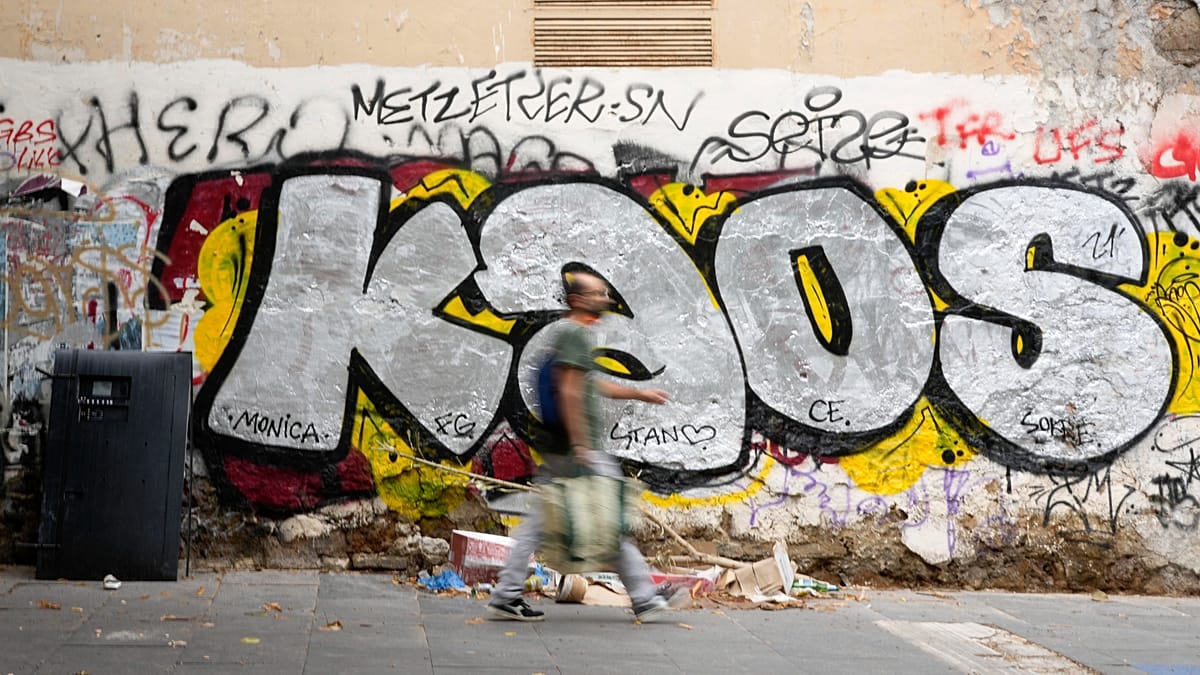
Rome's ancient monuments and baroque facades have long competed for attention with a less celebrated form of urban expression: graffiti. Tags and spray-paint scrawls have become a familiar sight across the Italian capital, but one young restorer is fighting back, one wall at a time.
Valerio Tuveri, a 28-year-old architectural restorer, has taken on the self-appointed mission of scrubbing Rome's historic surfaces clean. Armed with a high-pressure sandblaster and a growing following on Instagram and TikTok, he documents each restoration, turning heritage conservation into viral content. Known online as "the guy who cleans Rome," Tuveri has become a symbol of resistance against what he sees as an epidemic of vandalism.
A community effort at Villa Sciarra
His latest project took him to Villa Sciarra, a historic park in the Trastevere district, where fresh graffiti had appeared on newly restored walls. Dressed in protective gear, Tuveri carefully blasted away the spray paint, preserving the travertine and brick beneath. Curious residents stopped to watch, and some joined in, helping with the final touches. What began as a solo act of civic duty turned into a neighbourhood affair.
For Tuveri, the issue is not merely aesthetic. "I decided to take this path, this 'battle', against graffiti because Rome is, in my opinion, the most beautiful city in the world, but at the same time the most vandalised city in Europe," he says. "There is meaningless writing everywhere: on monuments, private homes, cars and shutters."
He draws a sharp line between street art and the indiscriminate tagging that defaces historic buildings. "Street art can be beautiful and meaningful," he explains, "but what we see on most walls is just noise, a signature without thought."
Tuveri believes Italy needs to get tougher on offenders. He is calling for more surveillance cameras, stricter security checks, and significantly higher fines. "You can tell people whatever you want, but when you hit them in the wallet, they start to feel it," he says. "We need harsh penalties, hefty fines and lots of cameras."
The scale of the challenge is evident even as he works. After restoring the walls of Villa Sciarra, nearby streets in Trastevere remain layered in graffiti, a reminder of how deeply the problem is woven into the city's fabric.
Under Italian law, damaging monuments or property of significant historical, archaeological or artistic value can lead to up to one year in prison or a fine of around €2,000, if the damage is deemed to harm the country's cultural heritage. Courts may also order the confiscation of the damaged property. But Tuveri argues that these measures are rarely enforced and insufficient to deter repeat offenders.
His campaign has resonated beyond Rome, drawing attention to a broader European debate about urban heritage and public space. From Paris to Berlin, cities are grappling with how to balance street art's cultural cachet with the need to protect historic architecture. Tuveri's approach—direct, visible, and digitally amplified—offers a model that other restorers and city officials are beginning to watch.
As he packs up his equipment after another day's work, Tuveri remains pragmatic. "I know I can't clean all of Rome," he admits. "But if I can save a few walls, and inspire others to do the same, that's a start."