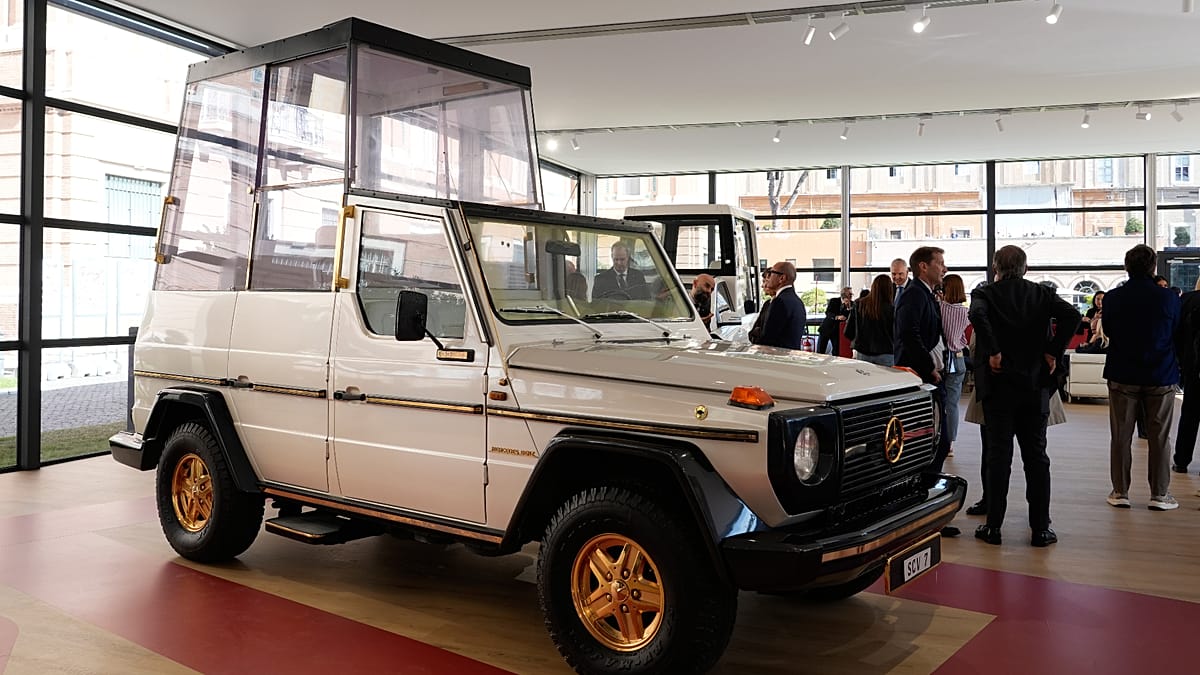
For nearly a century, the popemobile has been more than a means of transport—it is a rolling symbol of the papacy's reach and its need for protection. Now, eight historic Mercedes-Benz vehicles used by successive pontiffs have gone on display at the Vatican Museums, offering visitors a rare glimpse into how the Church has balanced ceremony with security.
A century of papal mobility
The exhibition, which opened this week in Rome, traces the evolution of papal transport from the silk-lined limousines of the 1930s to the bulletproof, glass-enclosed vehicles that have become familiar at public audiences. Each car tells a story of its era, reflecting changes in technology, diplomacy, and the papacy's public engagement.
Among the highlights is the 1930 Mercedes-Benz Nürburg 460, used by Pope Pius XI, which featured a rear seat upholstered in silk and a discreet interior designed for private audiences. Later models, such as the 1965 Mercedes-Benz 600 used by Pope Paul VI, show the shift toward more open designs, allowing the faithful to see the pontiff during public appearances.
The most recent vehicles in the collection include the modified Mercedes-Benz G-Class and M-Class models used by Popes Benedict XVI and Francis, fitted with bulletproof glass and a raised seat to ensure visibility. These modern popemobiles reflect the heightened security concerns of the 21st century while maintaining the tradition of papal accessibility.
Mercedes-Benz and the Vatican: a long partnership
The relationship between Mercedes-Benz and the Vatican dates back to the 1930s, when the German automaker first supplied vehicles for papal use. Over the decades, the company has custom-built each popemobile, often working closely with Vatican officials to meet specific liturgical and security requirements.
The exhibition also underscores the broader European dimension of this partnership. Mercedes-Benz, headquartered in Stuttgart, Germany, has been a staple of European automotive engineering for over a century. The company's recent challenges, including trimming its 2026 profit forecast as Chinese sales slide, highlight the shifting global market, but its Vatican connection remains a point of pride.
Visitors to the exhibition can also see a 1950 Mercedes-Benz 300, used by Pope John XXIII, which was famously converted into an open-top vehicle for his visits to Roman hospitals and churches. This model, with its simple design, marked a departure from the more formal limousines of earlier decades, reflecting the pope's pastoral approach.
Security and symbolism
The popemobile's evolution is not just about engineering but also about the changing nature of the papacy. The assassination attempt on Pope John Paul II in 1981 in St. Peter's Square led to a dramatic increase in security measures. Subsequent popemobiles were fitted with bulletproof glass, a feature that remains standard today.
Pope Francis, known for his preference for simplicity, has often chosen to use a modified Ford Focus or a Fiat during his travels, but the Mercedes-Benz popemobiles remain a staple for major public events. The exhibition acknowledges this tension between the desire for closeness with the faithful and the necessity of protection.
The Vatican Museums, which attract millions of visitors each year, have curated the display with an eye to both historical and cultural significance. The cars are presented in a dedicated hall, with informative panels in Italian and English explaining their provenance and use.
This exhibition comes at a time when the Vatican is in the spotlight following the recent health concerns of Pope Leo XIV, who released first images after lung tumour surgery. While the popemobile display is not directly linked to current events, it offers a reminder of the continuity of papal traditions.
For automotive enthusiasts, the exhibition is a rare opportunity to see these vehicles up close, many of which have never been shown publicly before. For others, it is a chance to reflect on how the papacy has navigated the modern world—one carefully engineered ride at a time.
The exhibition runs until the end of the year, and tickets are included in the standard Vatican Museums admission. As Mercedes-Benz continues to navigate a changing automotive landscape, this display of its papal heritage serves as a testament to a unique chapter in European industrial and religious history.