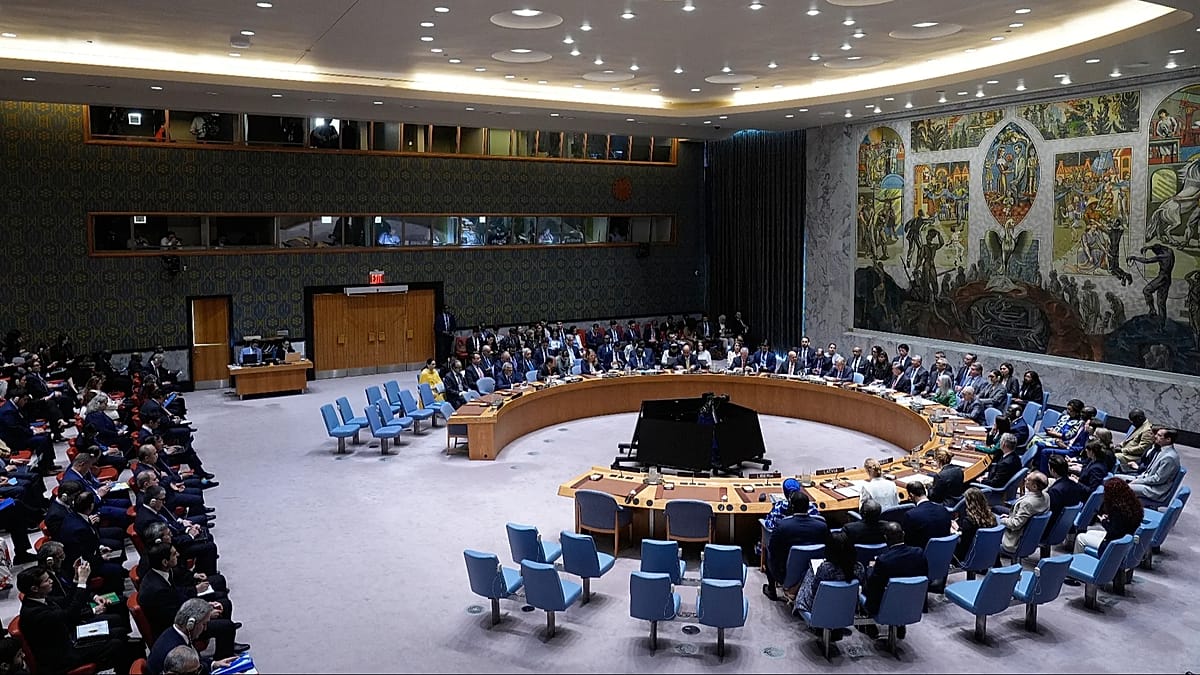
The United Nations Security Council failed on Thursday to renew the mandate of the independent panel of experts that monitors sanctions against Iran, after Russia and China cast vetoes. The US-drafted resolution, which would have extended the panel's work for another year, was defeated by a vote of 11 in favour, 2 against, with Somalia and Pakistan abstaining.
The sanctions in question were reimposed on Iran on 27 September last year under the so-called snapback mechanism of the 2015 nuclear deal, known as the Joint Comprehensive Plan of Action (JCPOA). They freeze Iranian assets abroad, restrict arms deals with Tehran, and penalise the development of its ballistic missile programme. France, Germany and the United Kingdom triggered the snapback, which also re-established the Security Council sanctions committee and authorised the panel of experts to monitor compliance.
Thursday's veto does not lift the sanctions themselves, but it removes the only independent mechanism for verifying that they are being enforced. The panel's members, proposed by UN Secretary-General António Guterres a year ago, were never formally approved, meaning the body had not yet begun its work.
European powers weigh next steps
France's UN ambassador, Jérôme Bonnafont, who currently holds the council presidency, said that implementing sanctions is “a crucial instrument to encourage Iran” to return to its nuclear obligations. He indicated that Paris would study how to ensure enforcement continues. One option, he suggested, would be to follow the model used after the North Korea panel of experts was abolished: establishing a monitoring team composed of France, Germany, the UK and the United States.
The vetoes come as the Trump administration intensifies its campaign to isolate Tehran economically. On the same day, Washington moved against digital currency networks it says are being used to give sanctioned Iranian entities illegal access to the international financial system. The US Treasury and State Departments targeted two companies — BitBank and Pishtaz Simorgh Electronic Trade Co. — as well as three associates of BitBank's previously sanctioned chief, Babak Zanjani, who are accused of helping Iran evade sanctions.
The developments also unfold against the backdrop of a conflict involving Iran that has lasted more than six months and reached a stalemate. Since Israel and the US struck Iranian nuclear sites in June 2025, UN nuclear inspectors have been unable to verify the status of Iran's stockpile of enriched uranium. The International Atomic Energy Agency (IAEA) has said Iran maintains a stockpile of 440.9 kilograms of uranium enriched up to 60% purity — a short, technical step away from weapons-grade levels of 90%.
Iran's UN mission thanked Russia and China for the vetoes, saying on social media that the two countries “prevented yet another cynical attempt by the United States and its allies to abuse the Security Council for their political purposes.”
Russian UN Ambassador Vassily Nebenzia reiterated Moscow's long-standing claim that the snapback of sanctions against Iran was illegal, and therefore the resolution to extend the panel's mandate “was deeply flawed and did not have any legal basis.” He said Russia and China had urged the US and its allies not to put the resolution to a vote, warning it would only increase tensions in the council, but Washington “decided to opt for confrontation.”
Washington's deputy ambassador to the UN, Jennifer Locetta, said the US was not surprised by the vetoes, because the experts “would have shone the light” on prohibited cooperation between Iran and its partners. She argued that the vetoes are part of a broader effort to prevent expert monitoring of sanctions and even the appointment of panel members “to stifle reporting that implicates their own activities in support of rogue regimes.”
This is not the first time Russia has used its veto to end UN sanctions oversight. In March 2024, a Russian veto terminated UN monitoring of sanctions against North Korea over its nuclear programme. In Mali, sanctions were terminated, and Locetta noted that in Yemen and the Central African Republic, expert appointments have been delayed or refused.
The collapse of the Iran panel leaves a significant gap in international oversight. European governments, which have been central to the JCPOA and its snapback mechanism, now face the challenge of ensuring that sanctions remain credible without the UN's independent verification. The possibility of a European-led monitoring team, as suggested by France, would mark a departure from the UN framework but could offer a pragmatic path forward.
For now, the sanctions remain in place, but their enforcement is increasingly uncertain. The vetoes also highlight the growing divide within the Security Council over how to deal with Iran, as Russia and China continue to shield Tehran from Western-led pressure. The coming months will test whether Europe can maintain a unified stance on Iran policy while navigating the broader geopolitical tensions that have paralysed the council.