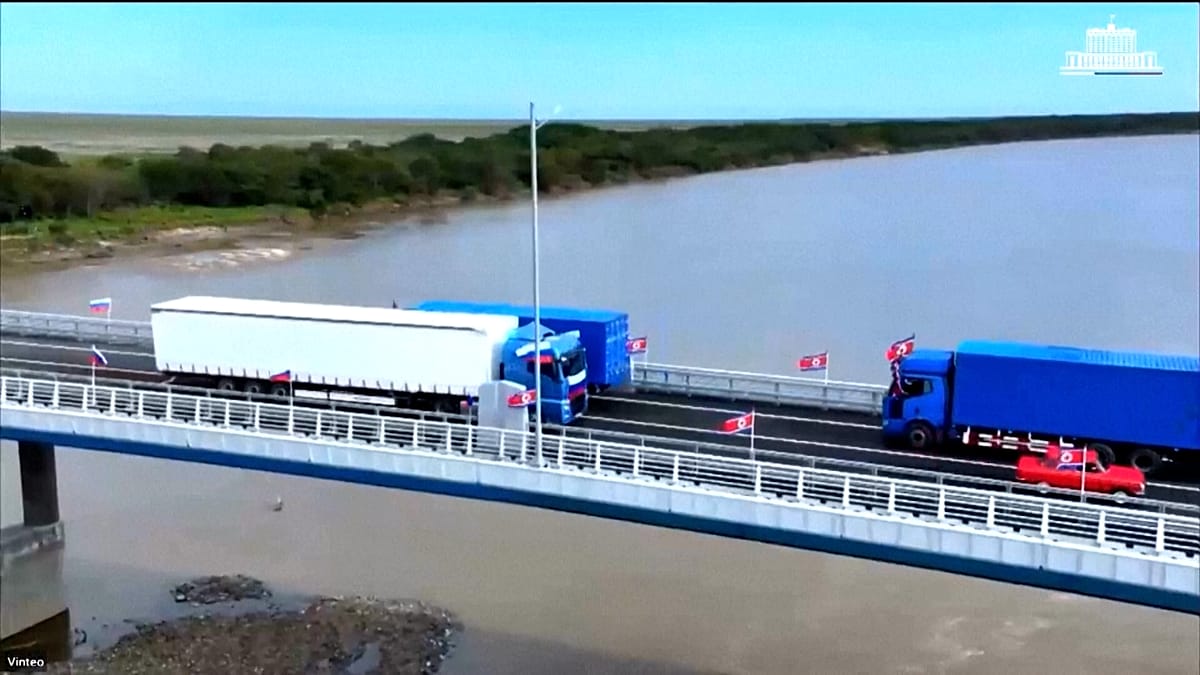
Russia and North Korea have inaugurated their first road bridge across the Tumen River, a symbolic and strategic link that physically connects the two neighbours. The bridge, which spans the river that forms part of the border between the Russian Far East and North Korea, was opened in a ceremony attended by officials from both sides.
The project, which has been in development for years, is seen as a tangible sign of the deepening partnership between Moscow and Pyongyang. It comes amid growing international isolation for both countries, with Russia facing sweeping sanctions over its war in Ukraine and North Korea subject to UN Security Council restrictions over its nuclear and missile programmes.
A strategic link with wider implications
The bridge is more than a piece of infrastructure; it is a geopolitical statement. It provides a direct overland route for trade and military logistics, potentially allowing Russia to supply North Korea with goods and technology, and North Korea to send workers or military equipment to Russia. Analysts have noted that the bridge could facilitate the transfer of arms, which Western intelligence agencies have accused North Korea of supplying to Russia for use in Ukraine.
For Europe, the development is a reminder of the shifting alliances that are reshaping the continent's eastern flank. The bridge sits at the intersection of Russian, Chinese, and North Korean interests, in a region where the European Union has limited leverage but significant concerns about the erosion of the global non-proliferation regime.
European leaders have repeatedly warned against deepening military cooperation between Moscow and Pyongyang. The opening of the bridge, which had been hailed by North Korea as a symbol of friendship, is likely to intensify those warnings.
Economic and security dimensions
Beyond the security implications, the bridge could have economic consequences. It offers a new corridor for trade between Russia and North Korea, potentially easing the flow of goods that have been restricted by sanctions. However, the scale of trade is likely to remain modest, given the limited size of North Korea's economy and the logistical challenges of the region.
The bridge also fits into Russia's broader strategy of pivoting towards Asia, as it seeks to reduce its dependence on European markets. This pivot has been accelerated by the war in Ukraine and the subsequent sanctions imposed by the EU and its allies. The opening of the bridge is a clear signal that Moscow is willing to deepen ties with partners that the West considers pariah states.
For the EU, the development underscores the need for vigilance. The bloc has been working to close loopholes that allow sanctioned goods to reach Russia, and the new bridge could become a conduit for such trade. European customs and border authorities will need to monitor the situation closely, though the bridge's remote location makes oversight difficult.
The move also comes at a time when fighting has resumed across Ukraine, with US envoys pushing for peace talks. The deepening Russia-North Korea axis could complicate diplomatic efforts, as it signals Moscow's willingness to defy international norms and build alliances that challenge the Western-led order.
In a separate but related development, Latvia has become the first EU state to ban Russian and Belarusian print imports, a move that reflects the growing unease in the Baltics about Russian influence. The bridge, while far from European borders, is part of the same pattern of Russian assertiveness that European states are grappling with.
The opening of the bridge has been met with a mix of curiosity and concern in the region. Local residents in the Russian Far East have expressed hope that it will boost economic activity, while international observers have warned of its potential to undermine sanctions. The bridge is a reminder that infrastructure can be a tool of geopolitics, and that even a remote crossing can have far-reaching consequences.
As the world watches, the bridge stands as a testament to the growing alignment between Moscow and Pyongyang. For Europe, it is another sign that the continent's security environment is becoming more complex, and that the challenges posed by Russia's actions extend well beyond Ukraine.