Moscow and Kyiv have resumed military operations across multiple front-line sectors, ending a brief three-day lull that had been arranged to allow American mediators to shuttle between the two capitals. The renewed hostilities underscore the fragility of any diplomatic opening, even as Washington pushes for a return to the negotiating table.
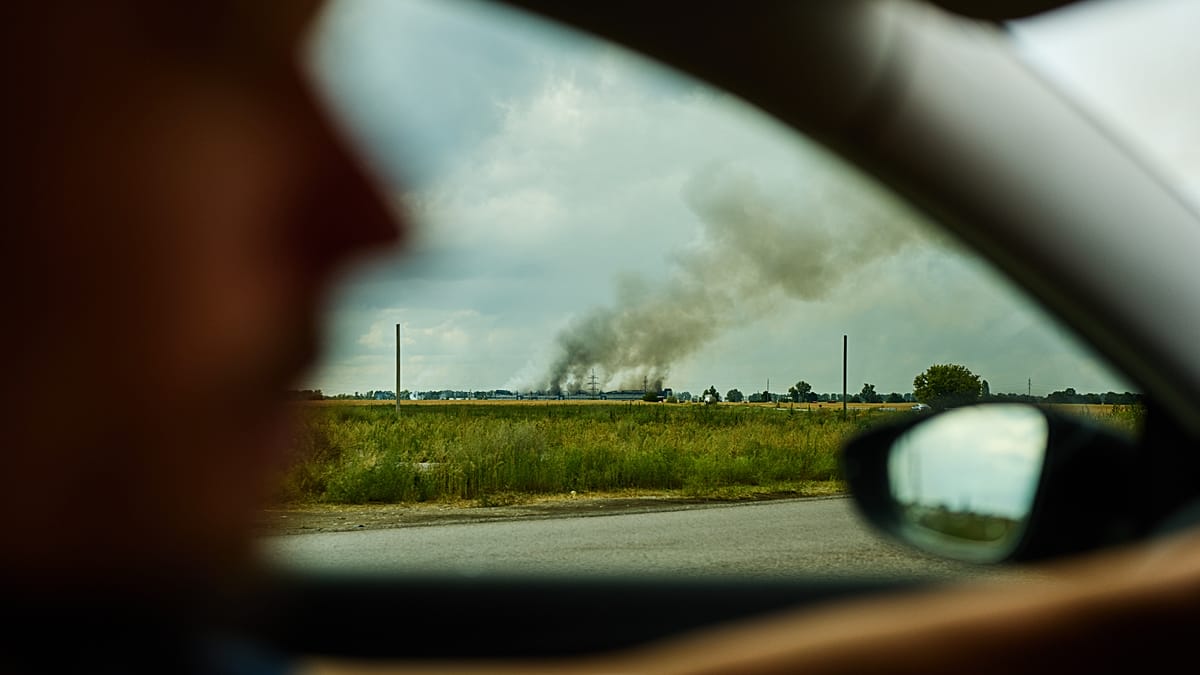
Late on Monday, the State Emergency Service of Ukraine reported that Russian forces had targeted the Boryspil and Fastiv districts around the capital with drones. Kyiv's military administration issued an air-raid alert, urging residents to seek shelter as the threat of "enemy" unmanned aircraft loomed. Russia's state news agency TASS confirmed that the strike pause had expired, and the Russian Ministry of Defence said its forces continued to hit port infrastructure and vessels it claims are used by Ukraine for military purposes.
The resumption of attacks came just days after US President Donald Trump's envoys, Steve Witkoff and Jared Kushner, visited both Moscow and Kyiv. Russian President Vladimir Putin had ordered the three-day halt in strikes on Kyiv as a gesture during their mission. Witkoff, speaking in Kyiv on Sunday, said that both Russia and Ukraine would need to make concessions to narrow the gap between them, adding that the necessary conditions for renewed talks were now in place.
On the ground, the General Staff of the Armed Forces of Ukraine reported that 237 battles had taken place over the past day. Ukrainian forces said they repelled Russian offensives in several locations, destroying 51 artillery systems, seven multiple rocket launchers, and more than 1,400 drones. Russia, for its part, claimed that its air defence units intercepted and destroyed 306 Ukrainian drones over Belgorod and Bryansk oblasts, as well as over the Sea of Azov and the Black Sea, between Sunday evening and Monday morning.
Diplomatic window remains open
Despite the renewed fighting, the US envoys' visit has revived hopes of a three-way peace process. Witkoff's remarks suggested that Washington sees a possible path to negotiations, though the scale of destruction and mutual distrust makes any breakthrough uncertain. The Kremlin has repeatedly insisted on its maximalist demands, while Ukraine's leadership, under Volodymyr Zelensky, has vowed to defend its territory and sovereignty.
The European Union has watched these developments with concern, as the war continues to shape the continent's security architecture. In Brussels, discussions have focused on how to support Ukraine while preparing for a potential diplomatic endgame. One proposal gaining traction is an EU custodian plan to unlock frozen Russian assets for Ukraine's reconstruction, a move that could provide Kyiv with much-needed resources.
Meanwhile, the human and material toll of the conflict remains staggering. The renewed strikes on Kyiv and other cities have once again put civilians at risk, and the constant drone and missile attacks have strained Ukraine's air defences. In a separate incident, a Russian drone hit the SBU headquarters in central Kyiv, prompting Zelensky to vow a response.
European governments are also grappling with the broader implications of the war. Latvia recently became the first EU state to ban Russian and Belarusian print imports, a move aimed at curbing Kremlin propaganda. Germany, meanwhile, is developing a digital shield against Russian hybrid sabotage, reflecting the growing concern over Moscow's non-military tactics.
As the fighting continues, the question of how to bring the war to an end remains as pressing as ever. The US envoys' visit may have opened a diplomatic channel, but the resumption of attacks on both sides shows that the path to peace is still fraught with obstacles. For now, the front lines remain active, and the people of Ukraine continue to bear the brunt of a conflict that shows no signs of abating.