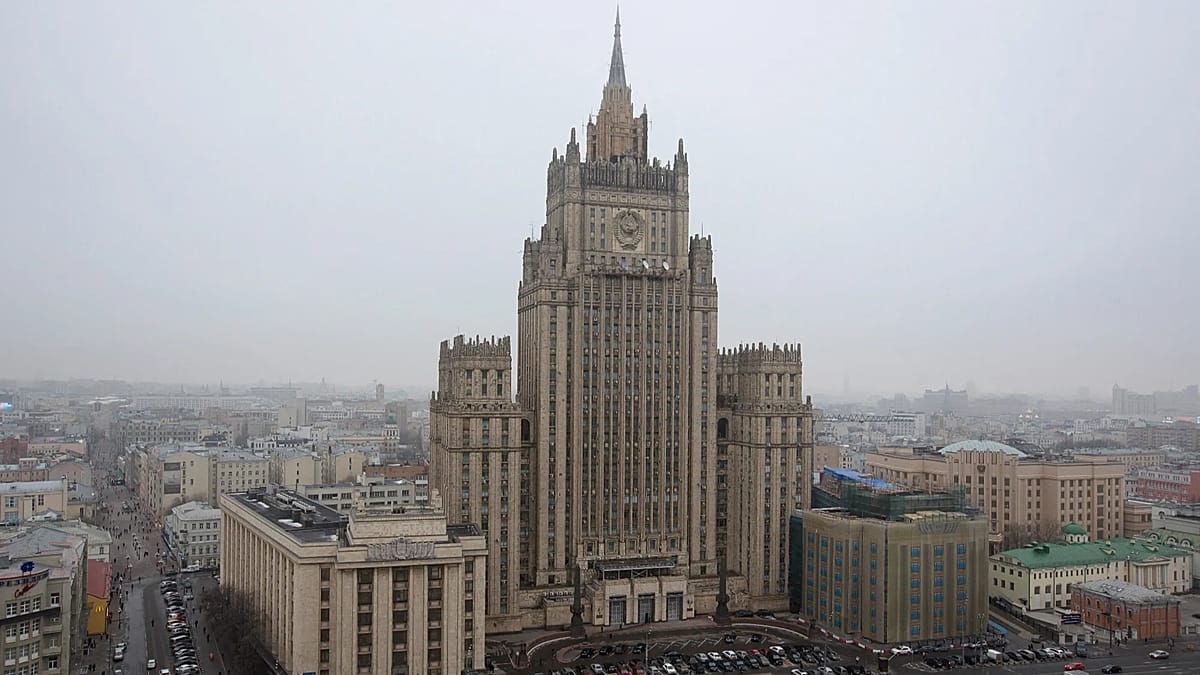
Moscow has escalated its confrontation with Paris by banning four French public figures from entering Russia, a move that reflects the deepening rift over the treatment of a pro-Kremlin commentator. The Russian foreign ministry announced on Wednesday that MPs Sacha Houlié and Arthur Delaporte, along with journalists Ariane Chemin and Paul Gogo, are now barred from Russian territory.
Ministry spokesperson Maria Zakharova told reporters that the four were targeted “because of their involvement in the harassment of Fedorova and their calls for her expulsion.” The measure is a direct response to France’s expulsion order and asset freeze against Xenia Fedorova, the former head of RT France, who has since become a prominent media figure in the French conservative landscape.
Fedorova, who has been under EU sanctions since September, is accused by Brussels of relaying “messages in line with those promoted by the Russian authorities.” According to a document published in the EU’s Official Journal, she has presented Western support for Ukraine as a factor prolonging the war, described Russia as a peace-seeking nation while portraying Europe as confrontational, and challenged established facts about the illegal transfer and deportation of Ukrainian children. The EU also noted that since RT’s broadcasting was suspended, Fedorova has appeared regularly on French outlets such as CNews, Europe 1, and the JDD, “through which she has continued to spread these messages to a wide audience in France.”
Who are the figures in the Kremlin’s sights?
Arthur Delaporte, a Socialist MP, confronted Interior Minister Laurent Nuñez in parliament last June over the renewal of Fedorova’s ten-year residence permit. He called the prefecture’s decision “undue and dysfunctional” and described Fedorova as a “Kremlin propagandist” and an “agent destabilising our country.” He demanded that the government withdraw her permit and initiate expulsion proceedings.
Sacha Houlié, who chaired the National Assembly’s law committee from 2022 to 2024 and sits on the parliamentary intelligence delegation, authored a November 2023 report on France’s vulnerability to foreign interference. The report details, over several pages, the methods Moscow uses to extend its influence in France and beyond. Reacting to the ban on X, Houlié called the decision “recognition of my work against foreign interference in France” and said it “invites me to pursue this just commitment to defending France’s fundamental interests.” Houlié, a member of the Place publique party and a supporter of presidential candidate Raphaël Glucksmann, has previously been targeted by Russian online “destabilisation” operations.
Ariane Chemin, a senior reporter at Le Monde, is also a writer. In May, she published The War – These are Proper Nouns, a literary account of the consequences of Russia’s invasion of Ukraine. Paul Gogo, a journalist known for his reporting on Russian influence, completes the quartet.
The ban comes amid broader European efforts to counter Russian disinformation and espionage. Recent incidents, such as the detention of a US soldier in England on suspicion of spying for Russia, highlight the continent’s heightened vigilance. Meanwhile, the EU has been pushing back on Russia’s security architecture gambit, and Moscow’s expanding list of “unfriendly” countries now reaches into courts and family law.
France’s expulsion of Fedorova is part of a wider pattern of European states taking a firmer stance against individuals linked to Russian propaganda. The EU’s sanctions against her, which include an asset freeze and travel ban, were adopted in September. The Russian foreign ministry’s retaliation is unlikely to ease tensions, as both sides continue to trade accusations over interference and disinformation.
For Houlié, the ban is a badge of honor. “This decision is recognition of my work against foreign interference in France,” he wrote on X. “It invites me to pursue this just commitment to defending France’s fundamental interests.” His resolve reflects a broader European determination to resist external attempts to undermine democratic processes, even as Moscow seeks to punish those who expose its methods.