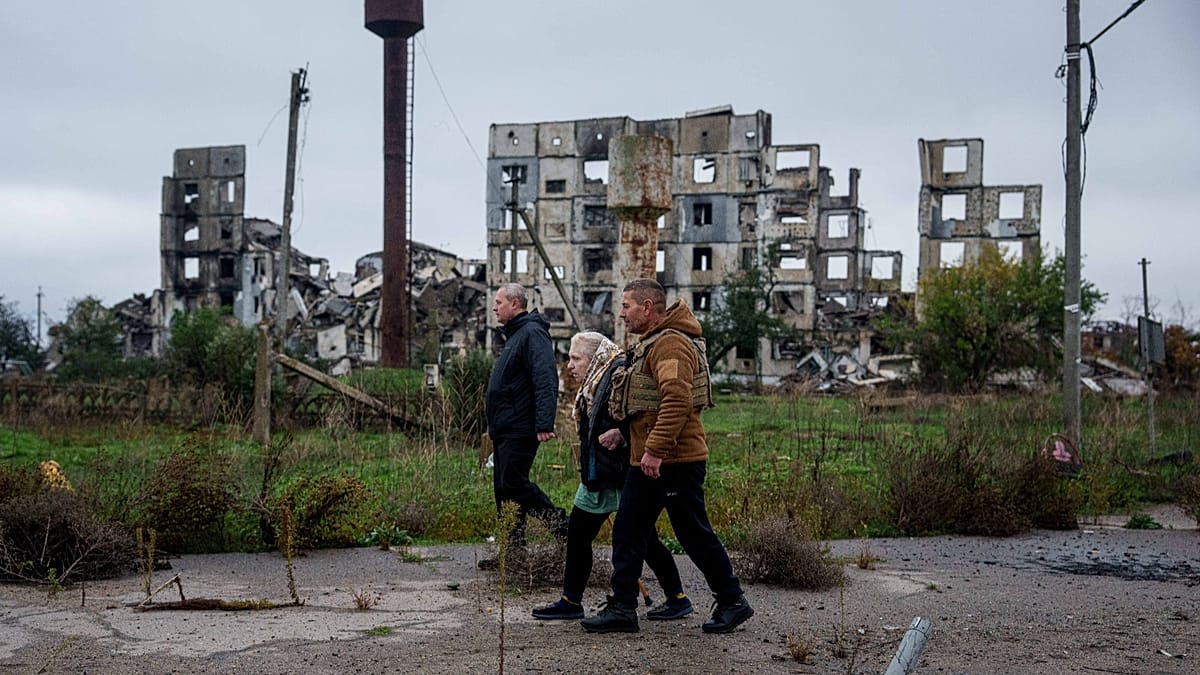
Russia resumed attacks on Ukraine's Kherson region on Monday, hours after a local ceasefire expired, ending the longest pause in fighting since the full-scale invasion began in 2022. Ukrainian authorities reported that a drone strike hit a car in the Korabelny district of Kherson city around 8:00 am, wounding a 62-year-old woman and a 73-year-old man, both of whom were hospitalised.
The truce, which began on Tuesday and ended on Sunday, was brokered by US First Lady Melania Trump. It allowed a humanitarian mission to reach the Russian-occupied city of Oleshky and enabled hundreds of stranded residents to evacuate. The pause was the most extended lull in hostilities between the two neighbours since the start of the war, now in its fifth year, which has killed hundreds of thousands and displaced millions.
Extension refused
A senior Ukrainian official told AFP on Sunday that Russia had rejected Kyiv's offer to extend the ceasefire. Kherson's regional governor, Oleksandr Prokudin, had warned residents to remain vigilant as the truce neared its end. Ukraine's military alleged that Moscow used the pause to fortify its positions along the front line.
Russian attacks also killed one person in Izium, a city in the north-eastern Kharkiv region, according to the local governor. The fresh strikes come as US-mediated talks between Russia and Ukraine are set to resume this month. The Kremlin has repeatedly dismissed calls for a broader ceasefire and insists it will continue its offensive to seize the rest of eastern Ukraine.
The collapse of the truce underscores the fragility of localised agreements in a war that shows no sign of abating. While the ceasefire enabled evacuations from Oleshky, it did little to alter the broader strategic picture. Analysts had warned that the pause was unlikely to lead to a wider de-escalation, a view echoed by former Ukrainian Prime Minister in a recent interview.
Cyberattacks hit alert systems
The renewed strikes on Kherson came a day after Ukraine said its air raid alert system had been compromised. Baseless alerts of a radiation threat appeared on the national app, with one fake warning in Russian reading: "Hi! A nuclear alert is about to go off all across Ukraine! Don't worry, the Oreshnik is on its way." Several regional governors confirmed the hack and advised residents that there was no imminent danger. By midnight local time, the State Emergency Service said the system was operating normally, urging citizens not to click on links from unknown sources or spread unverified information.
Hours later, Russia announced that its own emergency warnings app had suffered a "massive cyberattack" on Monday, with hackers posting false information on the platform designed to alert the public to drone attacks and other threats. The apparent exchange of cyber blows coincided with the end of the truce, raising concerns about the security of critical infrastructure on both sides.
The incidents highlight the growing role of cyber warfare in the conflict, which has increasingly targeted civilian systems. Ukraine has previously accused Russia of hacking its infrastructure, while Moscow has denied involvement. The latest attacks come as both countries' alert apps faced disruptions, adding another layer of uncertainty for civilians already enduring daily bombardments.
As the war enters its fifth year, the brief humanitarian window in Kherson has closed, leaving residents once again exposed to the relentless violence. The international community, including the European Union, has continued to support Ukraine, with the bloc accelerating a €45bn support package to help Kyiv address its funding gap. Yet, on the ground, the reality remains grim: the truce is over, and the attacks have resumed.