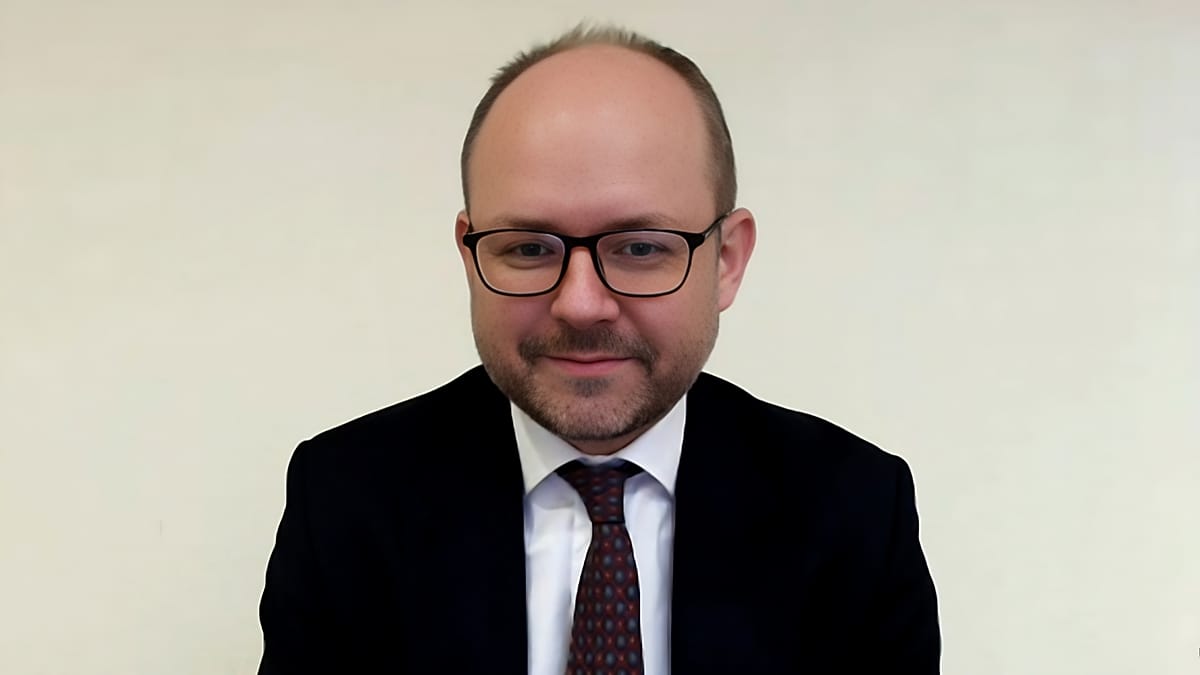
Warsaw's political standoff over the judiciary escalated this week as police were deployed to the Constitutional Tribunal, prompting a senior government official to declare that the intervention had no legal foundation. Marcin Przydacz, Poland's secretary of state, told Euronews that the scenes at the court were unjustified and that the country now faces a genuine constitutional crisis.
Przydacz, a close ally of President Andrzej Duda, said the police operation on Friday was ordered to enforce changes to the judiciary pushed through by Prime Minister Donald Tusk's government. But he insisted that two of the highest judges in Poland had confirmed there was no legal basis for such behaviour.
A clash over judicial appointments
The crisis centres on the appointment of judges to the Constitutional Tribunal, a body that reviews the constitutionality of laws. Tusk's administration has sought to replace several judges it considers illegitimate, arguing that they were appointed under the previous Law and Justice (PiS) government in a flawed process. The tribunal, however, has resisted these changes, leading to a standoff between the executive and the judiciary.
Przydacz accused Tusk of attempting to stack the court with loyalists. "Judges appointed to the national tribunal courts should be legitimate legal judges, not Tusk's judges," he said. He added that the government's actions had created a "definite constitutional crisis" and that there was "a need for any kind of a restart" to resolve the issue.
The Polish president, Andrzej Duda, has backed the tribunal's position, and the standoff has drawn international attention. The European Commission has expressed support for the Polish parliament's role in appointing judges, a stance that has further inflamed tensions between Warsaw and Brussels. Brussels has backed the parliament's appointments, while some European politicians, including France's Marine Le Pen, have waded into the dispute, drawing sharp rebukes from Polish officials.
Wider implications for the rule of law
The crisis is not merely a domestic matter. Poland's judicial reforms have been a point of contention with the European Union for years, with Brussels accusing the PiS government of undermining judicial independence. Tusk, who returned to power in late 2023, has pledged to restore the rule of law and unlock EU funds that were frozen over these concerns. But his efforts have met with fierce resistance from the PiS-aligned president and the tribunal itself.
Przydacz's comments highlight the depth of the divide. He argued that the government's actions are not only legally questionable but also politically dangerous, as they risk eroding public trust in the judiciary. "We need to find a way out of this impasse," he said, "but it cannot be done by ignoring the constitution."
The standoff has also had practical consequences. President Duda aborted a planned trip to Senegal to remain in Warsaw during the police operation, underscoring the seriousness of the situation. The president cut short his travel plans as police moved on the tribunal, a sign of how quickly the crisis has escalated.
Legal experts say the dispute could take months to resolve, and there are fears that it may further strain Poland's relations with the EU. The European Commission has already warned that the rule of law in Poland remains under scrutiny, and any perceived backsliding could delay the release of billions of euros in recovery funds.
For now, the political battle shows no signs of abating. Tusk has vowed not to compromise, while the tribunal and its supporters insist on the legitimacy of the current judges. Tusk has ruled out concessions, setting the stage for a prolonged confrontation that could define Polish politics for months to come.
The crisis also resonates beyond Poland's borders. As one of the EU's largest member states, Poland's judicial independence is a bellwether for the bloc's commitment to democratic values. The constitutional court has descended into open political crisis, and the outcome will be watched closely in Brussels and other European capitals.