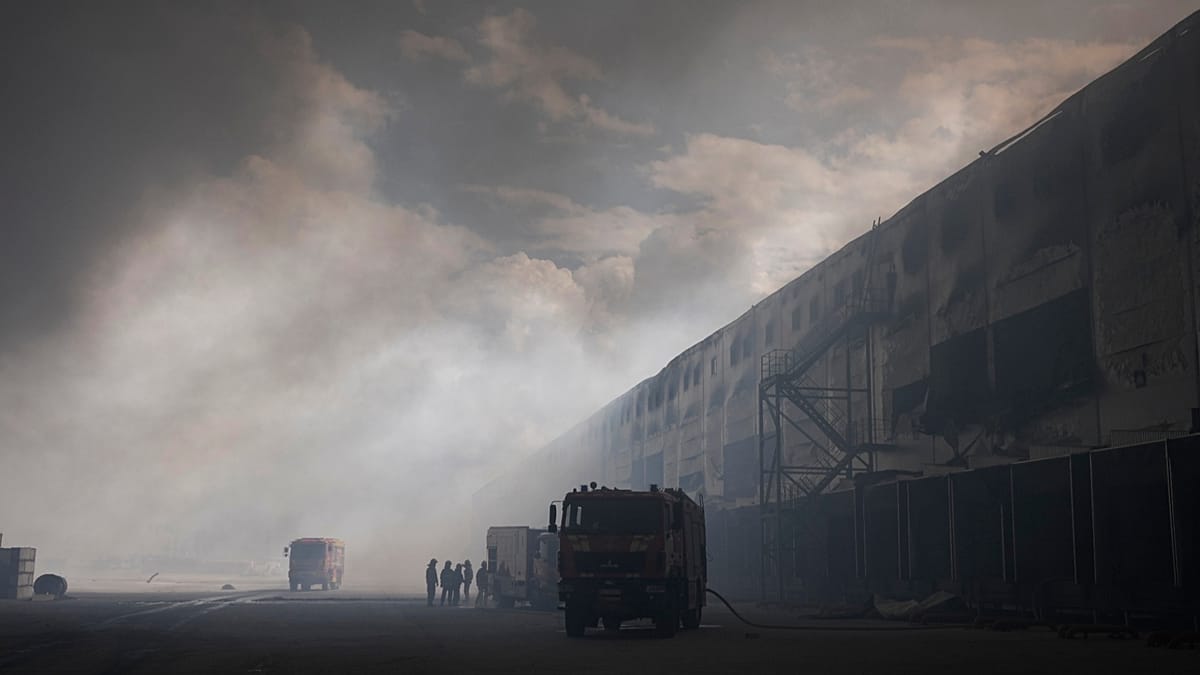
Overnight, Russian drone strikes pounded several Ukrainian regions, setting warehouses ablaze and wounding at least two civilians. The attacks, which targeted infrastructure and industrial sites, underscore the continued intensity of Moscow's aerial campaign against Ukrainian rear areas.
In the southern city of Zaporizhzhia, four people were injured when a drone barrage hit residential and commercial districts, according to local officials. Emergency crews battled fires that broke out in storage facilities, while residents took shelter in metro stations and underground parking garages.
The strikes come as Kyiv endures a second day of relentless drone attacks, with air raid alerts disrupting daily life and forcing schools to move lessons online. Ukrainian air defense units reported shooting down dozens of Iranian-designed Shahed drones, but several slipped through, causing damage and casualties.
Warehouses and logistics under fire
In the northeastern Sumy region, a series of explosions rocked a logistics hub near the city of Sumy, setting a large warehouse complex on fire. Regional governor Volodymyr Artiukh said the facility stored grain and agricultural equipment, vital for Ukraine's export economy. Firefighters worked through the night to contain the blaze, which sent plumes of smoke visible for kilometers.
Odesa, on the Black Sea coast, also came under attack, with drones targeting port infrastructure and nearby storage tanks. The strikes disrupted grain loading operations, a key revenue source for Ukraine despite the ongoing war. Local authorities reported no casualties but warned of potential secondary explosions from burning fuel.
The pattern of attacks reflects a broader Russian strategy to degrade Ukraine's logistics and economic capacity, rather than only targeting front-line positions. Warehouses, energy facilities, and transport links have become recurring targets, forcing Kyiv to allocate scarce air defense resources to protect civilian infrastructure.
European response and defense rethink
The escalating drone threat has prompted European nations to reassess their own air defense capabilities. Switzerland, for instance, has announced plans to field a dedicated drone battalion by 2028, a move that signals a shift in the traditionally neutral country's defense posture. The decision, detailed in a recent defense white paper, aims to counter the proliferation of low-cost aerial threats demonstrated in Ukraine.
Meanwhile, the European Union has revived discussions on using frozen Russian assets to support Ukraine's defense and reconstruction. Several member states, including Germany and France, have pushed for a more aggressive approach, though legal and financial hurdles remain. The debate has gained urgency as Ukraine's needs grow and Western aid packages face political headwinds.
Ukraine's military intelligence has also warned of Russia's plans to call up an additional 600,000 troops by 2027, a move that would extend the conflict's duration and intensify pressure on European security. Such a buildup would require significant resources, but Moscow appears willing to sustain high casualty rates to achieve its objectives.
For now, Ukrainian cities brace for more nightly raids. In Zaporizhzhia, residents have grown accustomed to the sound of drones and explosions, but each strike brings fresh trauma. "We never know when it will end," said a local shopkeeper, who asked not to be named. "We just try to live our lives, but it's hard."
The international community has condemned the attacks, but concrete action remains limited. As Europe debates defense spending and asset seizures, Ukraine continues to bear the brunt of Russia's aerial campaign, with warehouses burning and civilians paying the price.