Latvia’s Foreign Minister Baiba Braže confirmed on Friday that a Russian strike had damaged the Baltic nation’s honorary consulate in Sloviansk, a city in eastern Ukraine’s Donetsk region. The attack killed at least six Ukrainian civilians and wounded dozens more, according to Ukrainian authorities.
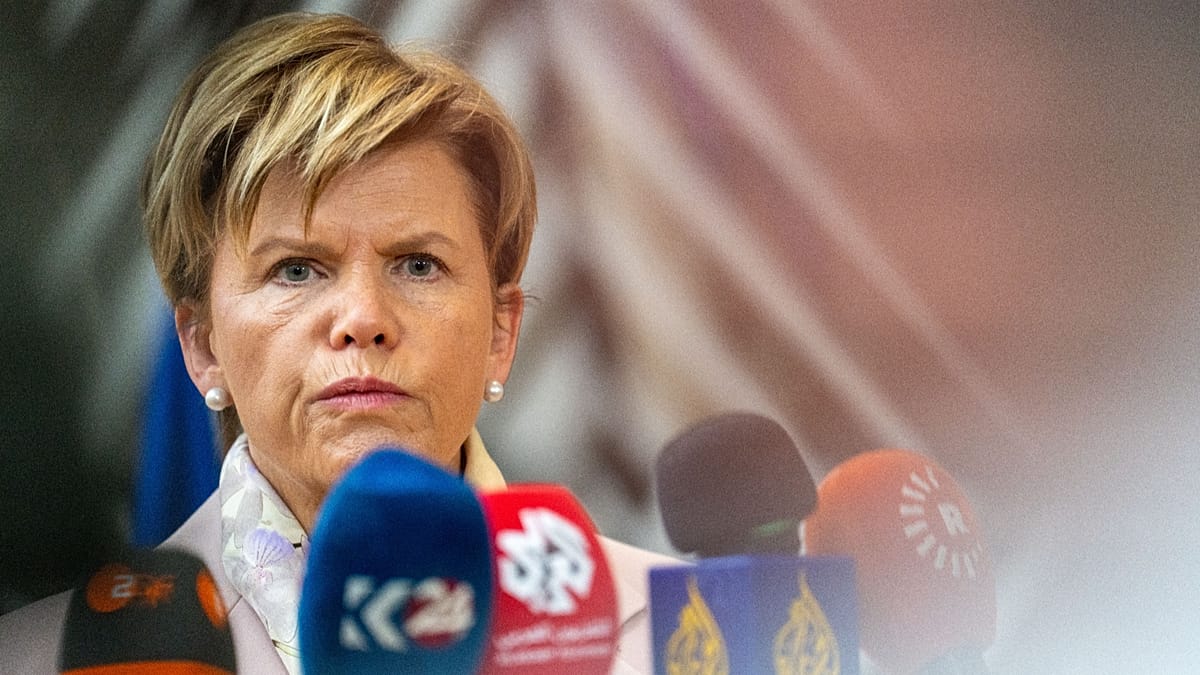
“I have informed EU and NATO ministers and international organisations,” Braže said in a statement. “Russia can destroy buildings, not Ukraine’s will and Latvia’s support.” The Latvian public broadcaster LTV reported that the honorary consul, Oleksandr Pavenko, was unharmed.
Ukrainian President Volodymyr Zelenskyy confirmed that guided aerial bombs were used in the assault, which also damaged residential buildings and vehicles. “It is important that our partners fully understand that protecting lives also depends on them. Interceptors for Patriot systems are the number one priority,” he wrote on social media.
EU and Baltic Condemnation
European Council President António Costa called the strike “a grave and unacceptable act,” expressing full solidarity with Ukraine and Latvia. “Russia’s attack on the Latvian Honorary Consulate in Sloviansk is a grave and unacceptable act. I strongly condemn this strike, which claimed lives and left many injured,” he said.
Lithuanian Foreign Minister Kęstutis Budrys denounced the targeting of civilians and diplomatic infrastructure, insisting it would not “break the courage, resilience, and determination of the Ukrainian people, nor the resolve of those who stand with Ukraine.” Estonia’s Foreign Minister Margus Tsahkna described the incident as a “deliberate attack” on Ukrainians and European diplomatic offices. “These attacks will not go unanswered. Pressure will intensify, and support for Ukraine will not waver,” he added.
The attack comes amid a broader pattern of Russian strikes on diplomatic facilities. In August last year, Russian missiles severely damaged the European Union’s diplomatic offices in Kyiv, killing at least 17 Ukrainian civilians. European Commission President Ursula von der Leyen expressed outrage at the time.
Latvia, a NATO and EU member, has been a staunch supporter of Ukraine since Russia’s full-scale invasion began in 2022. The Baltic state has provided military aid, hosted Ukrainian refugees, and pushed for tougher sanctions against Moscow. The targeting of its consulate in Sloviansk underscores the risks faced by diplomatic missions operating near front-line zones.
The strike also highlights the ongoing threat to civilians in eastern Ukraine, where Russian forces have increasingly used guided aerial bombs to target urban areas. Sloviansk, located about 40 kilometres from the front line, has been repeatedly shelled since the invasion began.
International reactions have been swift. The EU’s foreign policy chief, Josep Borrell, called for an investigation into the attack, while NATO Secretary General Jens Stoltenberg reiterated the alliance’s commitment to Ukraine’s defence. The United Nations condemned the strike as a violation of international humanitarian law.
For Latvia, the incident is a reminder of the broader hybrid war that Moscow is waging against the Baltic states. As Latvian PM: Putin Intensifies Hybrid War on Riga as Ukraine Losses Mount notes, the Kremlin has stepped up disinformation campaigns, cyberattacks, and political pressure on Riga. The consulate attack may be seen as part of this strategy, though Russia has denied targeting civilian infrastructure.
In response, Latvia’s government has called for increased air defence support for Ukraine, including Patriot systems, which are critical for intercepting guided bombs and missiles. The Baltic states have also urged EU and NATO partners to accelerate arms deliveries and tighten sanctions on Russia.
The attack on the Latvian consulate is a stark reminder that the war in Ukraine remains a direct threat to European security. As the conflict enters its third year, diplomatic missions and civilians alike continue to pay the price of Russia’s aggression.