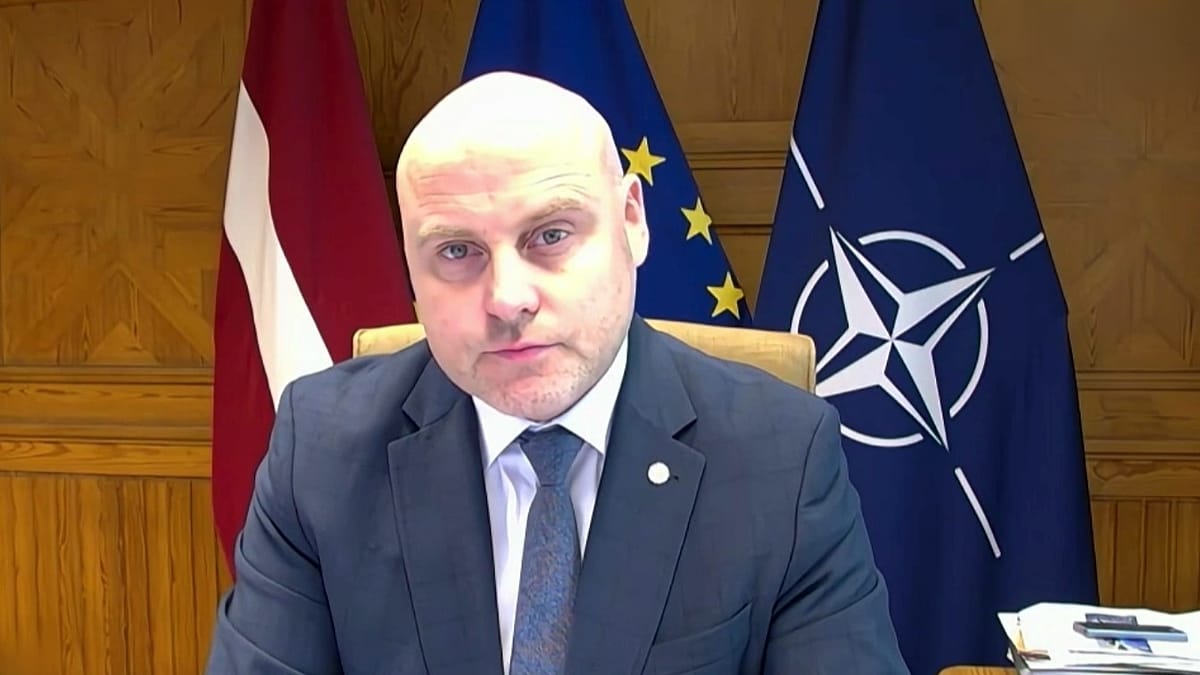
Latvia’s Prime Minister Andris Kulbergs has warned that Russia and Belarus are intensifying their hybrid campaign against his country, as Vladimir Putin seeks to shift attention from mounting military setbacks in Ukraine. In an exclusive interview with Euronews, Kulbergs described the recent surge in attempted migrant crossings from Belarus as a coordinated threat orchestrated at the highest levels of the Russian state.
“We’re being tested,” Kulbergs told Europe Today. “At this moment, it is us. At any given moment it is our neighbours in Lithuania, Estonia, Finland or Poland.” He added bluntly: “This is a hybrid threat. This is a war threat. That's what Russia does.”
Belarus as a Pressure Point
Since 2021, Belarusian President Aliaksandr Lukashenka has been funnelling migrants from the Middle East and Africa to the European Union’s eastern border, using state-sponsored migration as a weapon. While Poland and the Baltic states have fortified their frontiers with fences and increased patrols, Latvia has now become the focal point of this campaign. Last week, Latvian border guards recorded 111 attempted illegal crossings in a single day — a stark contrast to just two attempts on the same day across Lithuania’s much longer border with Belarus.
On Wednesday, Latvia’s armed forces fired warning shots and deployed tear gas against a group of migrants attempting to cross from Belarus. The incident underscores the growing pressure on Riga, which is also bracing for parliamentary elections in October. The timing, Kulbergs suggested, is no coincidence: “Because he's losing in Ukraine, simple. He needs to take attention somewhere else.”
The prime minister described the asylum seekers as “men, 18 to 25, with a criminal past, all given visas from Belarus”. He characterised the operation as “an organised threat towards us to find a weak link”.
Regional Ripple Effects
The spike in crossings has prompted neighbouring Lithuania to consider reintroducing border controls with Latvia to prevent secondary migration — a move both countries’ presidents have firmly rejected. Yet the trend is real: secondary migration into Lithuania has risen since Riga became the primary target. The situation echoes earlier crises on the Polish-Belarusian border, where Lukashenka’s tactics have repeatedly tested EU solidarity.
Kulbergs’ remarks come amid a broader pattern of Russian hybrid warfare across Europe. From cyberattacks on Estonian government networks to disinformation campaigns in Germany, Moscow has long used non-military means to destabilise its neighbours. The current focus on Latvia, however, appears directly linked to the war in Ukraine. As Ukraine launches mass drone strikes on Russian soil and Kyiv’s forces hold the line, Putin may be seeking to open new fronts — even if they are not conventional battlefields.
For the European Union, the crisis on Latvia’s border is a test of collective resolve. Brussels has condemned the instrumentalisation of migrants and provided funding for border security, but the pressure shows no sign of abating. As Kulbergs put it, “We all have to take all the measures to prevent that.”
The situation also highlights the interconnected nature of European security. Latvia’s prime minister has previously stressed the need for NATO and EU enlargement as a bulwark against Russian aggression. Now, with an election looming and hybrid attacks intensifying, Riga is on the front line of a conflict that extends far beyond Ukraine’s borders.