Ukraine launched an unprecedented wave of over 400 drones toward Moscow overnight on Monday, striking an oil depot and a logistics centre, according to Ukrainian officials. The attack marks a significant escalation in Kyiv's campaign to bring the war to Russian soil, targeting infrastructure deep inside the country.
Ukrainian President Volodymyr Zelenskyy confirmed that Ukrainian forces also struck two shadow fleet tankers and four cargo ships in the Black Sea, part of a broader effort to disrupt Russia's maritime logistics and energy exports.
The drone barrage followed a weekend of intensifying exchanges between the two sides. On Sunday, Russia targeted Kyiv with a large-scale ballistic missile attack, killing one person and wounding 16 others. On Saturday, Ukraine struck warehouses belonging to Wildberries, one of Russia's largest online retailers, outside Moscow. Local media reported a fire at another Wildberries facility in a subsequent attack.
Moscow Under Siege
Moscow Mayor Sergei Sobyanin said most of the 400 drones were downed away from the capital, with 85 intercepted near Moscow. Andrei Vorobyov, the governor of the Moscow region, reported that ten people, including a child, were wounded and several residential buildings and civilian infrastructure were damaged. Damage was recorded in the towns of Podolsk, Domodedovo, and Odintsovo.
Russia's ballistic missile assault on Kyiv on Sunday was part of a broader pattern. The Institute for the Study of War noted that Russia has launched more ballistic missiles against Ukraine in July than it reportedly produces each month. “Russia appears to be dipping into its stockpiles to continue increasing the number of ballistic missiles it launches against Ukraine, as these missiles have a higher success rate than drones and cruise missiles,” the think tank said.
Ukraine's air force reported that Russia launched 94 long-range strike drones at Ukraine overnight, of which Ukrainian air defences jammed or intercepted 81. Nine drones and a missile caused damage at nine locations.
The escalating exchanges suggest a negotiated settlement remains distant. Kyiv has framed its strikes on Moscow as a means to degrade Russia's offensive capabilities and pressure the Kremlin to negotiate. “We are justly responding to every Russian strike on our cities and communities,” Zelenskyy wrote on X. “This war must be ended, and that is possible only by intensifying pressure on the sole cause of this war.”
Meanwhile, Zelenskyy said he would hold “key talks” on Monday as he grapples with a domestic political crisis after announcing a cabinet reshuffle last week. The reshuffle has added uncertainty to Ukraine's governance at a critical juncture in the war.
The conflict's ripple effects continue to shape European security. EU leaders have been grappling with how to sustain support for Ukraine while managing internal divisions, as seen in Greece's recent block on EU sanctions on Russian LNG. The war has also accelerated defence cooperation, with EU-Ukraine drone pacts and accession talks advancing.
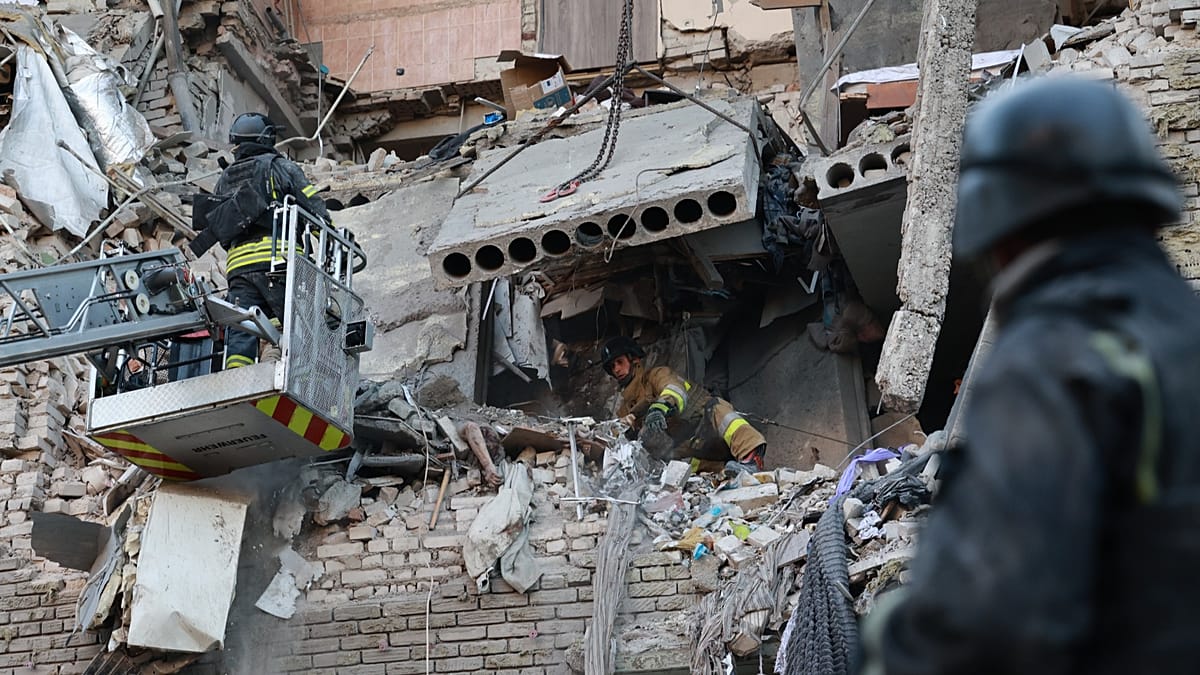
As both sides dig in, the human toll mounts. In the Donetsk region, a residential building in Kramatorsk was set ablaze by a Russian air attack on Monday, underscoring the relentless violence that has defined the conflict for over two years.