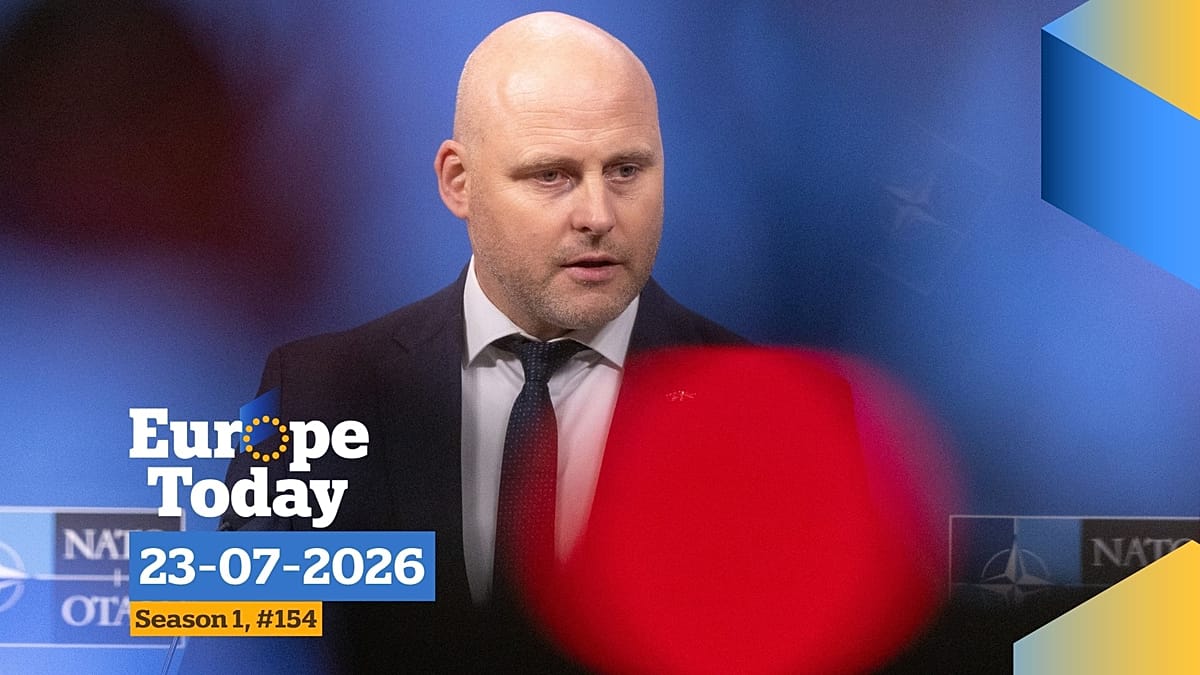
Latvian Prime Minister Andris Kulbergs, who took office in May after a coalition government collapsed over its handling of stray drones, has given an exclusive interview to Euronews. The conversation comes on the same day US Secretary of State Marco Rubio meets Russian Foreign Minister Sergey Lavrov to discuss a potential end to the war in Ukraine. Kulbergs, a former finance minister, outlined his vision for NATO, European security, and the alliance's future, emphasizing the need for a robust and united front against Russian aggression.
NATO's Future and European Security
Kulbergs stressed that NATO remains the cornerstone of European defense, but warned that the alliance must adapt to new threats, including hybrid warfare and cyberattacks. He noted that Latvia, as a frontline state, has long advocated for increased defense spending and a stronger NATO presence in the Baltic region. The prime minister also highlighted the importance of the upcoming NATO summit in July, where leaders will discuss burden-sharing and strategic priorities. NATO Chief Rutte's recent meeting with Trump to ease tensions before the summit underscores the delicate diplomacy required to maintain alliance cohesion.
On the meeting between Rubio and Lavrov, Kulbergs expressed cautious optimism. He said that any peace deal must respect Ukraine's sovereignty and territorial integrity, and that Europe must have a seat at the negotiating table. The prime minister also warned against any concessions that could embolden Moscow, drawing parallels to the 2014 annexation of Crimea.
EU Enlargement and the Accession Process
In a separate segment, Germany's Minister of State for Europe, Gunther Krichbaum, discussed EU enlargement and plans to make the accession process more credible. Krichbaum emphasized that the EU must offer a clear path to membership for Western Balkan countries, while also ensuring that candidates meet strict criteria on rule of law and democratic reforms. This comes as the EU seeks to counter Russian and Chinese influence in the region.
The show also featured a report by Shona Murray on the implications of the Rubio-Lavrov meeting for peace in Ukraine. She spoke to Colonel Martin O'Donnell, NATO's senior military adviser, who noted that any ceasefire would require robust verification mechanisms to prevent violations. O'Donnell also highlighted the importance of continued military aid to Ukraine, even as diplomatic channels open.
EU Fines Google Over Digital Markets Act
In technology news, Luca Bertuzzi explained why the EU is set to fine Google for breaching the bloc's Digital Markets Act (DMA). The DMA, which came into force in 2023, aims to curb the power of big tech companies by promoting competition and protecting consumer rights. Google's alleged violations include favoring its own services in search results and imposing unfair conditions on app developers. This marks one of the first major enforcement actions under the DMA, signaling the EU's commitment to regulating digital markets.
The episode also touched on broader European issues, including the ongoing conflict in Ukraine and its impact on energy security. As winter approaches, European countries are scrambling to secure alternative energy supplies, with Latvia pushing for greater investment in renewable energy and interconnectors to reduce dependence on Russian gas.
Kulbergs' interview comes at a critical time for European security, as the war in Ukraine enters its third year and the US presidential election looms. The prime minister's message was clear: Europe must take greater responsibility for its own defense, while maintaining strong transatlantic ties. Recent Ukrainian strikes on Moscow's oil refinery and Zelenskyy's meeting with NATO's chief underscore the high stakes involved.
For viewers interested in the broader geopolitical context, the show also covered the Rubio campaign to undermine the International Criminal Court, a move that has drawn criticism from European allies. The ICC's investigations into alleged war crimes in Ukraine have been a point of contention between Washington and The Hague.
As the day's events unfolded, the message from Riga, Brussels, and Washington was clear: Europe's security architecture is being tested, and the decisions made in the coming weeks will shape the continent's future for years to come.