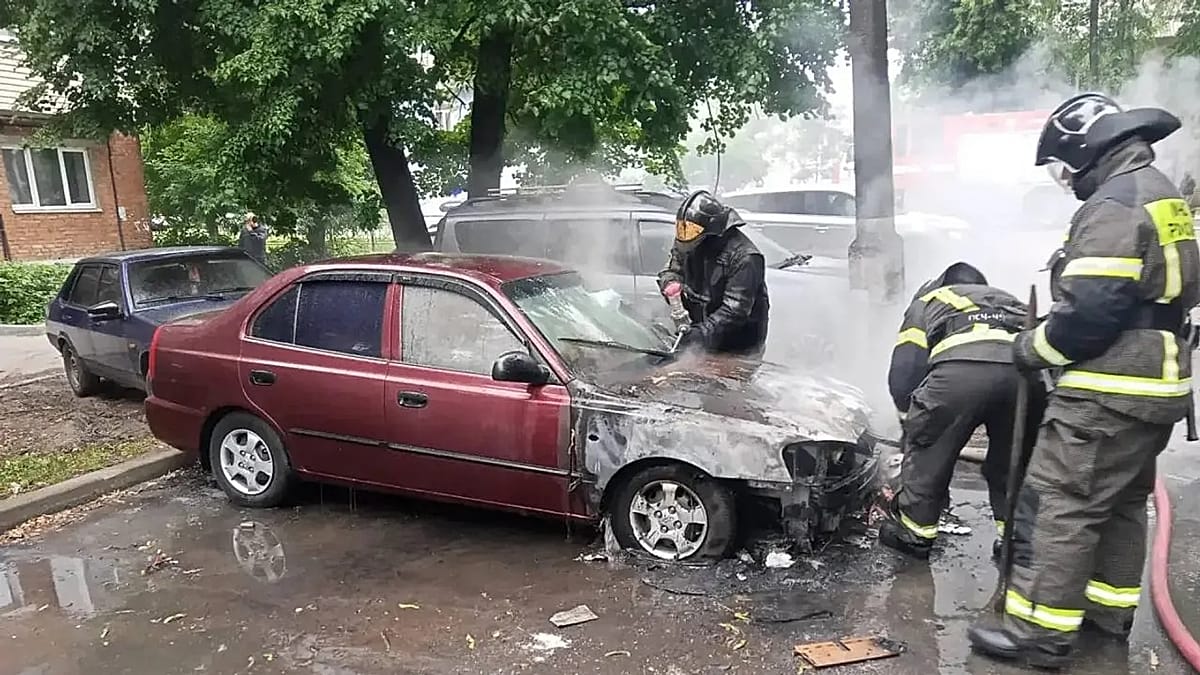
Ukrainian forces launched a large-scale drone assault on Moscow early Thursday, targeting a key oil refinery for the second time in a week. Moscow Mayor Sergey Sobyanin reported that air defenses intercepted 180 unmanned aerial vehicles approaching the capital, but several managed to strike the refinery, causing a major fire. Video footage on social media showed a massive explosion and flames at the scene, with emergency services responding across the city.
Andrey Vorobyov, governor of the Moscow region, added that drone debris sparked a fire at a shopping center in southeastern Moscow and struck an apartment building in Zhukovsky, damaging a fire escape. Ukrainian President Volodymyr Zelenskyy confirmed the refinery attack in a post on X, sharing video of the aftermath and noting that targets were also hit in the Rostov region and temporarily occupied Ukrainian territories.
Escalation of Long-Range Sanctions
Kyiv has intensified strikes on Russian energy infrastructure in recent months, with Zelenskyy framing the campaign as a form of “long-range sanctions” against Moscow. Ukrainian forces have focused on oil facilities, including refineries, terminals, and depots. Last week, Zelenskyy announced strikes on the Kuibyshev refinery in Russia’s Samara region and two oil infrastructure sites in the Vladimir region.
Russia retaliated Wednesday night by targeting an energy infrastructure facility in Ukraine’s Poltava region, according to local authorities. Additional strikes on an industrial facility and a business in the same region left one person injured. Zelenskyy reported that Russia used 1,920 attack drones, 1,790 guided aerial bombs, and 17 missiles against Ukraine last week.
Diplomatic Push in Brussels
The Ukrainian leader arrived in Brussels on Wednesday for a meeting with NATO Secretary General Mark Rutte. They discussed the NATO Prioritised Ukraine Requirements List (PURL), a procurement mechanism for Ukraine, and Zelenskyy’s earlier talks with G7 leaders at the Évian summit in France. During those discussions, Zelenskyy renewed pleas for more air defense missiles and increased pressure on Moscow. He stated after the meeting that G7 leaders agreed to “additional strengthening of Ukraine’s air defense” and new measures against Russia.
Meanwhile, Russian President Vladimir Putin is hosting leaders from Southeast Asia at the ASEAN-Russia summit in Kazan, a move that underscores Moscow’s efforts to bolster ties with non-Western powers amid the ongoing conflict. The dual developments highlight the widening geopolitical divide over Ukraine, with European allies rallying behind Kyiv while Russia seeks alternative partnerships.
The attack on the Moscow refinery comes as European leaders grapple with the broader implications of the war, including energy security and defense spending. The EU has been working to reduce reliance on Russian energy, a topic that featured prominently in recent Brussels summit discussions. As the conflict enters its third year, the targeting of Russian oil infrastructure represents a strategic shift for Ukraine, aiming to disrupt Moscow’s revenue streams and military logistics.