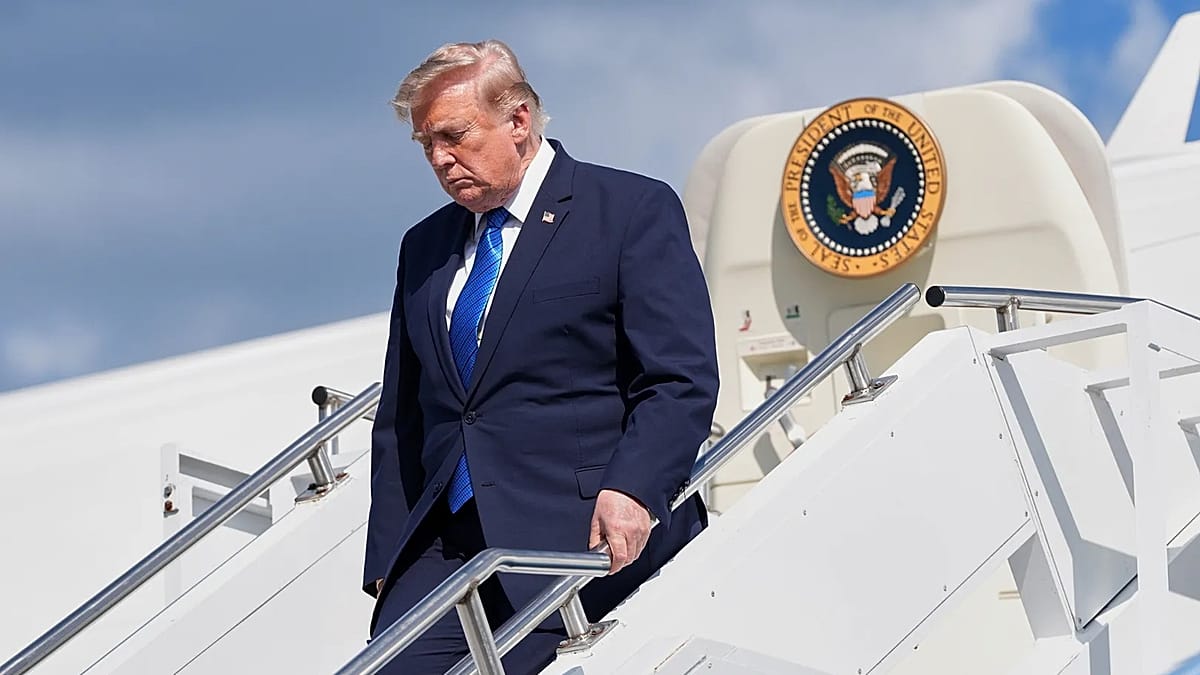
US President Donald Trump has announced the cancellation of a planned military strike on Iran, citing an agreement with Tehran and several unnamed Middle Eastern countries on the "perimeters of a deal." In a post on Truth Social, Trump stated that the deal would include the "Immediate, Complete, and Total OPENING OF THE HORMUZ STRAIT, and an end to Iran’s nuclear threat."
The president said he had agreed to cancel the attack "for the future benefit of the WORLD and, likewise, the survival of a successful and prosperous Iran," but warned that US forces remain "locked and loaded and ready to go" should negotiations fail. He also noted that Israel joins him in this commitment.
The announcement comes after the US State Department issued a security alert on Saturday, urging Americans in the Middle East to exercise heightened vigilance and prepare for potential flight cancellations, airspace closures, and travel disruptions amid escalating tensions.
Just a day earlier, Trump had expressed "losing faith" in the prospect of a peace deal and threatened to hit Iran "very hard." The reversal marks a significant shift in the conflict that has simmered since late February, when the US and Israel launched a series of strikes on Iran, prompting Tehran to effectively close the Strait of Hormuz—a vital chokepoint for roughly a quarter of global seaborne oil trade.
Renewed hostilities and fragile diplomacy
After a brief pause, the US and Iran resumed strikes earlier this week when Tehran fired ballistic missiles at US forces stationed in the Middle East. In response, Washington targeted dozens of Iranian Revolutionary Guard Corps (IRGC) facilities, including missile and drone sites and military command centers, according to US Central Command. The strikes aimed to "further diminish threats posed by Iran and its proxies to American forces, commercial shipping, and neighboring Gulf countries."
The two nations had appeared to make progress in June with the signing of a memorandum of understanding, which required an end to hostilities, the lifting of the US naval blockade, and Tehran's reopening of the Strait of Hormuz. The provisional agreement also reaffirmed Iran's commitment not to procure or develop nuclear weapons.
European observers have watched the developments with concern, as the conflict threatens energy supplies and regional stability. The reopening of the Strait of Hormuz is critical for global oil markets, and any disruption has direct implications for European economies. The EU has repeatedly called for de-escalation and a return to diplomatic channels.
Trump's latest move, while halting immediate strikes, leaves the situation fluid. The president stressed that the deal must be reached "rapidly," and US military assets remain in place. The coming days will test whether the perimeters agreed upon can be translated into a formal agreement, or whether the region returns to the brink of wider conflict.
For now, the cancellation offers a glimmer of hope, but the underlying tensions remain unresolved. As the US and Iran navigate this fragile moment, Europe's diplomatic and economic interests hang in the balance.