As artificial intelligence reshapes economies and societies, a German state is testing a novel answer to a pressing question: how can individuals retain agency over their own learning? The Ministry of Education in Schleswig-Holstein has introduced the concept of Bildungssouveränität — educational sovereignty — as the philosophical backbone of its new Digital Learning Campus.
Stefan Lemke, a policy adviser for future skills at the ministry, describes the idea as a framework that places the learner's will, curiosity, and capacity for lifelong learning at the centre. In an era where digital tools and AI are becoming ubiquitous, he argues, people need more than just technical proficiency; they need the confidence to decide what matters to them and how to invest their time and energy in self-development.
From Passive Consumption to Active Direction
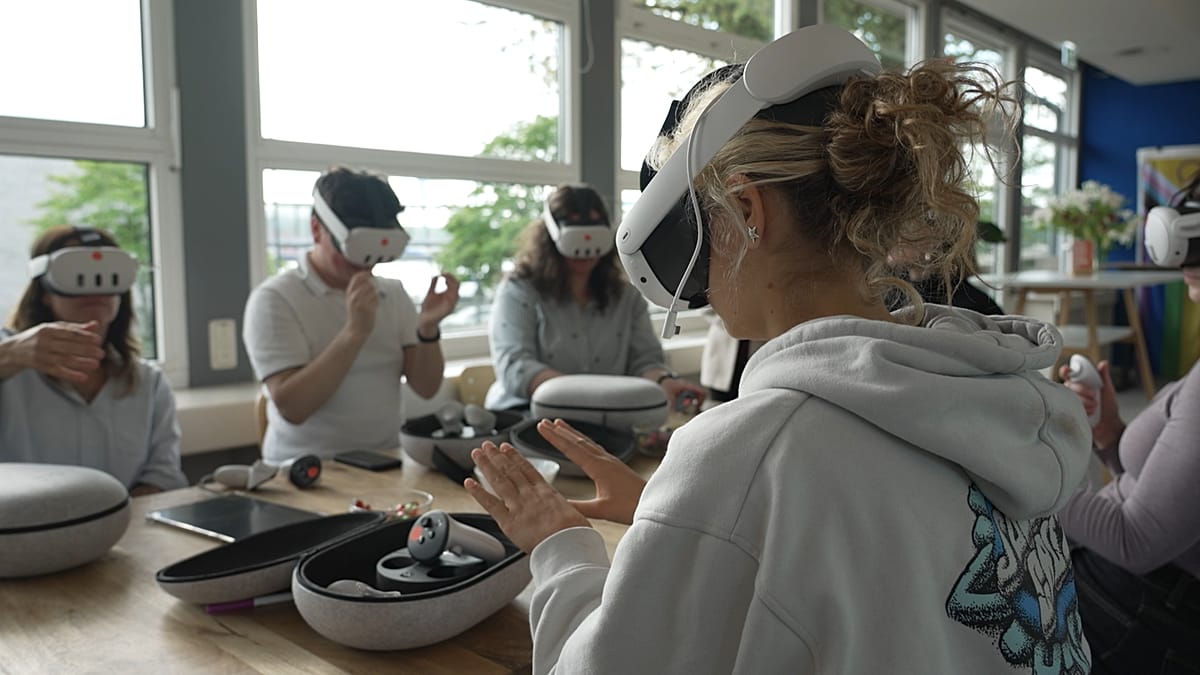
The Digital Learning Campus is not a traditional school or university. Instead, it is envisioned as a flexible, modular ecosystem that blends physical and digital spaces. Learners — whether students, professionals, or retirees — can navigate pathways tailored to their interests, from coding and data literacy to creative arts and civic engagement. The goal is to move beyond the passive consumption of online content toward active, self-directed exploration.
“The concept of educational sovereignty is a kind of framework behind the Digital Learning Campus, for me,” Lemke explained. “And it means that you can make decisions about what you are interested in and where you invest your time and your power to develop yourself or to use future technologies for yourself. The goal is to find a space for this educational sovereignty and for the digital learning campus in the education system.”
This approach resonates with broader European debates about how to reform education systems that were designed for the industrial age. While countries like Finland and Estonia have long emphasised student autonomy and digital skills, Schleswig-Holstein's model explicitly ties personal curiosity to the challenge of AI adaptation. It acknowledges that many routine tasks will be automated, making uniquely human traits — creativity, critical thinking, and intrinsic motivation — more valuable than ever.
The initiative also reflects a distinctly European perspective on technology: one that prioritises human agency over algorithmic determinism. Rather than treating AI as a force to be feared or merely adopted, the Digital Learning Campus aims to equip citizens with the literacy to understand, question, and shape these tools. This aligns with the EU's broader push for digital sovereignty, though applied at the individual level.
Practical implementation remains a work in progress. The campus will rely on partnerships with local libraries, community centres, and online platforms, as well as input from employers and universities. Early pilots have focused on regions with varying levels of digital infrastructure, from Kiel to rural districts in the state's north. If successful, the model could offer a template for other German Länder and even for EU member states grappling with similar challenges.
Critics, however, caution that educational sovereignty risks widening inequalities if not paired with strong support systems. Learners from disadvantaged backgrounds may lack the time, resources, or confidence to exercise such freedom. Lemke acknowledges this tension, stressing that the campus must be inclusive and accessible, with mentors and guides available to help navigate choices.
For now, Schleswig-Holstein's experiment stands out as a thoughtful attempt to reconcile two powerful trends: the rise of AI and the enduring importance of human curiosity. In a continent where education systems are often slow to change, it offers a glimpse of what a more personalised, curiosity-driven learning ecosystem might look like — and why it matters.