Electric aircraft could become a practical option on some of Europe's busiest short-haul routes within four years, as battery technology improves and startups push for certification. While sceptics have long dismissed battery-powered flight as a distant fantasy, engineers and policymakers now see it as a credible piece of the continent's decarbonisation puzzle.
“Many people still think airplanes running on batteries are a distant dream,” says Carlos López de la Osa, aviation technical manager at the European Federation for Transport & Environment (T&E). “But electric and hybrid flights are a core part of the solution to making short-haul travel more sustainable, and less dependent on imported jet fuel.”
With energy prices still volatile amid tensions in the Middle East, fuel-free flying offers a hedge against fossil fuel shocks. It also promises quieter skies and cleaner air, and could open up connections to remote communities that mainstream airlines often ignore.
Which routes could go electric first?
European startups are designing aircraft with ranges of up to 500 kilometres. According to the European Union Aviation Safety Agency (EASA), that would make them capable of serving roughly a quarter of the continent's flight routes, including several popular corridors.
Potential candidates include London to Dublin, Athens to Santorini, Barcelona to Ibiza, Nice to Corsica, and Rome to Sardinia. These are journeys where rail is not a realistic alternative—either because they cross water or serve islands. France has already banned short-haul flights where a train journey of under 2.5 hours exists, and Spain has proposed similar measures, but for island and cross-water routes, flying remains the only practical option.
German startup Vaeridion estimates its nine-seat electric aircraft could eventually operate at under €0.50 per passenger-kilometre, comparable to a first-class rail fare. The company has already secured commitments from airlines and jet operators to buy 100 aircraft, and it aims to receive passenger-carrying certification by 2030.
However, first-generation electric planes are small and unlikely to compete with conventional jets on mainstream routes. Instead, they are expected to initially serve rural and underserved regions, where they can provide a lifeline to communities that lack frequent air service.
How close is commercial reality?
Battery weight has long been the main obstacle to electric aviation, but recent advances in electric motors, battery integration, and aircraft design have improved the outlook significantly. Energy density remains the limiting factor, dictating the weight, size, and range of fully electric aircraft.
While major manufacturers have been cautious—Airbus recently delayed its zero-emission aircraft programme—European innovators are stepping into the gap. Stringent climate policies, short regional routes, and a dense network of smaller airports make the continent an ideal testing ground.
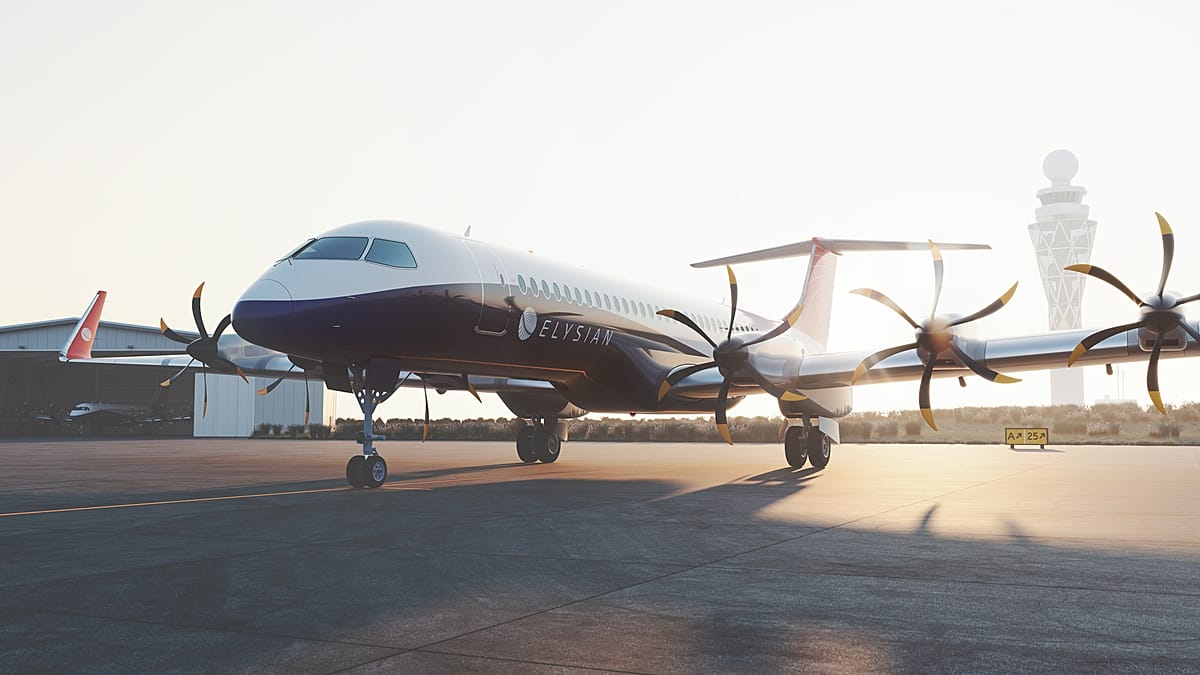
Dutch aerospace company Elysian Aircraft, in partnership with KLM, is developing a 90-seat battery-electric aircraft with a range of up to 1,000 kilometres, targeting entry into service as early as 2035. French startup Aura Aero is working on a 19-seat hybrid-electric regional aircraft with a range of up to 1,500 kilometres, aiming for certification in late 2029 and eventually scaling up to 40–90 seat versions.
“Being hybrid will help our aircraft go further, but it still cuts emissions by up to 80 per cent—and it can easily use sustainable aviation fuel [SAF] rather than conventional jet fuel,” says Antoine Toulemont, Aura Aero's European affairs advisor. “Even at today's fuel prices, we estimate a 50 per cent reduction in direct operating costs.”
Is electric flying truly green?
Sustainable aviation fuel is often touted as a solution for long-haul decarbonisation, but supplies remain scarce and production methods have faced scrutiny. Many experts argue that truly sustainable SAF will never be available in sufficient quantities to meet aviation's growth, making direct electrification a more promising path.
Yet electric flight is not automatically carbon-free. The climate impact depends on how the electricity is generated and the emissions embedded in battery manufacturing. “Electric flight will be an essential part of a low-carbon world of travel, especially when it comes to decarbonising the routes such as London-Dublin, which can't easily be replaced by other means,” says Anna Hughes, director of campaign group Flight Free UK. “But we need to keep one eye on reality: this type of flight is only zero carbon when powered by renewables.”
With energy demand set to rise as more sectors electrify, Hughes warns that “non essential activities such as flying” should not be prioritised over essentials like home heating and food production. “The reality of decarbonising travel will inevitably be travelling a lot less, investing heavily in rail, and only then electrifying the flights that remain,” she adds.
As Europe pushes ahead with its green transition, electric aviation could become a visible symbol of change—especially on routes that tourism trends are making more popular. But the technology's success will depend on continued investment in renewable energy and a realistic assessment of what it can and cannot replace.