Apple has finally begun testing its artificial intelligence tools with developers in China, a market where it has been playing catch-up with domestic smartphone rivals. The trial, which started on Wednesday, marks the first step toward bringing Apple Intelligence to Chinese users, nearly two years after the features launched in the United States.
The initial release includes 18 features, such as live call translation and message summarization and proofreading tools. Notably, it omits the latest upgrade to Siri, Apple's voice assistant. The company has said the public will get access in December.
Apple's delay in China stems from the country's stringent rules on AI, which require service providers to register with the internet regulator, use local data centers, and process data domestically. Unlike in other markets, where Apple relies on Google and OpenAI models, those services are not available in China. Instead, Apple has partnered with Alibaba, using its Qwen AI assistant to power more advanced features alongside Apple's own basic tools.
What is Qwen?
Qwen is a family of open-weight AI models and assistants developed by Alibaba, the Chinese e-commerce and cloud giant. Like OpenAI's GPT, it can write, translate, summarize, and generate code. However, unlike ChatGPT, most Qwen versions are freely downloadable and adaptable, making it the world's most-downloaded open AI model.
Apple is not the first Western brand to adopt Qwen in China. BMW is building an in-car assistant with Alibaba for its Neue Klasse vehicles produced in China from 2026, while Mercedes-Benz has a similar partnership with ByteDance. Qwen is also gaining traction in Europe: UEFA signed a multi-year deal with Alibaba in May to use Qwen for fan engagement and content management.
Research tracking open AI models shows that by February 2026, Qwen was the base for 69% of new adapted models built by developers, while European models' share had fallen to just 4%.
Apple only received regulatory approval in July after reportedly holding talks with several Chinese tech firms, including Baidu, ByteDance, and Tencent. Leading US AI companies like Google, OpenAI, and Anthropic have blocked or restricted Chinese users and are unlikely to gain clearance.
Zhang Yi, founder of research firm iiMedia, told AFP that relying on local partners "signifies a structural concession by Apple regarding its pricing and defining power over the AI experience in the Chinese market." He attributed the delay to "compliance costs" rather than research and development.
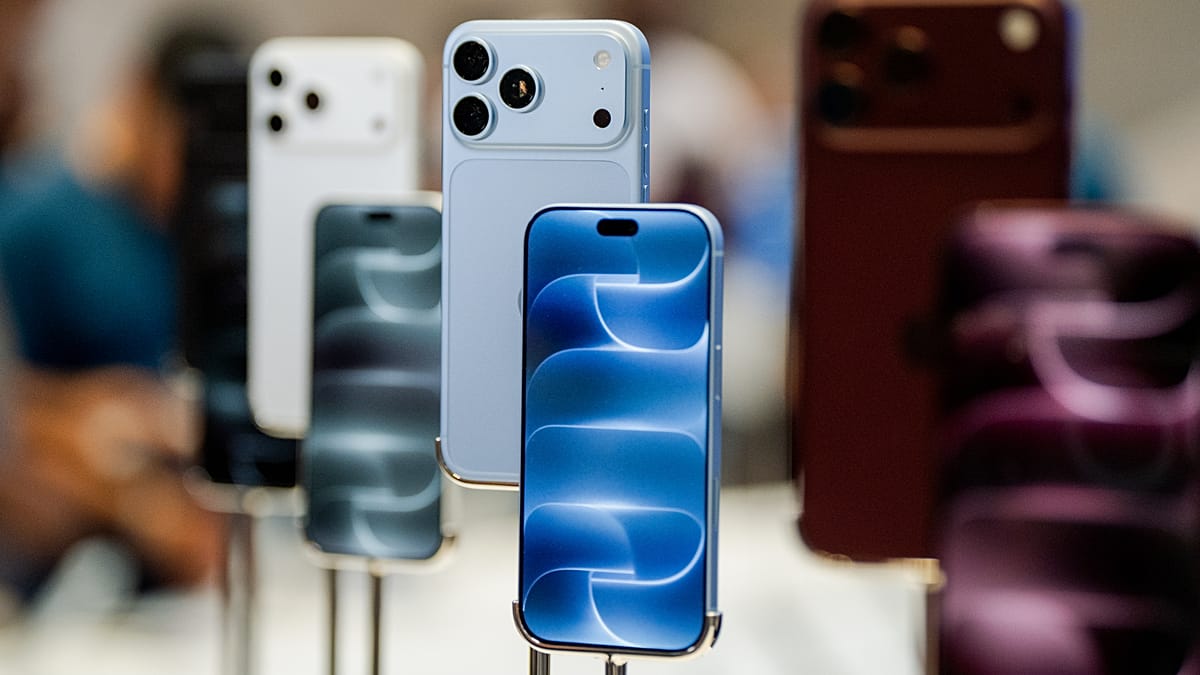
According to research firm Omdia, more than 110 million iPhones in China can run Apple Intelligence, giving Apple a solid base for quick adoption. However, competition is fierce. "Chinese mobile phone manufacturers and internet companies are actively developing AI features and agent ecosystems," said Omdia senior analyst Zhong Xiaolei.
Ivan Lam, a senior analyst at Counterpoint Research, noted that the launch "fills a long-standing gap in Apple's AI offering," but added that it does not necessarily give the company "a significant advantage" in a crowded market.
Apple's revenue in Greater China, which includes Hong Kong and Taiwan, rose 21% last quarter. But the company's new chief executive, John Ternus, faces a tough market as he navigates rising chip costs and AI spending. The partnership with Alibaba also comes amid broader EU concerns about de-risking from China, a dynamic that could shape Apple's strategy in the region.