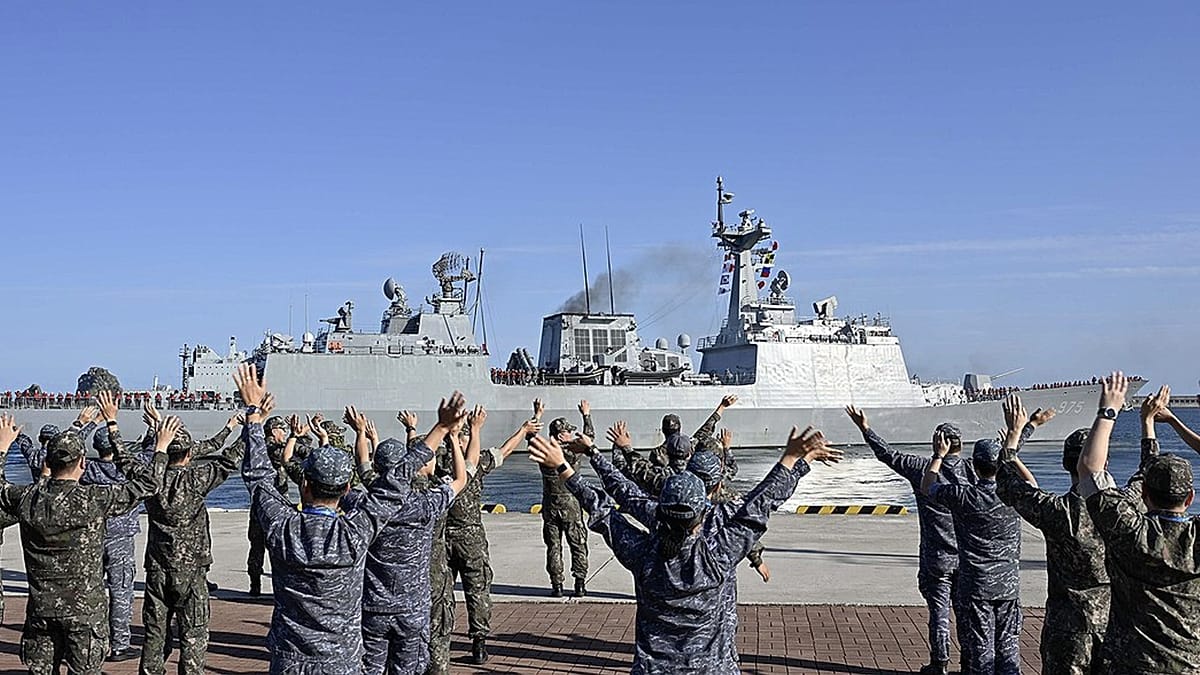
South Korea's defence ministry announced on Thursday that it will extend its naval anti-piracy patrols from the Gulf of Aden to waters near Oman, responding to a recent increase in pirate attacks off the Somali coast. The Cheonghae Unit, which has escorted merchant ships in the region since 2009, will now also operate near the Omani port of Duqm, roughly 650 kilometres from the Strait of Hormuz.
The patrols will remain outside the strait, and the unit will stay under South Korean command, the ministry said. The decision comes as Seoul seeks to balance its security interests with avoiding entanglement in the ongoing conflict between the United States and Iran.
Rising piracy and shifting naval presence
According to the defence ministry, 36 piracy incidents have been reported off Somalia so far this year, compared with just 11 in all of 2025. Pirates have ventured further towards Oman as international naval forces have redeployed to the Red Sea and the Strait of Hormuz, leaving gaps in coverage.
To bolster the mission, South Korea will deploy a P-8A Poseidon maritime patrol aircraft, a bomb disposal team, and uncrewed vessels capable of clearing sea mines. The personnel ceiling for the unit will rise from 320 to 395.
The current mandate expires on 31 December. Deputy ministers endorsed the plan on Thursday, and the cabinet is scheduled to review it next week. If approved by the cabinet and President Lee Jae-myung, the National Assembly will vote on expanding the patrol area and extending the mission until 31 December 2027.
Why the Strait of Hormuz matters to Seoul
South Korea sourced roughly 70% of its oil from the Middle East in 2025, with most of that volume transiting the Strait of Hormuz, according to industry ministry data. The strait is a critical chokepoint for global energy supplies, and any disruption would have immediate consequences for South Korea's economy.
US President Donald Trump has criticised Seoul for what he perceives as insufficient support for the US-led campaign against Iran. In September, President Lee said South Korea had a duty to protect its citizens, merchant ships, and oil shipments, but ruled out a deployment that could draw the country into the war.
Seoul has backed a British and French-led initiative to protect merchant ships and clear mines in the strait once conditions allow. The defence ministry said sending mine-clearing equipment to Omani waters would give South Korean crews valuable experience for a potential future mission inside the strait.
A South Korean defence official told Yonhap that Seoul had agreed to participate if asked, once the war ended or Washington and Tehran reached a deal allowing crews to operate safely. Any deployment inside the strait would still require parliamentary approval.
The move comes amid heightened tensions in the region, including recent US strikes on an Iranian island and reports of tanker fires. For European readers, the situation underscores the fragility of global energy routes and the complex security dynamics that also affect European supply chains.