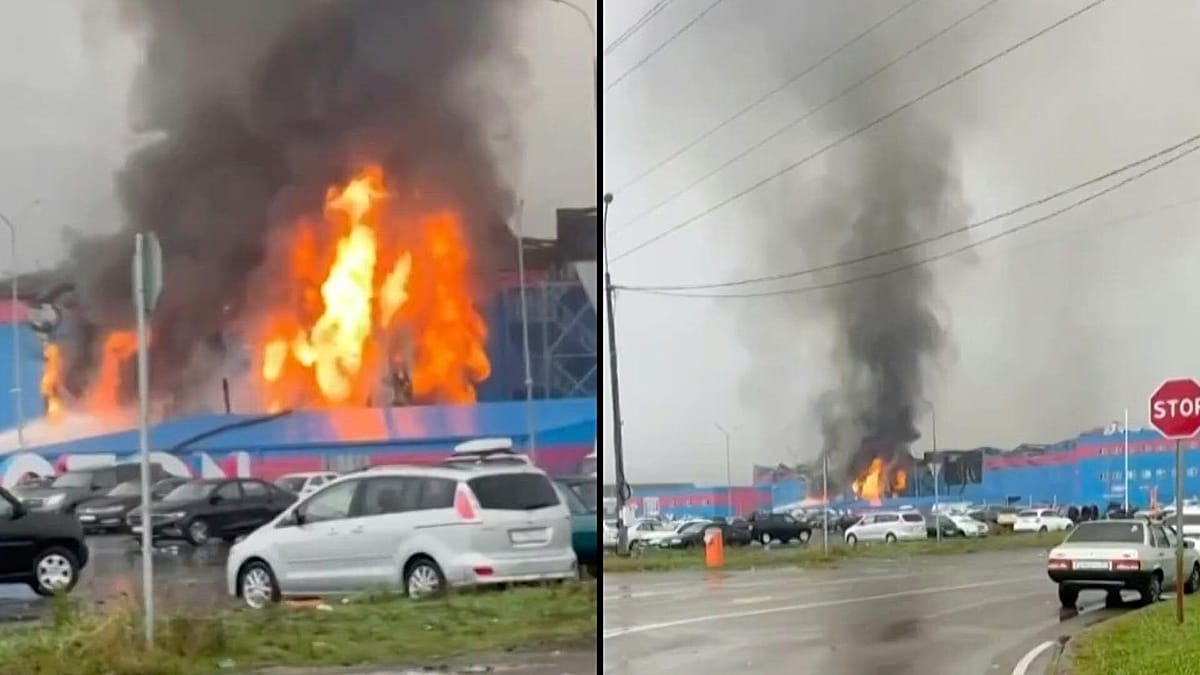
Flames and thick plumes of smoke billowed from an Ozon warehouse in Adygeysk, a town in Russia's Republic of Adygeya, on Wednesday, according to footage circulating on social media. The e-commerce giant confirmed that one of its facilities had been hit by a drone.
The incident underscores the expanding scope of Ukraine's military strategy, which now targets logistics infrastructure deep inside Russian territory. Over recent months, Kyiv has repeatedly struck warehouses and distribution centers operated by major Russian online retailers, including Ozon and its rival Wildberries.
Ukraine's logistics offensive
Ukrainian officials have framed these attacks as a means to disrupt Russian supply chains and reduce the country's capacity to sustain its war effort. Kyiv has also alleged that Wildberries, Russia's largest online marketplace, supplied components to the Russian military—a claim the company has denied.
Wednesday's fire in Adygeysk, located roughly 1,400 kilometers south of Moscow, adds to a growing list of incidents affecting Russian e-commerce infrastructure. In recent weeks, similar strikes have hit Ozon facilities in other regions, causing significant damage and forcing temporary suspensions of operations.
The choice of targets reflects a deliberate effort to undermine the Russian economy's resilience, particularly in sectors that support both civilian and military logistics. Analysts note that online retail has become a critical node in Russia's domestic supply chain, making it a vulnerable point for disruption.
While Moscow has repeatedly condemned such attacks as acts of terrorism, Ukrainian authorities maintain that they are legitimate military targets under international law, as they contribute to Russia's war machine.
The fire in Adygeysk was brought under control by emergency services, but the extent of the damage and any potential casualties remain unclear. Ozon has not yet commented on the operational impact or whether it will affect deliveries in the region.
This latest strike comes amid a broader pattern of Ukrainian drone operations targeting Russian infrastructure, from oil refineries to military airbases. The campaign has forced Russian authorities to bolster air defenses and implement protective measures around key industrial sites.
For European observers, the escalation highlights the ongoing volatility along Russia's periphery and the continent's continued exposure to the conflict's ripple effects, from energy prices to migration flows. As the war enters another winter, both sides show little sign of de-escalation.