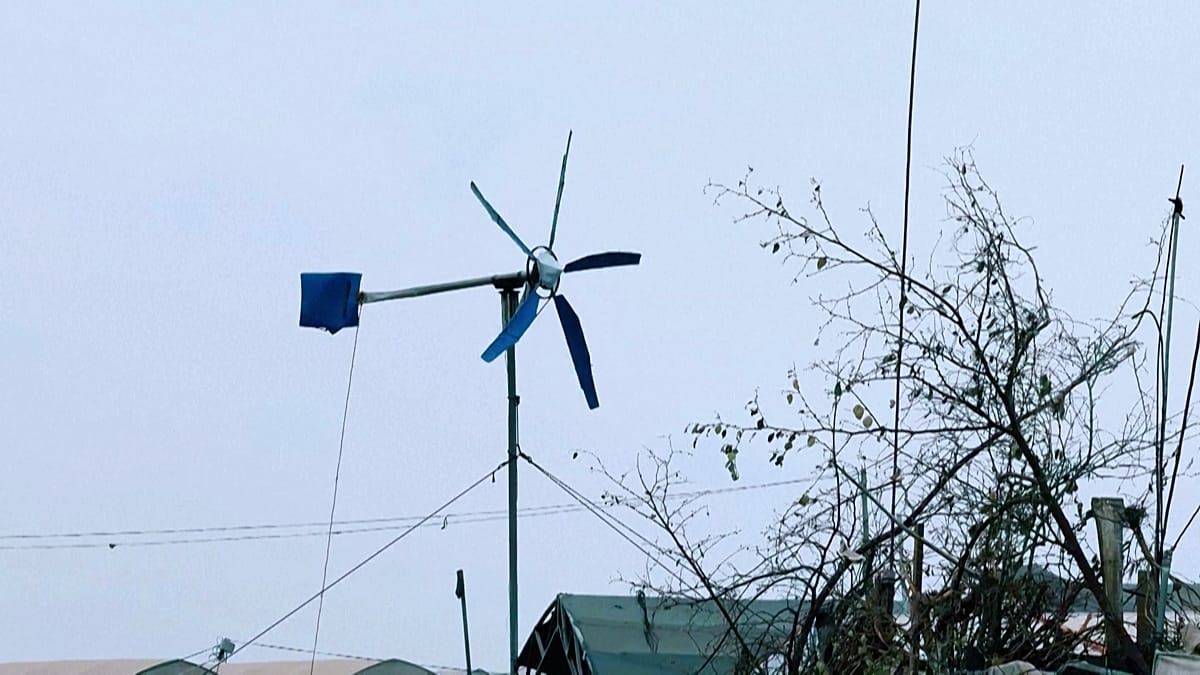
In the sprawling tent camps of Khan Younis, where electricity is a rare commodity, one displaced Palestinian has taken matters into his own hands. With limited resources and no access to the grid, he has constructed a makeshift wind turbine from salvaged materials to generate enough power for his family's daily needs.
The man, who asked not to be named for safety reasons, said he could not afford solar panels, which have become prohibitively expensive in Gaza due to the ongoing blockade and war. Instead, he studied online tutorials and used scrap metal, a car alternator, and wooden poles to build a small turbine that now stands beside his tent.
A flicker of light in the dark
The turbine produces just enough electricity to charge phones, run a small fan, and power a single LED bulb for a few hours each evening. For a family living in a canvas shelter, that modest output is transformative. "We used to sit in darkness after sunset," he told European Pulse. "Now my children can do their homework, and we can keep in touch with relatives abroad."
His innovation is a stark reminder of the energy crisis gripping the Gaza Strip, where years of conflict and a tightening Israeli blockade have crippled infrastructure. The United Nations has repeatedly warned that Gaza's electricity supply meets only a fraction of demand, leaving hospitals, water pumps, and households dependent on unreliable generators or expensive private fuel.
The engineer's approach mirrors a broader trend of grassroots resilience. Across the enclave, residents have experimented with solar panels, hand-cranked chargers, and even bicycle-powered generators. But wind energy remains rare, largely because of the technical challenges of building a durable turbine in a war zone.
His success has drawn attention from neighbors, who have begun asking for help building their own turbines. He says he is happy to share his design, though he cautions that materials are scarce. "I used parts from an old washing machine and a broken scooter," he explained. "Not everyone has those."
The situation in Gaza is part of a wider pattern of displacement and hardship. Recent Israeli operations have forced hundreds of families from their homes in areas like Hebron, as reported in this account of displacement. Meanwhile, political leaders remain deadlocked, with some analysts arguing that removing Netanyahu is a top priority for Palestinians.
For now, the wind turbine in Khan Younis is a small but potent symbol of defiance. It shows that even under siege, ingenuity can flourish. Yet it also underscores the urgent need for a political solution that would allow Palestinians to rebuild their lives and infrastructure.
As one local aid worker put it, "This man is not an engineer by training, but he has solved a problem that international agencies have failed to address. That says something about the resilience of people here—and about the failure of the international community."
The turbine may be makeshift, but its impact is real. For one family, it means light, connectivity, and a semblance of normalcy. For the wider world, it is a reminder that even in the darkest corners of conflict, human creativity endures.