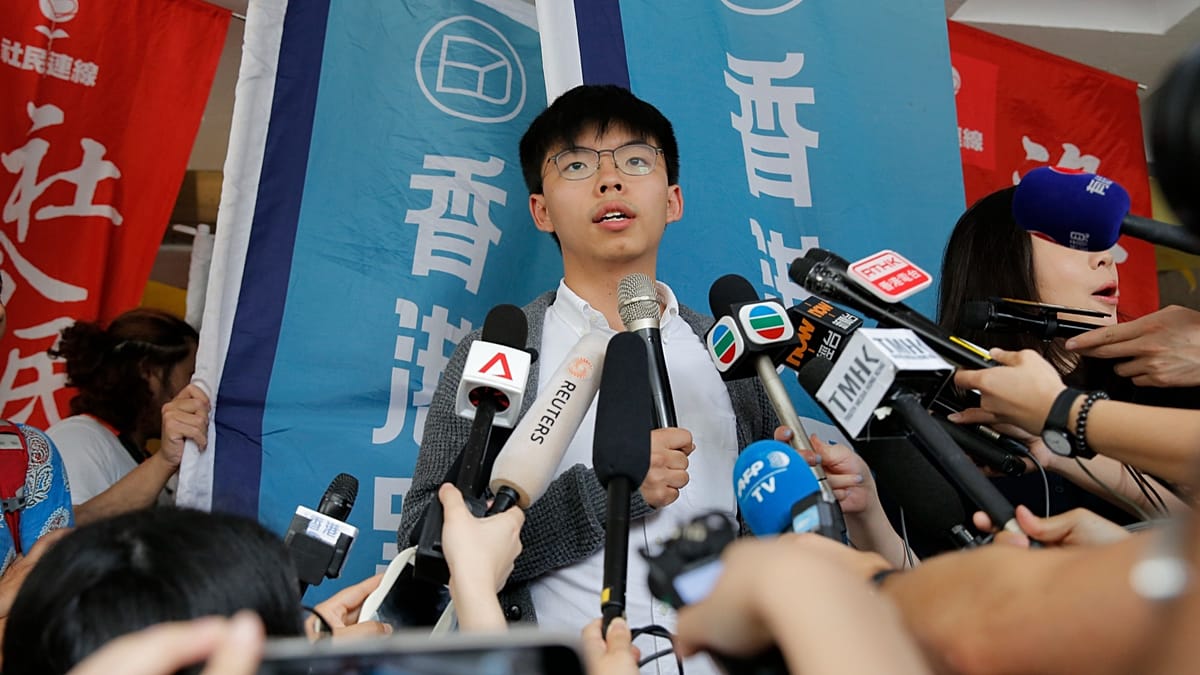
Hong Kong's High Court on Thursday sentenced democracy activist Joshua Wong to a further 10 years in prison for colluding with foreign powers, extending his detention until late 2036. Wong, who turned 30 last month, had been expected to be released in January after serving a four-year-and-eight-month term for subversion under the national security law imposed by Beijing in 2020.
The new charge, filed in June last year, accused Wong of working with foreign governments and entities to push for sanctions against Hong Kong and China. Judge William Tam described Wong and fellow activist Nathan Law, who remains in self-imposed exile, as "two ring-leaders or masterminds" of a conspiracy to endanger national security. Wong pleaded guilty, and the judge reduced his sentence from a starting point of 13 years to 10.
Wong rose to international prominence during the 2014 Umbrella Movement protests in Hong Kong, and has been in and out of prison since 2017. His case is part of a broader crackdown on pro-democracy figures in the territory. In February, Jimmy Lai, founder of the now-defunct Apple Daily newspaper, was sentenced to 20 years under the same legislation.
A life shaped by activism
Wong's activism dates back to his teenage years. He was a key figure in the Umbrella Movement, which saw thousands of protesters occupy streets in Hong Kong demanding greater democratic freedoms. In 2019, during the massive pro-democracy protests, Wong travelled to the United States as part of a delegation lobbying for the Hong Kong Human Rights and Democracy Act, which later passed and allowed Washington to impose sanctions over rights violations in the city.
In his mitigation letter, seen by AFP, Wong said he had hoped to leave prison in 2027, but the new charge made him feel as though he was "back at the beginning." He added that his future would not be defined by events before 2020, and that his years behind bars have been the "most profound lessons" of his life.
After the sentencing, Wong waved to supporters as he left the courtroom. Some wept, and one was heard saying, "We'll be waiting for your release."
The case has drawn international criticism. Human Rights Watch called the sentence "cruel and unjust" and urged foreign governments to impose targeted sanctions on officials responsible for Hong Kong's repression. Taiwan's top China policy body condemned the "endless political persecution" of pro-democracy activists.
Steve Tsang, director of the China Institute at SOAS University of London, told AFP that Wong's fate shows Beijing is "keeping a tight rein over Hong Kong and there's no scope for turning back to the more relaxed days before 2019."
Hong Kong police welcomed the sentencing. Steve Li, chief superintendent of the National Security Department, said it "evidently proved" that Wong's efforts to rouse foreign sanctions were "futile."
Wong was among dozens of pro-democracy figures jailed for subversion in 2024, in what was Hong Kong's largest national security trial. Some have since been released, but Wong's new sentence ensures he will remain in prison for years to come.
Across Europe, the case resonates with concerns about the erosion of civil liberties and the rule of law. In Brussels, EU officials have repeatedly called for the protection of Hong Kong's autonomy, but have stopped short of imposing sanctions on China. The European Parliament has passed resolutions condemning the crackdown, yet member states remain divided on how to respond.
As Wong begins his extended term, his case serves as a stark reminder of the tightening grip on dissent in Hong Kong, and the limits of international pressure to reverse it.