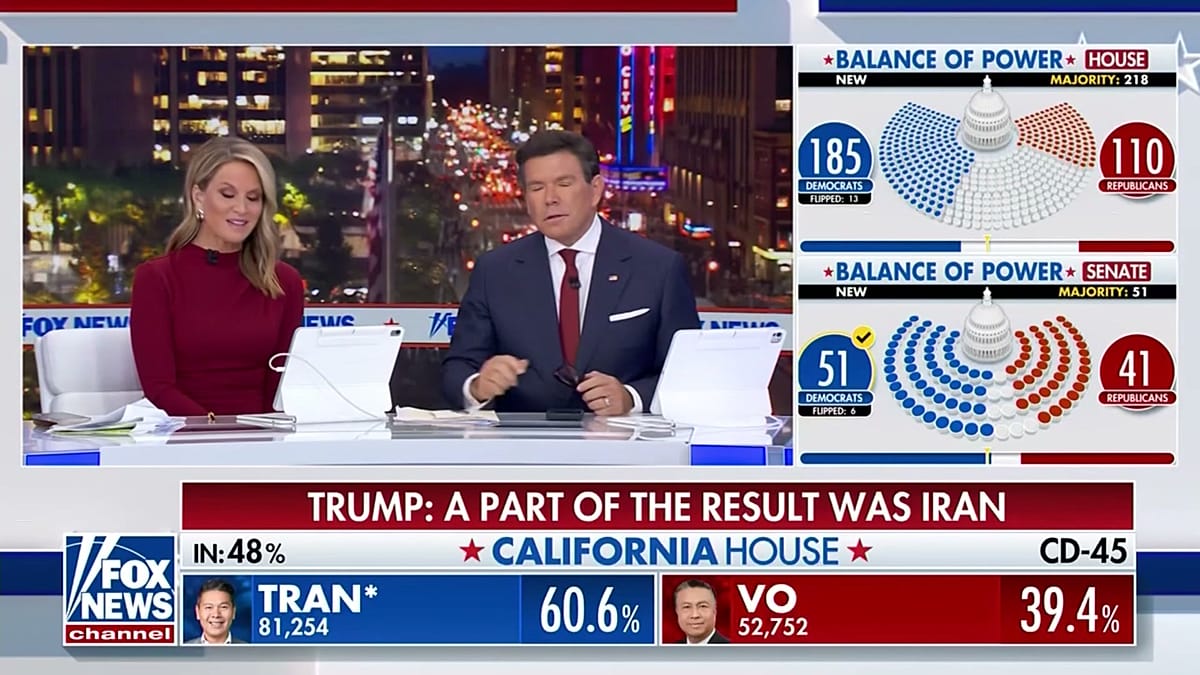
US President Donald Trump has acknowledged that the Republican Party's losses in the midterm elections were partly due to rising petrol prices, which he linked to the ongoing conflict with Iran. In a phone interview with Fox News, Trump said voters broadly supported his actions against Iran but were unwilling to bear the short-term financial consequences of the war.
"I don't think it's the war. I think it's a gasoline price. People agree with what I'm doing on Iran, but they really probably weren't willing to do the short-term consequence of paying more for gasoline," he said.
The president described the higher fuel costs as a short-term problem that could bring longer-term benefits, while acknowledging voters' concerns. His remarks come as the oil markets react to diplomatic efforts in the Strait of Hormuz, though the option of a military strike remains on the table.
A conciliatory tone
In a surprisingly conciliatory tone, Trump also praised his Democratic opponents for their campaign efforts. "I think the Democrats did a good job. I really do. They fought hard," he said.
The midterm results have reshaped the political landscape in Washington, with the Democrats taking control of the House of Representatives. The outcome has been interpreted by many European observers as a rebuke to the president's agenda, though the full implications for transatlantic relations remain unclear.
European leaders have been watching the elections closely, as the new balance of power could affect US policy on trade, defence, and climate. The European relief at the Democratic gains may be tempered by the prospect of continued political gridlock in Washington.
Analysts note that while the Democrats' victory may lead to more oversight of the administration, it is unlikely to fundamentally alter the direction of US foreign policy, particularly regarding Iran and the broader Middle East.
The president's comments on fuel prices echo concerns raised by European allies, who have also felt the economic strain of the conflict. The war in Iran has disrupted global oil supplies, driving up prices across the continent and contributing to inflationary pressures.
Trump's acknowledgment of the political cost of the conflict is a rare admission from a president who has often sought to downplay setbacks. It also signals that the administration may be sensitive to the economic impact of its foreign policy decisions.
As the new Congress prepares to convene, the focus will shift to how the Democrats use their majority to challenge the president's agenda. The Democratic gains in the Senate have further strengthened their position, though the party faces internal divisions on key issues.
For Europe, the midterm results offer both opportunities and challenges. A more assertive Congress could push for a tougher stance on Russia, while also scrutinising US military commitments under NATO. The coming months will reveal whether the new political dynamics in Washington align with European interests.