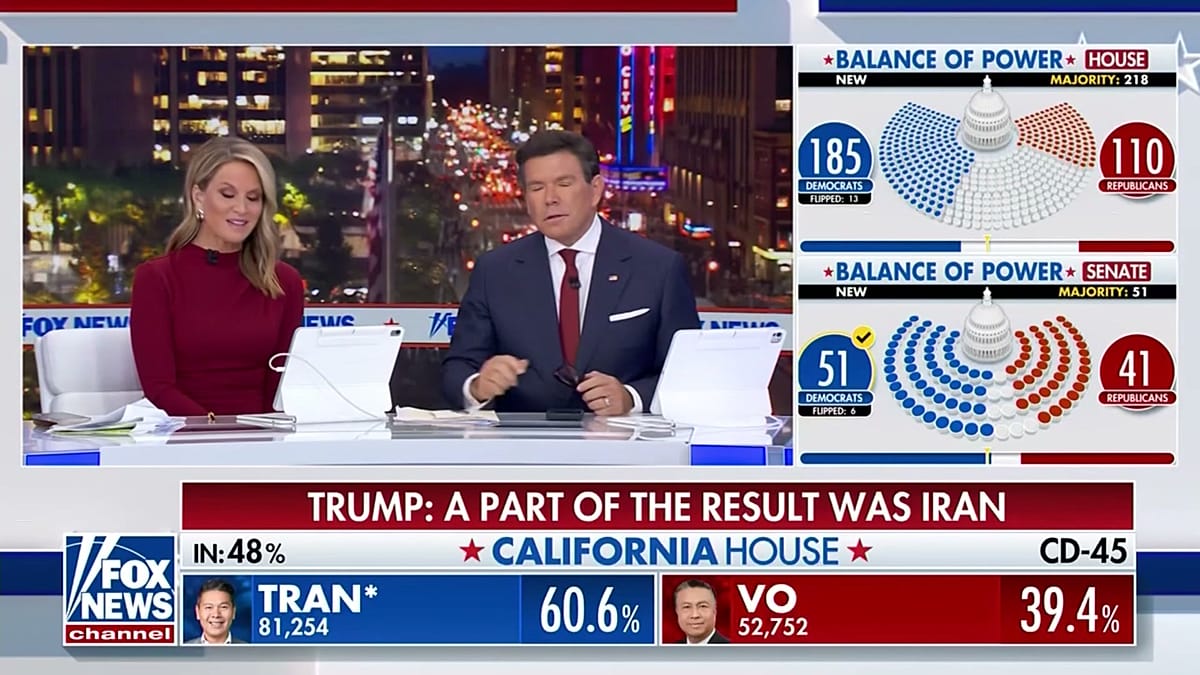
The Democratic Party has secured control of the US Senate in Tuesday's midterm elections, a decisive rebuke to President Donald Trump's administration. With votes still being counted on the West Coast, the party is also projected to win a substantial majority in the House of Representatives. The result marks a significant shift in Washington's political landscape, with implications for transatlantic relations.
From Philadelphia, elections expert Boyd Wagner, former head of polling at Euronews, described the outcome as "a clear signal that American voters are looking for a check on executive power." He noted that the Democratic gains were driven by suburban voters, particularly women, who were motivated by concerns over healthcare and democratic norms.
The European angle is immediate. Brussels has watched the midterms closely, mindful that a divided US government could affect trade policy, NATO commitments, and the ongoing support for Ukraine. Penny Naas, Senior Vice President and Brussels Office Director of the German Marshall Fund, argued that the result does not spell the end of Trumpism. "The president's base remains intact, but his legislative agenda will face serious obstacles," she said. "For Europe, this means a more unpredictable partner, but also an opportunity to strengthen ties with Congress."
Naas also pointed to the 2028 presidential race, suggesting that the Democratic victory could reshape the party's internal dynamics. "The progressive wing will feel emboldened, but the party will need to balance that with the centrist appeal that won these races," she added.
Meanwhile, Poland's constitutional crisis continues to dominate European political discourse. The government of Prime Minister Donald Tusk has been locked in a bitter dispute with President Andrzej Duda over the appointment of judges to the country's highest courts. The standoff has raised fears that judicial independence in Poland could be further eroded, complicating Warsaw's relations with Brussels.
Vera Jourová, former EU Justice Commissioner, assessed the situation in an interview with Europe Today. "The rule of law in Poland is at a critical juncture," she said. "The European Commission has tools to address this, but they must be used carefully to avoid a full-blown confrontation that could destabilise the union." She called for a "pragmatic dialogue" that would allow Poland to restore judicial independence without further polarisation.
The crisis has also drawn attention to the broader EU enlargement race. As the bloc considers new members from the Western Balkans and Ukraine, the ability to enforce democratic standards within existing member states is under scrutiny. Poland's judicial standoff is seen as a test case for the EU's credibility in upholding its founding values.
Ukraine talks and European security
This week, European and NATO officials are set to hold talks with US envoy Steve Witkoff, alongside representatives from the World Bank and NATO, on ending the war in Ukraine. Shona Murray, Euronews' NATO correspondent, previewed the discussions, noting that the focus will be on a potential ceasefire framework and post-war reconstruction.
"The talks are exploratory, but there is a sense of urgency," Murray said. "European countries are keen to ensure they have a seat at the table, especially as the US administration has signalled a desire to reduce its military commitment in Europe."
The discussions come as European troops rehearse a post-war support mission in Poland, preparing for a possible stabilisation force. The exercise underscores the continent's readiness to take on a greater security role, even as questions remain about funding and political will.
The midterm results in the US could also influence the Ukraine talks. A Democratic-controlled Congress may be more inclined to maintain or even increase aid to Kyiv, but the president retains significant latitude in foreign policy. European leaders will be watching closely to see how the balance of power in Washington affects the negotiations.
For now, the mood in Brussels is one of cautious optimism mixed with realism. The Democratic victory is seen as a positive development for transatlantic cooperation, but the underlying tensions in the relationship remain. As one EU diplomat put it, "We have learned not to put all our eggs in one basket."
The coming weeks will reveal whether the new Congress can translate its electoral mandate into a coherent foreign policy. For Europe, the stakes are high: from trade disputes to security guarantees, the partnership with the United States is central to the continent's stability. The midterms have changed the political calculus, but the fundamental challenges remain.