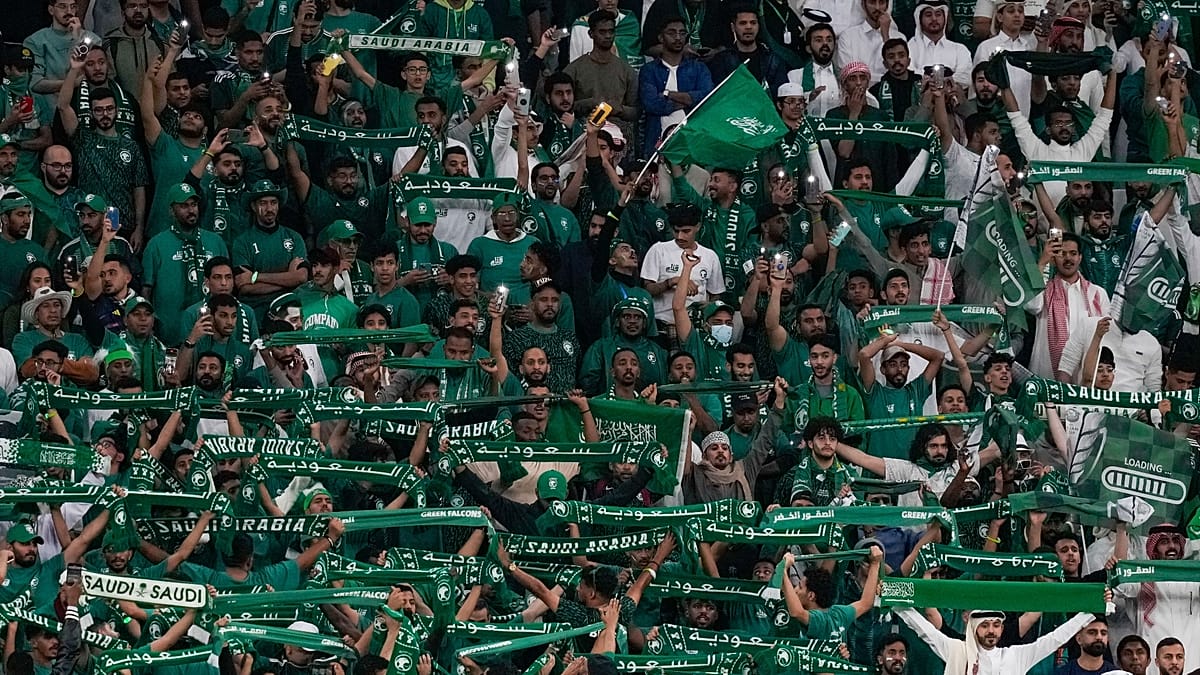
The Asian Football Confederation (AFC) announced on Tuesday that the 2027 Asian Cup, originally scheduled to take place in Saudi Arabia from 7 January to 5 February, will be moved to 23 December 2027 – 21 January 2028. The governing body cited “exceptional circumstances” and “substantial logistical complexities and travel disruptions” arising from regional security developments.
The postponement comes after a series of Houthi attacks on Saudi infrastructure, including airports, since the resumption of the Yemen war in July. These attacks have already forced the cancellation or relocation of several high-profile sporting events in the kingdom, including the Dakar Rally, which was moved out of Saudi Arabia last month, and the WTA Finals, which will now be held at Indian Wells in the United States.
The AFC’s statement said the decision was made after “extensive discussions and close consultation” with Saudi officials. “Exceptional circumstances have been created for the organisation and delivery of the competition as originally scheduled, making the postponement necessary in the interest of all participating teams, officials, spectators and other stakeholders,” the Kuala Lumpur-based body said.
The tournament, which will be staged in Jeddah, Riyadh and Al Khobar, had been touted as a showcase for Saudi Arabia’s growing sports ambitions. Local organisers insisted as recently as last month that preparations were “on schedule”, but pressure from Asian football associations, particularly over player and fan safety, had been mounting.
Yasser al-Misehal, chairman of the local organising committee, sought to reassure stakeholders after the announcement. “The tournament will move to the new dates, and our preparations will continue as planned,” he told the Saudi Press Agency. “We’re working closely with the AFC and all our partners to make sure the tournament runs smoothly and meets the high standards expected of Saudi Arabia and the Asian Cup.”
However, concerns remain. The Korea Professional Footballers Association, representing South Korean players, had earlier voiced severe reservations. Its president, Lee Keun-ho, told Yonhap News Agency last month: “The ongoing military tensions and security instability in the Middle East are issues that cannot be taken lightly.”
The AFC’s decision also affects the Asian Champions League and domestic football matches in Saudi Arabia, which have already been impacted by the security situation. The new dates for the Asian Cup will now be submitted to FIFA for approval.
Regional instability and its wider impact
The postponement is the latest sign of how the conflict in Yemen is spilling over into the wider region. The Houthis, who are fighting a Saudi-led coalition supporting Yemen’s internationally recognised government, have targeted Saudi energy sites and transport hubs. These attacks have not only disrupted sporting events but also raised concerns about the safety of international travel and investment in the Gulf.
For European observers, the situation underscores the fragility of the Middle East’s security environment and its knock-on effects on global sport and business. The decision to move the Asian Cup, a major continental tournament, reflects a broader trend of sporting bodies reassessing their commitments in the region. Earlier this year, Paris Saint-Germain’s Intercontinental Cup title defence was scheduled for Qatar, but such events now face heightened scrutiny.
The AFC’s move also highlights the diplomatic complexities in the region. While Saudi Arabia has sought to position itself as a hub for international sport, the ongoing conflict with the Houthis, who are backed by Iran, has complicated those ambitions. Qatar has been pressing Iran to ease regional tensions, and Egypt’s parliament has voiced support for Saudi Arabia amid the strikes, but a durable resolution remains elusive.
For European football fans, the postponement means a reshuffled international calendar, with the Asian Cup now clashing with the European club season. The new dates, from late December to late January, will see Asian national teams compete during the winter break in many European leagues, potentially affecting player availability for clubs across the continent.
The AFC has not yet announced whether the tournament will retain its original format or if further changes will be made. For now, the focus is on ensuring the event can be held safely, a challenge that is likely to persist as long as the regional security situation remains volatile.