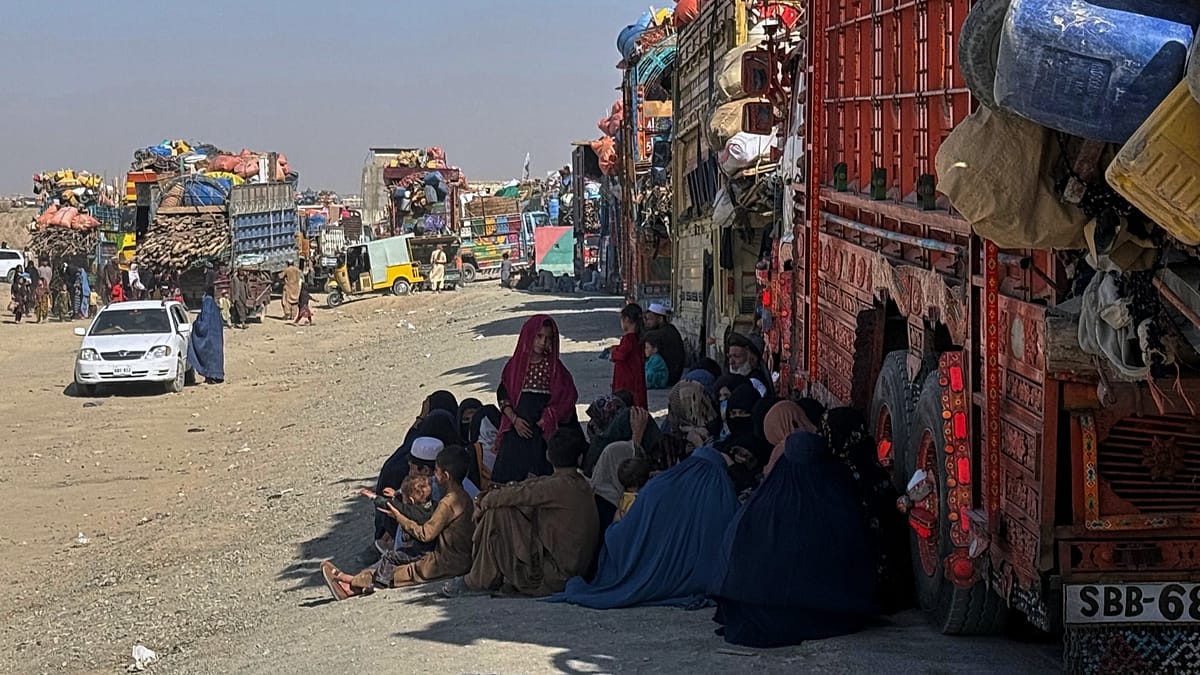
The Taliban administration in Kabul has voiced serious concern over reports that Washington intends to deport more than 150 Afghan nationals via Pakistan, a move that could put former allies of the US military at risk. The Afghan foreign ministry spokesperson, Abdul Qahar Balkhi, issued a statement on Monday urging the United States to adopt a responsible and measured approach.
According to US media reports and the advocacy group AfghanEvac, the deportees include relatives of Afghans who assisted US forces before the 2021 withdrawal. The group, which supports former Afghan allies, has warned that the removal of these individuals could endanger their lives.
Background of the deportation plan
The reported plan would involve deporting Afghan nationals from the United States to Pakistan, which would then oversee their expulsion to Afghanistan. Since the US does not have direct diplomatic or consular relations with the Taliban government, it cannot arrange deportations directly to Afghanistan. Anonymous US officials told The New York Times that Pakistan would facilitate the process.
This comes amid a broader immigration crackdown by the administration of President Donald Trump, which last year imposed travel bans on several countries, including Afghanistan. The administration also sought to end deportation protections for Afghans, some of whom had been granted special immigrant visas following the Taliban's takeover in August 2021.
AfghanEvac has identified that among those expected to be deported are relatives of Afghans who worked with the US military during the two-decade war. The group has repeatedly called on Washington to ensure the safety of its former allies, who face potential retaliation from the Taliban despite a general amnesty announced after the group regained power.
Taliban's stance and international precedents
In his statement, Balkhi said the Islamic Emirate of Afghanistan expresses serious concern over the reported US intention to deport Afghan refugees who have not yet obtained legal residency documents in the United States. He urged Washington to take decisions regarding the fate of Afghan citizens with clear mutual understanding, necessary coordination, and consideration of the rights and legitimate demands of the individuals concerned.
"The Afghan side is ready to interact in this regard in a practical and mutually understanding manner," Balkhi added.
The Taliban has repeatedly promised that former enemies can safely return home, but the United Nations has documented extrajudicial killings, detentions, and abuses against those perceived as collaborators. This has fueled skepticism about the safety of deportees.
Other European countries have also deported Afghan nationals directly to Afghanistan in recent years. Germany and Turkey have carried out such deportations despite concerns from human rights groups about the risks facing returnees. The European Union has been expanding its own deportation mechanisms, as seen in proposals to triple Frontex and expand its powers, which could have implications for Afghan asylum seekers in Europe.
Pakistan, meanwhile, has been implementing a years-long repatriation policy. Earlier this year, its government ordered law enforcement nationwide to arrest Afghan citizens without visas, a move that has pushed back millions of Afghans who fled decades of war. The policy has drawn criticism from human rights organizations and has strained relations between Islamabad and Kabul.
The reported US plan has also raised questions about the fate of Afghan refugees in Europe, where many have sought asylum after the Taliban takeover. The EU's recent moves to expand Frontex's role in deportations beyond its borders could affect how member states handle Afghan asylum claims, potentially leading to more returns to Afghanistan.
Advocacy groups have called on the US and other countries to halt deportations to Afghanistan, arguing that the Taliban's amnesty is not reliable and that returnees face serious risks. The UN has also urged countries to refrain from forced returns to Afghanistan until the security situation improves.
As the situation unfolds, the Taliban's statement signals a willingness to engage with the US on the matter, but the practicalities of deportation via Pakistan remain complex. The coming weeks will likely see further diplomatic exchanges between Washington, Islamabad, and Kabul, as well as continued pressure from human rights groups.