Iran's foreign ministry said on Monday that it could reopen the Strait of Hormuz within two days if the United States meets a set of conditions, shortening the timeline from the seven days first proposed in September. The initial offer was conveyed to Washington through Qatari mediators.
Spokesman Esmaeil Baghaei told reporters in Tehran that the reduced timeframe was "another indication of Iran's good-faith approach," but stressed that "everything depends" on the US side. "We have stated that, if Iran's demands are met, it would be possible to restore security to the Strait of Hormuz and resume the negotiating process within a short period," he added.
Tehran's conditions include an end to hostilities on all fronts, the unfreezing of Iranian assets abroad, the lifting of sanctions on its oil sector, and the removal of the US naval blockade of Iranian ports. Foreign Minister Abbas Araghchi, in an interview with Al Jazeera released on Sunday, added further requirements: Washington must accept a new transit route through the strait agreed between Iran and Oman, reduce US troop numbers in the region, and lift sanctions imposed since August.
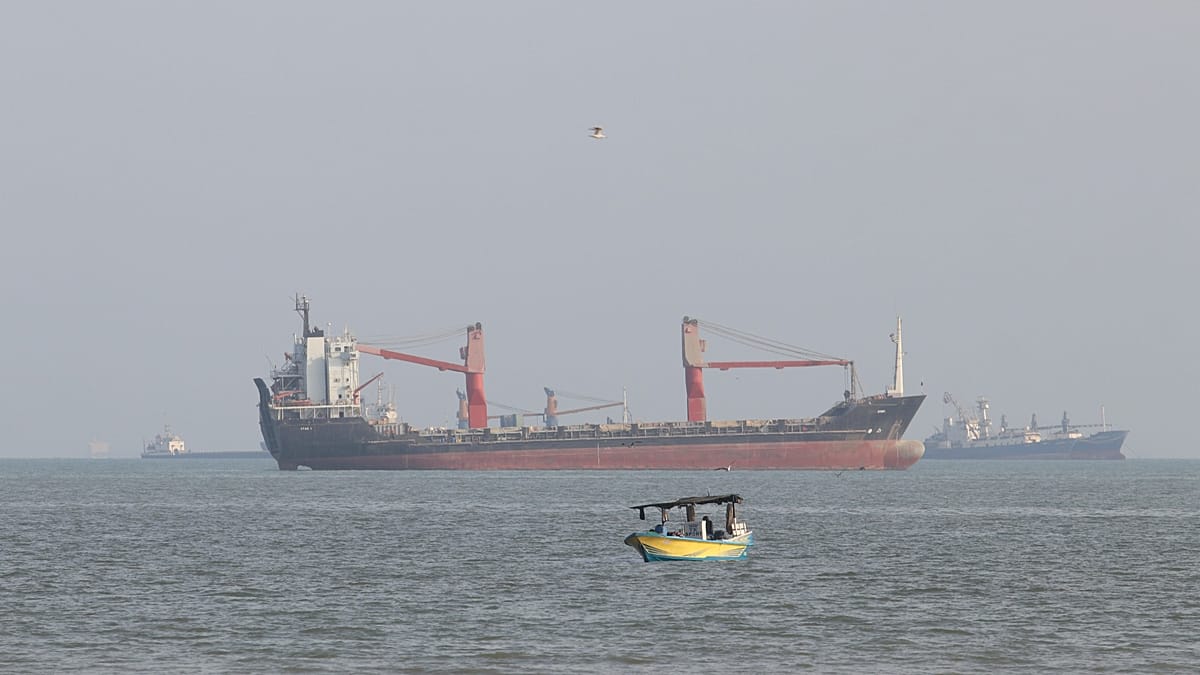
The United States has rolled out a fresh wave of measures since August, which it described as the "economic asphyxiation" of Iran. Since the outbreak of the Iran war in late February, Tehran has claimed it maintains control over Hormuz, regularly targeting vessels that attempt to cross without its authorisation. The US, meanwhile, has imposed a naval blockade on Iranian ports.
Diplomatic push amid military threats
The diplomatic activity comes as both Washington and Tel Aviv have intensified military threats. On Saturday, President Donald Trump said he still had to "take care" of one or two targets, including Pickaxe mountain in central Iran, a site Washington suspects houses nuclear infrastructure—a claim Tehran denies.
Baghaei warned at Monday's briefing that "any act of aggression against Iran, any military attack against Iran, by whatever means, will be met with a powerful, immediate and comprehensive response from us."
Iran's deputy foreign minister, Kazem Gharibabadi, travelled to Doha on Monday to help draft a preliminary agreement, with Qatar acting as mediator. China said it was sending its special envoy Zhai Jun to Iran, Oman and Saudi Arabia to press all sides to halt the fighting. President Xi Jinping said the Middle East and Gulf must not become an arena for great-power competition. Beijing and Muscat jointly called on Washington and Tehran to return to the "Islamabad memorandum of understanding," Chinese state media reported.
Officials in Tehran continued to set red lines. Deputy parliament speaker Ali Nikzad said Iran would not enter nuclear negotiations under pressure, and that previous talks had produced only broken promises. Mohsen Rezaei, secretary of Iran's Supreme National Security Council, said on Saturday that the US would need to meet Iran's conditions before talks could begin. Rezaei said he had received a letter from US Vice President JD Vance but had not yet replied.
US military command CENTCOM rejected Iranian claims that its strikes had targeted only military objectives. CENTCOM said on X that Iran had deliberately hit residential areas, civilian centres and civilian sailors in international waters, and that its attacks had killed at least 20 people.
Anwar Gargash, adviser to the UAE president, told the Manama Dialogue conference in Bahrain that Abu Dhabi did not want a prolonged crisis with Iran but acknowledged that trust had been lost. "This damage was not caused by us. Rather, following Iran's attack on us, trust was damaged," he said.
The diplomatic activity falls ahead of US midterm elections on Tuesday, in which economic pressures linked to the Iran war have increased the likelihood of Republican losses in Congress. The announcement of results on Wednesday coincides with the anniversary of the 1979 seizure of the US embassy in Tehran, during which 52 US diplomats were held for over a year. Tehran-organised demonstrations against the US are expected across the country, while billboards depicting Trump behind prison bars have been erected in Tehran in recent days.
Trump said on Sunday evening that he and Israeli Prime Minister Benjamin Netanyahu had held "very good" talks the previous day and discussed Iran, without elaborating. Netanyahu's office has not commented on the meeting. Since Israeli voters went to the polls last Tuesday, Netanyahu has spoken publicly only about the vote. Results remain inconclusive, with preliminary assessments suggesting he may not secure a coalition, although no alternative government has taken shape.
For European observers, the standoff over Hormuz carries direct implications for energy security and maritime trade. The strait is a critical chokepoint for global oil shipments, and any disruption would reverberate across European economies. The oil price response to the talks has been muted so far, but the risk of escalation remains. Meanwhile, Qatar's mediation efforts have been central to the diplomatic track, and tanker fires reported by Iran's Revolutionary Guard underline the fragility of the situation.