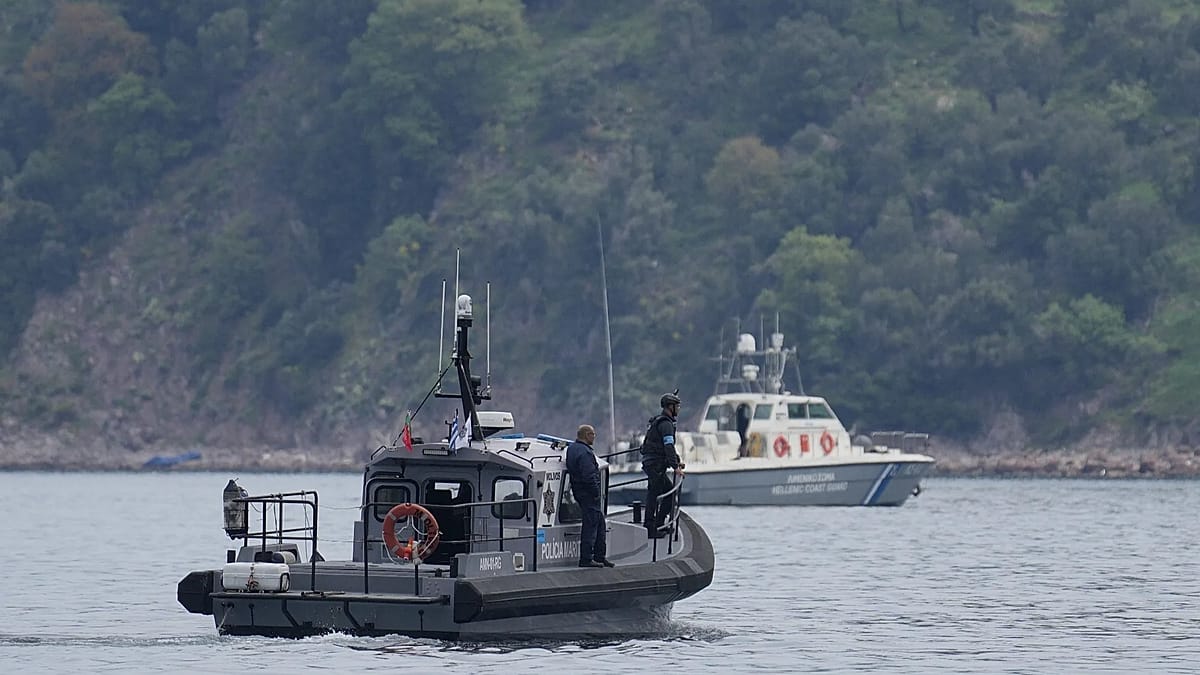
The European Commission has unveiled a sweeping reform of Frontex, the EU's border and coastguard agency, that would triple its workforce and grant it unprecedented powers to deport irregular migrants, monitor social media, and respond to mass arrivals at the bloc's external borders. The proposals, which still require approval from member states and the European Parliament, mark a significant shift in the agency's focus from border management to enforcement and surveillance.
Deportation at the core
Under the plan, Frontex would become the "central EU actor on returns," providing support "from A to Z," according to EU Migration Commissioner Magnus Brunner. While member states retain responsibility for returning migrants to their countries of origin, the agency would help identify individuals, operate return flights, and provide reintegration assistance through a new Return Coordination Centre.
Critically, Frontex would be allowed to operate from one non-EU country to another, enabling officials to assist in deportations before migrants reach European soil. This includes participation in deportations from return hubs, which a recently approved EU law permits to be set up outside the bloc. Civil society groups have warned that such operations would be opaque and difficult to scrutinize.
"The Commission wants to turn Frontex into a deportation agency operating far beyond Europe's borders, where abuses will be harder to expose," said Iftach Cohen, co-director of the NGO Front-LEX, in a statement to Euronews.
Italian socialist MEP Cecilia Strada drew a sharp comparison: "This is shameful and makes Frontex closer and closer to Donald Trump's ICE," referring to the US agency responsible for apprehending and deporting irregular migrants.
Any cooperation with a third country would require a specific agreement negotiated by the Commission and approved by member states and the Parliament. A separate regulation to "digitalise" returns, which would streamline administrative procedures by sharing data among member states, has also raised concerns about excessive data collection, with organisations like Statewatch warning of privacy risks.
Social media surveillance
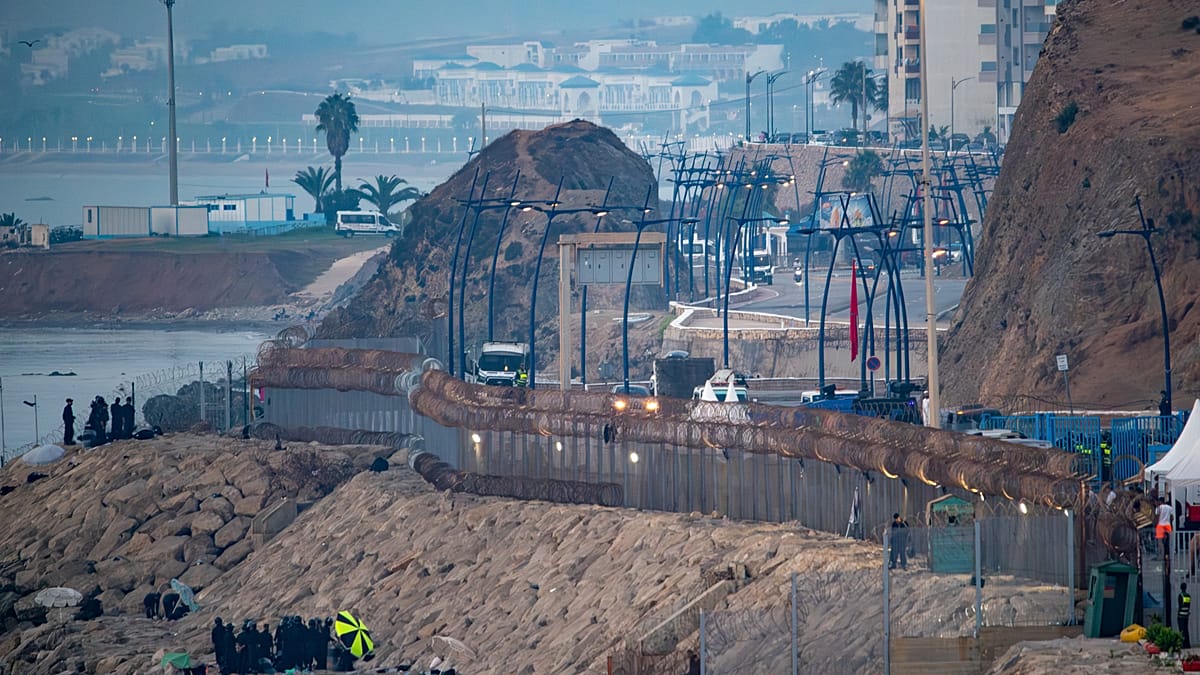
Frontex would also be tasked with monitoring social media to detect advertisements for people-smuggling and anticipate mass arrivals. An EU official acknowledged that the proposal was partly a response to the July crisis in the Spanish enclave of Ceuta, when an estimated 80,000 people crossed from Morocco.
"There was lots of messaging [on social media] before what happened, lots of misinformation. If we have a sort of real-time ability to see these things happening upstream, then it's possible to envisage reactions," the official said.
A new "Online Monitoring and Response Centre" would be established, and Frontex would be allowed to identify illegal content, flag it to social media platforms, and request its removal. The agency would apply for "trusted flagger" status, which would give its flags priority in takedown decisions, though national authorities would remain responsible for determining legality.
Henna Virkkunen, Commission Vice-President for Tech Sovereignty and Security, described the digital dimension as "not a technical annexe to the Frontex reform, but one of its main enablers."
Critics argue the powers could lead to intrusive online surveillance. "Social media surveillance poses serious risks to people's data," said French Green MEP Mélissa Camara. Even far-right MEPs, who typically favour stricter border controls, have expressed reservations. Susanna Ceccardi of Italy's League said: "We will not accept the fight against traffickers on social media becoming a pretext for monitoring citizens' opinions. We will make no concessions and we will not sign blank checks."
Rapid reaction force and staffing surge
The reform also establishes a Quick Reaction Force, inspired by the Ceuta crisis, which could be deployed at short notice to an EU country's external border in an emergency. The decision to deploy would be taken by Frontex's Executive Director, but only after a request from the member state concerned.
The expanded mandate comes with a substantial increase in resources. The Commission wants to triple Frontex's workforce to 30,000 officers by 2041, up from the current 10,000. The standing corps would double from 3,000 to 6,000 officers, supplemented by 7,000 officers seconded from national police forces, and a new "European border and return reserve" of 17,000 officers.
The proposals have sparked a heated debate, with concerns over fundamental rights and the potential for abuse. As the legislation moves through the EU institutions, the balance between security and civil liberties will be a key battleground. For more on related EU migration policies, see the earlier report on Frontex's expanding role.