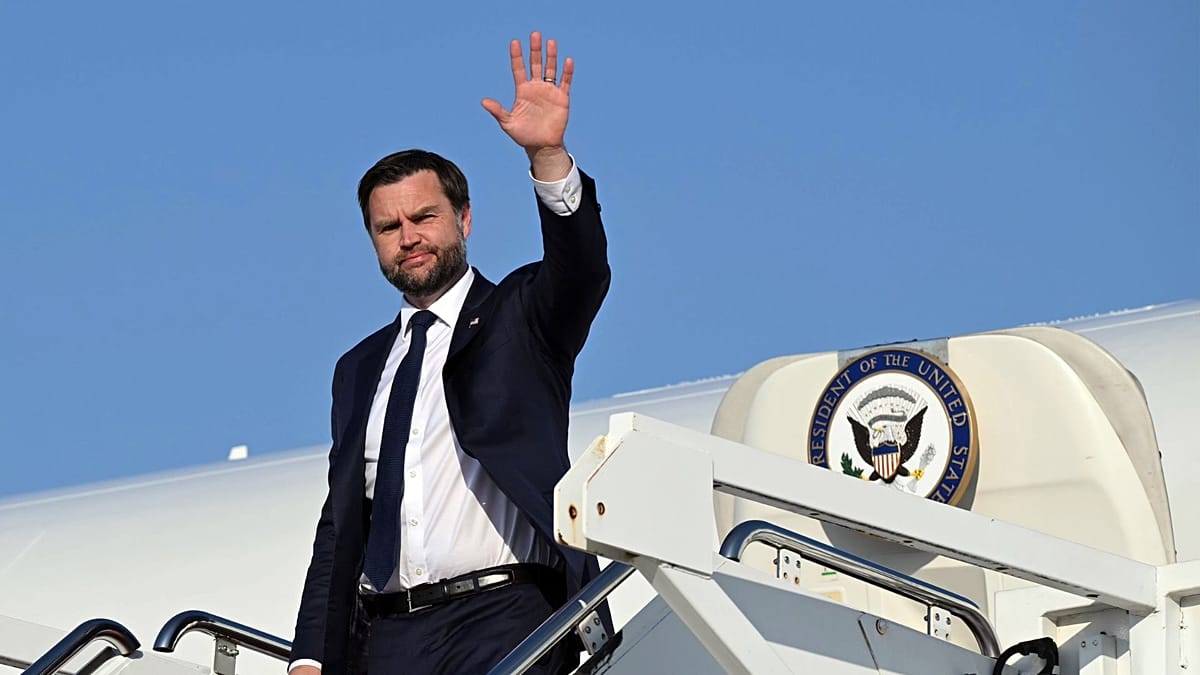
Washington's latest diplomatic overture to Tehran has taken an unexpected turn. According to the Wall Street Journal, Vice President JD Vance has written to Mohsen Rezaei, secretary of Iran's Supreme National Security Council, in an effort to restart talks and head off a possible new US military campaign against the Islamic Republic.
The letter, reportedly sent at the direction of President Donald Trump, is part of a broader effort to determine whether enough common ground exists to persuade Trump to hold off on ordering what officials have described as a “short but intense” strike package in the coming weeks. The outreach comes despite Trump's recent insistence that his administration was not negotiating with Iran and his repeated warnings that further military action could be imminent.
A narrow window for diplomacy
According to the Wall Street Journal, the letter and subsequent contacts between US and Iranian officials have focused on establishing a framework for potential negotiations rather than outlining a detailed peace agreement. Axios separately reported that Vance stressed in his letter that any talks aimed at preventing renewed US strikes would have to address Iran's nuclear programme.
A US official told Axios that Vance had proposed sending the letter and that Trump had welcomed the initiative, though the official declined to specify when it was delivered. However, Trump offered a different account on Wednesday, denying that he had instructed Vance to pursue peace negotiations. The president said the contact was primarily aimed at facilitating the delivery of medical supplies.
“They need help with medical supplies and various things,” Trump told reporters, adding that Vance had sought his approval before proceeding.
Iran's foreign minister, Abbas Araghchi, struck a cautiously open tone on Wednesday. Writing on X, he said: “While our brave armed forces are fully prepared to defend the homeland, Iran is still giving diplomacy a chance to succeed.” He added: “We are still in close and continuous contact with mediators to examine ideas that could guarantee implementation of our seven-day plan even in less than a week.”
The diplomatic push comes as Washington has reportedly warned several Gulf Arab countries to prepare for a possible new military campaign against Iran after the US midterm elections on 3 November, according to the Wall Street Journal. Trump has not made a final decision on whether to authorise further strikes, citing people briefed on the discussions.
For European observers, the stakes are considerable. A renewed US-Iranian confrontation would have immediate consequences for energy markets, regional security, and the fragile diplomatic architecture that European powers have tried to maintain with Tehran. The European shift toward direct engagement with adversaries, seen in recent signals about talks with Russia, reflects a broader continental preference for diplomacy over escalation.
Meanwhile, the timing of the outreach—just days before the US midterms—adds a layer of political complexity. The Federal Reserve's decision to hold rates ahead of the vote highlighted how domestic considerations often shape US foreign policy moves. Whether Vance's letter is a genuine opening or a tactical pause remains unclear.
Iran's nuclear programme remains the central sticking point. European signatories to the 2015 nuclear deal have repeatedly called for a return to compliance, but the accord has been in tatters since the US withdrawal in 2018. Any new negotiation would need to address not only enrichment levels but also regional missile programs and Iran's support for proxies across the Middle East.
For now, the ball is in Tehran's court. Araghchi's reference to a “seven-day plan” suggests that Iranian officials have their own timeline for a possible agreement. But with Trump's public denials and the looming threat of strikes, the window for a diplomatic breakthrough appears narrow.
As European capitals watch closely, the coming days will test whether the Vance letter can translate into a sustained dialogue—or whether it will be remembered as a last-minute gambit before another round of conflict.