The Federal Reserve left its benchmark interest rate unchanged on Wednesday, pausing just days before the US midterm elections. The decision, which kept the target range at 3.75% to 4%, came after a quarter-point hike in September—the first in three years. But the vote was not unanimous: Governor Lisa Cook and Cleveland Fed President Beth Hammack both pushed for another increase, citing persistent inflation.
The split marks a departure from September's unanimous decision and highlights the internal debate over how much more tightening is needed. Cook's dissent is particularly notable given that President Donald Trump is trying to remove her from the board over mortgage fraud allegations she denies. A three-person committee is weighing whether Trump has cause to fire her, and she is expected to appear before it next week. The Supreme Court blocked a previous attempt to oust her in June.
Inflation remains the key driver
US consumer prices rose 3.7% in September from a year earlier, while core inflation—excluding food and energy—climbed to 2.6%. Energy costs have been a major factor: petrol has stayed above $4 a gallon for three months, and diesel hit a record $6.53 in late September. Brent crude, the global benchmark, fell more than 6% on Monday amid diplomatic efforts over the Iran war, but still trades around $111.75 a barrel—far above the roughly $72 before the conflict began.
The Fed's statement acknowledged that "inflation remains elevated" and repeated its commitment to "deliver price stability." It also upgraded its assessment of the economy, saying activity is "expanding at a strong pace," compared with "solid pace" in September. However, it dropped earlier references to the Middle East conflict and supply shocks in energy, becoming less specific about the Iran war's impact.
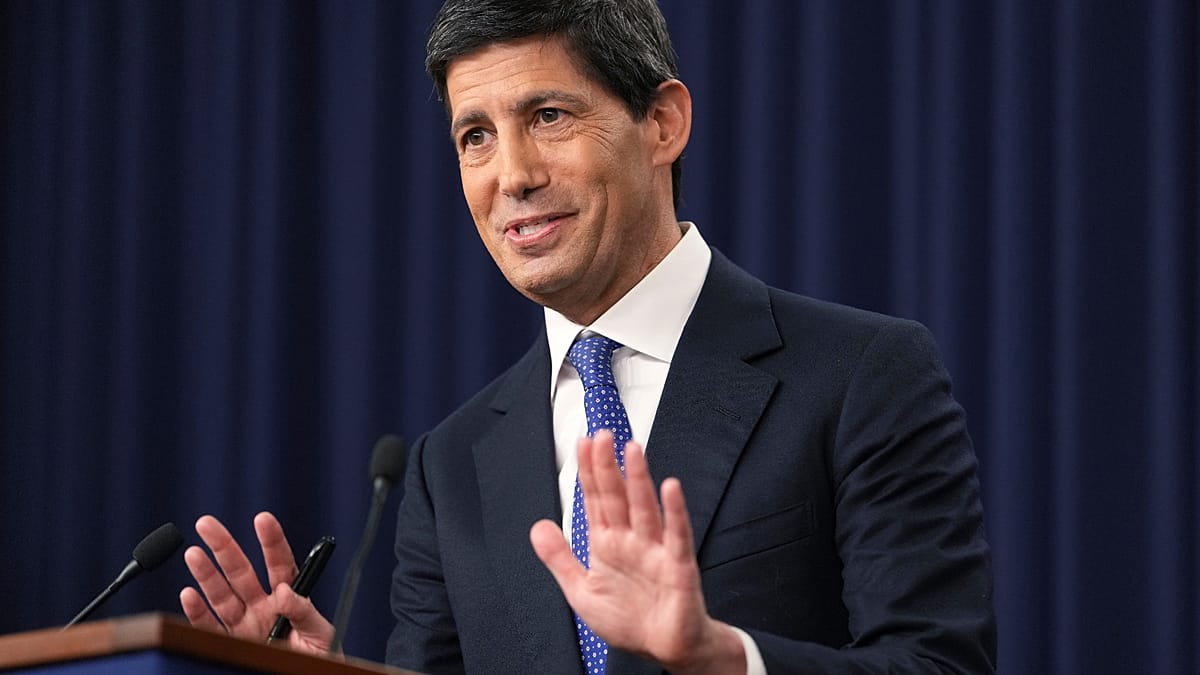
Fed Chair Kevin Warsh, who has long opposed forward guidance, told reporters that more information would help the committee decide on the appropriate policy stance. "I don't prejudge meetings," he said earlier this month in Bangkok. He also announced a change to the Federal Open Market Committee's calendar: from autumn 2027, some meetings will be dedicated to strategy rather than rate decisions, reducing the number of rate-setting sessions from eight to seven in 2027 and six in 2028.
Higher borrowing costs are already affecting households and businesses. The average 30-year US mortgage rate hit a three-year peak of 7.4% in early October, and hiring has slowed sharply—employers added just 29,000 jobs in September, with unemployment rising to 4.2%. Yet the economy has shown resilience, growing at an annualised 2.2% in the second quarter, with the Atlanta Fed's GDPNow tracker pointing to 3.5% for the third.
Markets are now pricing an 87.5% chance of a quarter-point hike at the Fed's December 8-9 meeting, up from 73% on Tuesday, according to CME Group's FedWatch tool. Investors will get more clues on Thursday when the US releases its first estimate of third-quarter growth and September data for the Fed's preferred inflation gauge, the personal consumption expenditures price index.
For Europe, the Fed's path has direct implications. The European Central Bank is set to announce its own decision soon, and inflation pressures across the eurozone remain a concern. Meanwhile, German mortgage rates have hit their highest level since 2009, reflecting the global tightening cycle. As the Fed weighs its next move, European policymakers will be watching closely, especially given the transatlantic rift over Trump's overtures to Putin and the ongoing oil market volatility.