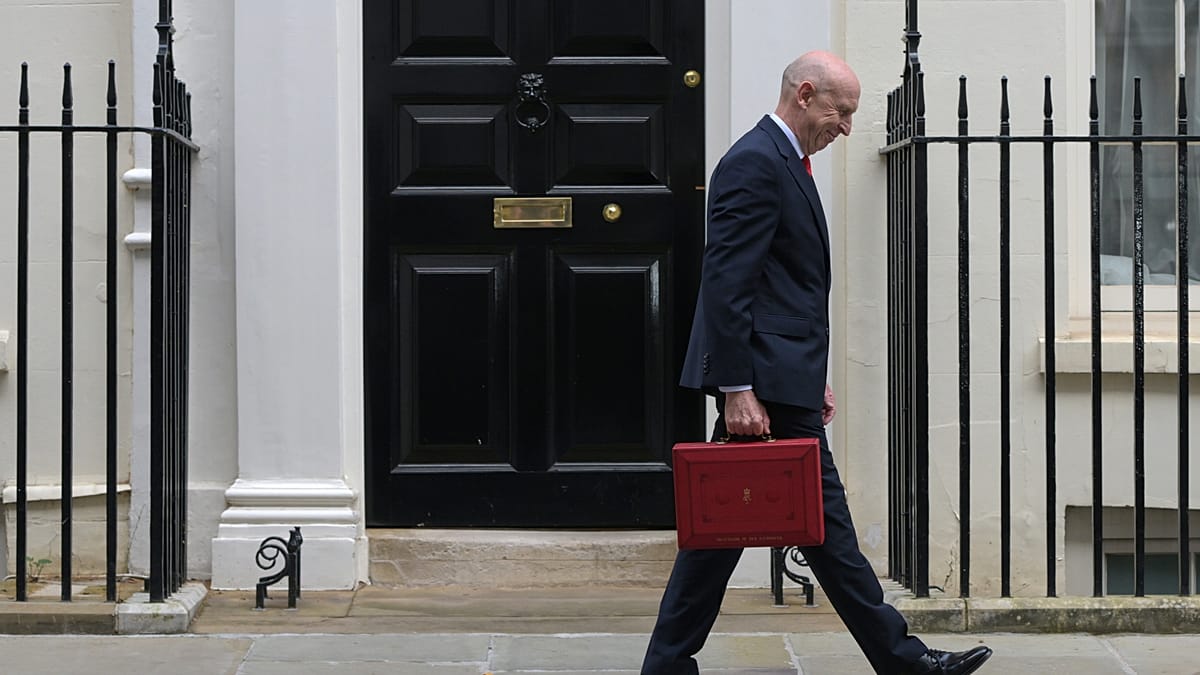
Britain's new Chancellor of the Exchequer, John Healey, presented his inaugural budget to Parliament on Wednesday, setting out the Labour government's fiscal priorities amid a challenging economic backdrop. The statement came as the Office for Budget Responsibility (OBR) revised growth forecasts slightly upward for the current year, though the outlook remains modest.
Healey told MPs that gross domestic product (GDP) is now expected to grow by 1.2% in 2026, a marginal upgrade from the 1.1% forecast issued shortly after the start of the US-Iran conflict. However, growth is projected to slow to 1.0% in 2027, a downward revision from the 1.6% that Labour had anticipated in early March. The figures underscore the fiscal constraints facing the new administration as it seeks to balance public investment with debt sustainability.
Bank profits to face higher tax
In a move designed to shore up public finances, the government will double the additional surcharge on bank profits from 3% to 6%. This increase in the corporate tax rate for financial institutions is intended to help fund a one-off subsidy for households grappling with soaring energy bills. Healey framed the measure as a fairness issue, arguing that banks should contribute more during a period of high energy costs driven largely by the Middle East conflict.
Energy support for households
To alleviate the pressure on consumers, the Chancellor announced a direct payment of £100 to 20 million households. The payment is aimed at helping families through the coldest months and into spring, as gas and electricity prices remain elevated. Healey described the measure as a targeted intervention to "take the pressure off in the coldest months and see people through to the spring."
First-time buyer ISA overhaul
In a bid to ease the path to homeownership, Healey unveiled plans to replace the Lifetime ISA with a new First-Time Buyer ISA. The change includes a revision to the ISA penalty, ensuring that savers receive at least their original contributions back if the property they wish to buy exceeds the purchase limit. "For every young person who is working hard, saving what they can, and dreaming of their first home, I'm taking action," he said. "I'm announcing that a first-time buyer ISA will replace the lifetime ISA. From today, I'm dealing with the ISA penalty, so that if the home you want costs more than the limit, you will get back at least what you put in."
Pension triple lock and national care service
Healey confirmed changes to the triple lock, the mechanism that ensures the state pension rises annually by the highest of inflation, average wage growth, or 2.5%. He also announced the creation of a new national care service, which he said would save £15 billion a year by the end of the 2030s and £50 billion by 2050. The Chancellor argued that a rising state pension and a national care service would work together to support older people, "taking the burden off families, taken the burden off our NHS."
Business rates devolution
In a significant shift towards fiscal decentralisation, Healey outlined a "roadmap to fiscal devolution." He announced that 100% of business rates will be retained locally by the end of the decade, with 20% of revenue going to mayors from next year. From 2028, a share of income tax receipts will also be devolved to mayors. This move is likely to be watched closely by other European nations grappling with regional imbalances, as it represents a notable transfer of fiscal power from Westminster to local leaders.
The budget comes at a time when fiscal debates are intensifying across Europe. The UK's approach to bank taxation and energy subsidies may offer a contrast to the ongoing discussions in Brussels over EU-wide taxes and the bloc's own budget negotiations. While the UK charts its own course post-Brexit, the pressures of energy costs and housing affordability are shared by many European countries.
Healey's budget is a balancing act: it seeks to address immediate cost-of-living concerns while laying the groundwork for longer-term structural reforms. The reaction from opposition parties and economic analysts will likely focus on whether the growth forecasts are realistic and whether the tax increases on banks could dampen investment in the financial sector, a key pillar of the UK economy.