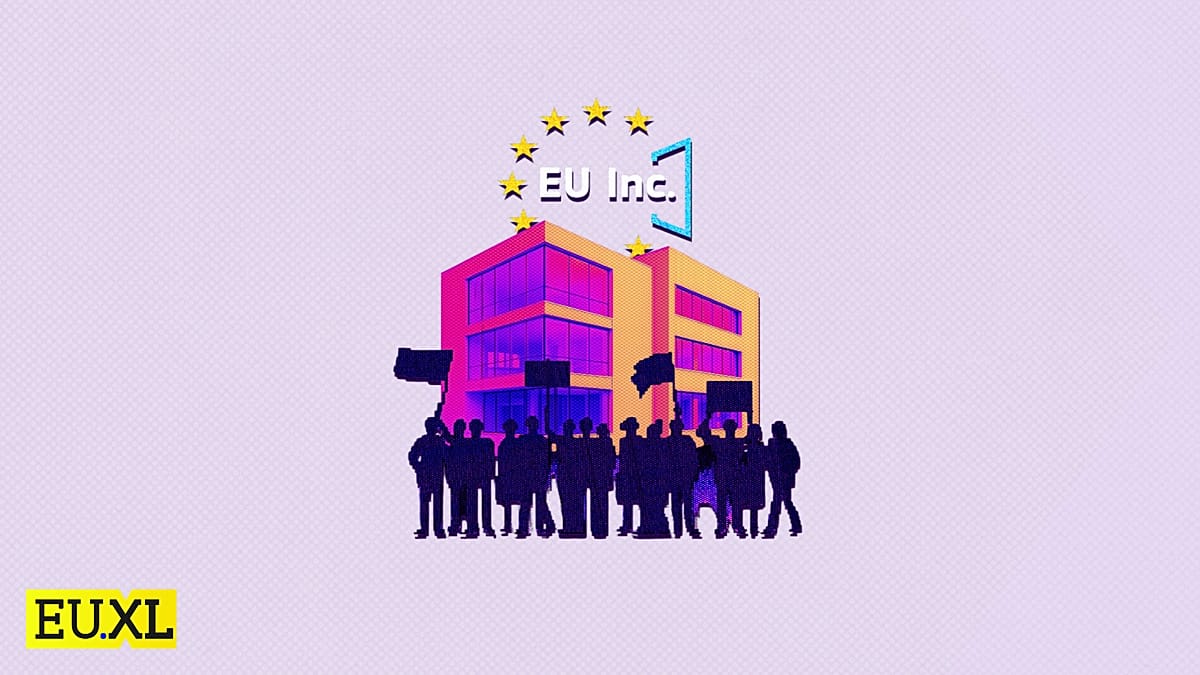
The European Commission's ambitious plan to create a unified company form for startups across the bloc—dubbed EU Inc—has hit a significant roadblock in the European Parliament. The proposal, which would allow new businesses to register digitally within 48 hours at a cost of up to €100 and with no minimum share capital, was meant to simplify cross-border operations for the continent's most dynamic firms. But political disagreements over worker participation rights have stalled progress, raising questions about whether the flagship initiative can survive in its current form.
A clash over worker protections
Two votes in the Parliament's Legal Affairs Committee were cancelled in October because political groups could not agree on how to handle employee representation. Under the current draft, companies opting for the EU Inc structure would follow the employee-participation rules of the country where they choose to register. Trade unions and centre-left MEPs fear this could allow firms to shop for jurisdictions with weaker board-level protections, undermining decades of worker rights legislation across the Union.
Business-friendly lawmakers, on the other hand, argue that applying multiple national systems would defeat the purpose of a single, harmonised regime. They contend that the plan's complexity would deter startups from using it, particularly those operating in several member states. The deadlock has left the proposal in limbo, with both sides digging in ahead of a new committee vote pencilled in for 5 November.
The EU-INC campaign, which has gathered more than 26,000 supporters and backing from figures linked to Stripe, Mistral AI, Klarna, and Wise, says the real problem is the opposite. They point to the deletion of a central EU register from the Council's negotiating text and restrictions on harmonised stock options—both seen as essential for attracting talent and scaling across borders. Commissioner Stéphane Séjourné has publicly stated that the regime cannot work without stock-option harmonisation, a view echoed by many in the startup ecosystem.
The stakes are high for Europe's ambition to become a global tech hub. While the bloc has produced successful startups, many still choose to incorporate in the US or the UK to access more flexible legal frameworks. EU Inc was designed to change that, offering a single, recognisable structure that would reduce legal costs and administrative burdens. But the current impasse threatens to dilute the proposal to the point where it loses its appeal.
For workers' rights advocates, the issue is non-negotiable. They argue that any new company form must not become a loophole for avoiding collective bargaining or board-level co-determination, which are cornerstones of many European labour models, particularly in Germany and the Nordic countries. The fear is that a race to the bottom could erode protections that took decades to establish.
Meanwhile, the Council's position has also raised eyebrows. The removal of the central EU register from the text—a key element for transparency and cross-border oversight—has been criticised by the EU-INC campaign as a step backwards. They argue that without a single point of registration, the benefits of the 28th regime would be severely diminished.
The provisional plenary vote is scheduled for 12 November, but both dates remain subject to change. The project is not dead, but the fight is now over how much of it survives. A compromise could still be reached, perhaps by allowing companies to choose between the EU register and national ones, or by setting minimum standards for worker participation that apply across all member states.
As the debate continues, the broader context is one of European competitiveness. The bloc is racing to catch up with the US and China in technology and innovation, and the startup ecosystem is a key battleground. Earlier reports have highlighted the difficulties the Commission has faced in pushing the plan forward, and member states and unions have pushed back on several fronts. The outcome of the upcoming votes will be a test of whether Europe can balance its social model with its economic ambitions.
For now, entrepreneurs and investors are watching closely. The promise of a 48-hour registration and a cost cap of €100 was a bold statement of intent. Whether that promise survives the political process remains to be seen. The next few weeks will be crucial in determining the fate of EU Inc—and with it, the bloc's ability to foster the next generation of homegrown tech champions.