Rescue teams in Spain worked through the night at the scene of a catastrophic train collision near Toledo, where at least 68 people were killed. The crash, which occurred on a high-speed line south of Madrid, has left the country in mourning and raised urgent questions about rail safety.
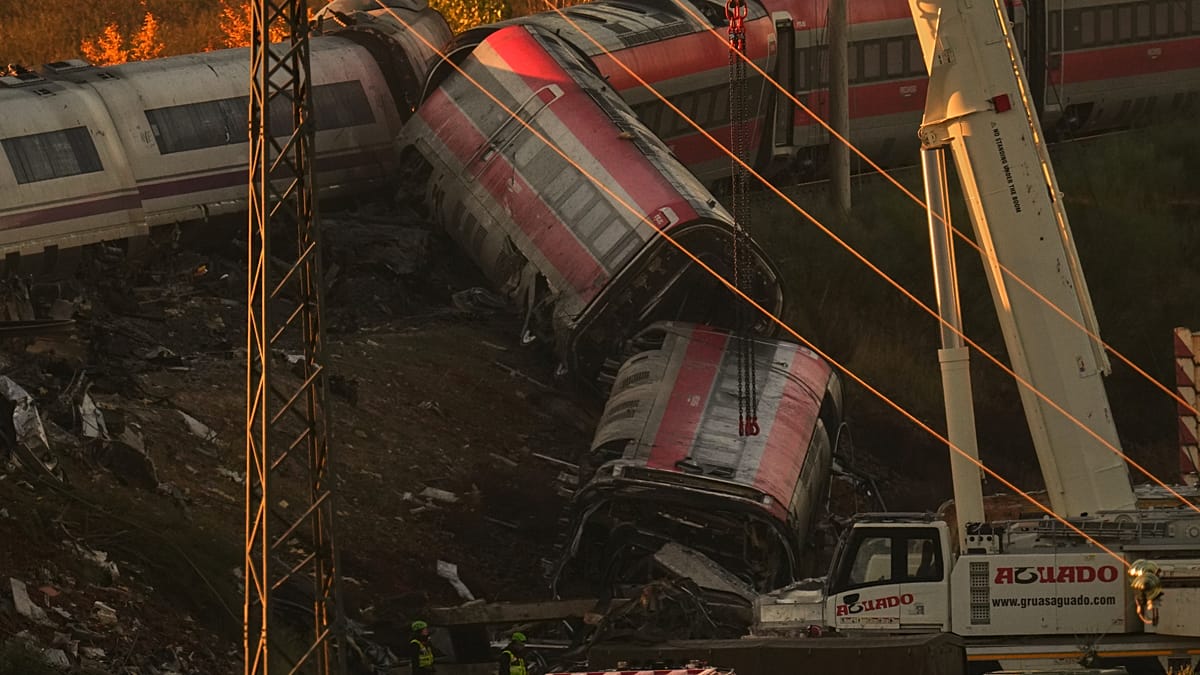
By dawn, heavy cranes were carefully lifting sections of the mangled carriages, their twisted metal a stark reminder of the force of the impact. Emergency services, including firefighters, medical personnel, and police, have been combing the debris for survivors and recovering the deceased.
Identification efforts and temporary morgue
Authorities have set up a temporary morgue near the crash site to facilitate the identification of victims. Forensic teams are using DNA samples and personal effects to match remains, a painstaking process that officials say could take days. Families of the missing have been gathering at a designated center in Toledo, awaiting news with a mixture of hope and dread.
Spanish Prime Minister Pedro Sánchez visited the scene and declared three days of national mourning. In a brief statement, he expressed condolences to the families and pledged a full investigation. "We will not rest until we understand what happened and ensure such a tragedy never occurs again," he said.
The collision involved a high-speed train and another train, though the exact circumstances remain unclear. Initial reports suggest one of the trains may have derailed before being struck. Investigators are examining signaling systems, track conditions, and the actions of the drivers and control center staff.
This disaster comes just nine months after another deadly high-speed rail incident in Spain, prompting renewed scrutiny of the country's rail network. The second high-speed rail disaster in nine months has shaken public confidence in a system long considered among the most advanced in Europe.
Attention is now turning to the Madrid control centre, which coordinated train movements on the affected line. Questions are being raised about whether human error or technical failure played a role. The Madrid control centre under scrutiny as investigators review communication logs and data recorders.
Rescuers have been working in difficult conditions, with the wreckage scattered over a wide area and some carriages partially buried in the embankment. Specialized equipment, including thermal imaging cameras, was used overnight to detect any signs of life. The operation has been described as "complex and delicate" by emergency coordinators.
As the sun rose, the scale of the devastation became clearer. Aerial footage revealed the full extent of the damage, with carriages crumpled like accordions and debris strewn across the tracks. The aerial footage reveals the scale of what is now one of Spain's worst rail disasters in decades.
The crash has also reignited debates about infrastructure investment and maintenance. Spain's high-speed network, the largest in Europe, has been a source of national pride, but critics argue that budget cuts and privatization have compromised safety. The broader economic pressures facing the country are now intersecting with questions of public safety.
For the families of the victims, the wait for answers is agonizing. Many have traveled to Toledo from across Spain, hoping for news of their loved ones. Local residents have opened their homes and offered food and water to the rescue teams, a small gesture of solidarity in the face of tragedy.
As the investigation continues, European rail authorities are watching closely. The crash serves as a stark reminder that even the most modern systems are vulnerable to failure. For now, the focus remains on the grim task of recovery and the beginning of a long process of mourning.