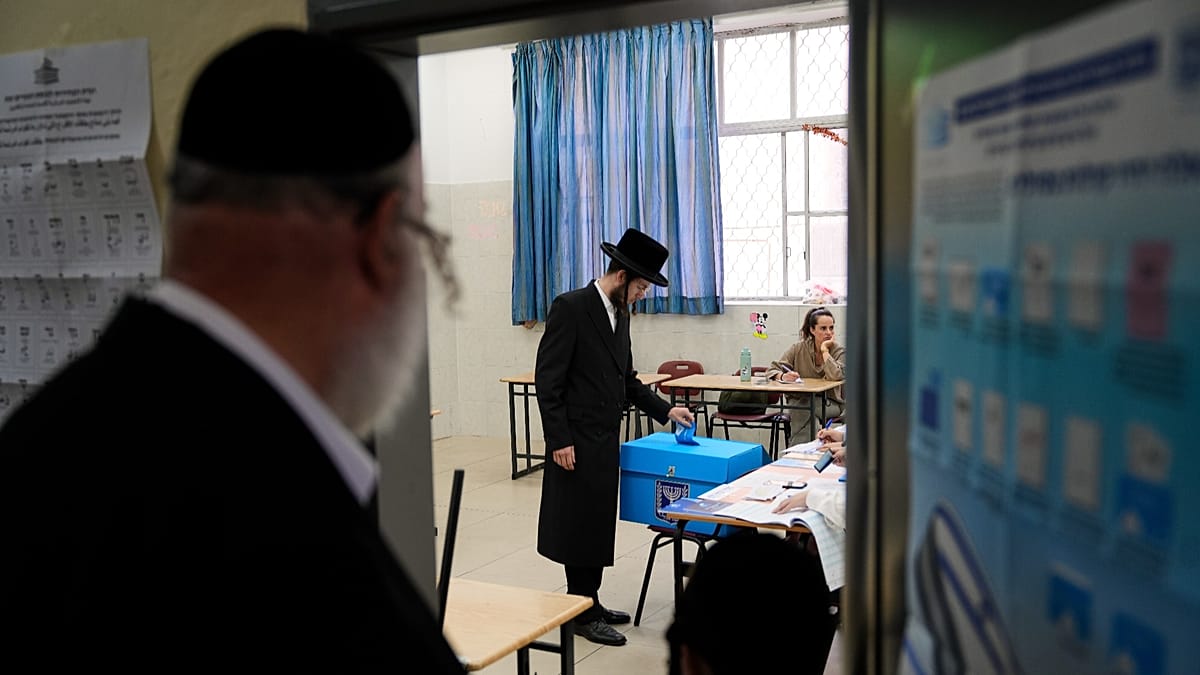
Israel's Central Elections Committee announced on Wednesday that it had found no evidence of fraud in last week's parliamentary election, a setback for Prime Minister Benjamin Netanyahu's efforts to cast doubt on the outcome. The committee's review, which examined every complaint filed, concluded that the vote's integrity was not compromised.
Netanyahu and his allies had repeatedly alleged, without providing proof, that Arab-led parties had "stolen" the election, possibly with foreign assistance. These claims were widely seen as an attempt to delegitimize the results, which showed his religious-nationalist bloc falling short of a parliamentary majority.
Committee's findings
In a statement, the committee said: "The review found no evidence of irregularities that compromised the integrity of the election or affected its results." Acting elections director Dean Livne emphasized that each complaint was investigated "individually and thoroughly," but no substantiation was found for allegations that the results were invalid.
Livne added that the certified results, which were formally approved on Wednesday, "accurately reflect the choices voters made at the ballot box." A separate probe by the Shin Bet intelligence service into alleged foreign interference is still ongoing, according to a committee spokesperson.
The certification clears the way for President Isaac Herzog to begin consultations with the parties that won seats in the Knesset. After two days of meetings, Herzog will nominate the candidate—most likely Netanyahu or his chief rival, opposition leader Gadi Eisenkot—who appears best positioned to form a coalition government. This sets the stage for weeks of intense negotiations.
Neither Netanyahu's bloc nor Eisenkot's alliance secured the 61 seats needed for a majority, raising the possibility of a unity government between the two rivals or a coalition involving Eisenkot and some Arab-led parties. If neither can cobble together a government, Israel would face another election early next year.
The political uncertainty in Israel comes amid broader regional tensions, and European observers have been closely watching the developments. The election results have implications for the Middle East peace process and for Europe's diplomatic engagement with the region.
Netanyahu's attempts to discredit the vote have drawn criticism from international partners, including European Union officials, who have stressed the importance of respecting democratic outcomes. The EU has maintained a consistent position on the need for a negotiated two-state solution, and any prolonged political crisis in Israel could affect its stance.
Meanwhile, the ongoing Shin Bet investigation into alleged foreign interference is being monitored by European intelligence agencies, which have expressed concern about similar disinformation campaigns targeting their own elections. The G20 photo controversy earlier this year highlighted the strained relations between Western democracies and Russia, and the Israeli election saga echoes those tensions.
As the coalition talks begin, the focus will be on whether Netanyahu can retain power or whether a new alignment emerges. The coming weeks will be crucial for Israel's political future, and for the stability of a region that remains a key priority for European foreign policy.