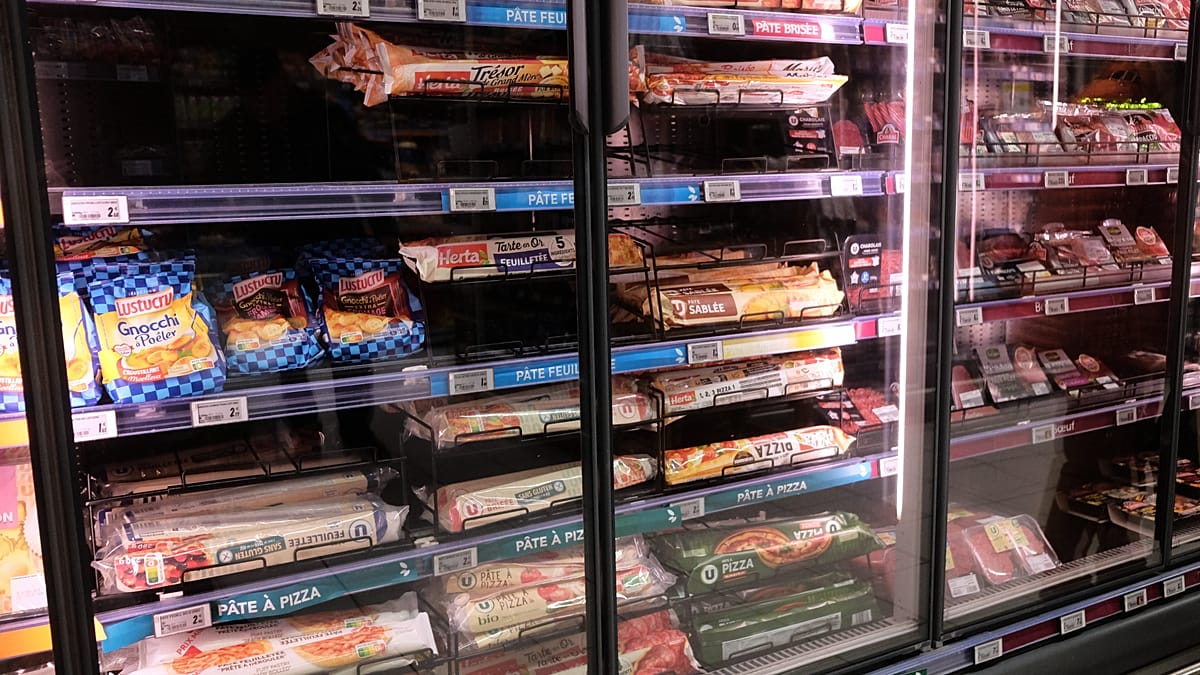
On Monday night, a coordinated cyberattack disrupted supermarket refrigeration systems across at least six European countries, causing significant food spoilage and raising concerns about the vulnerability of critical retail infrastructure. The incident, which affected stores in Sweden, Belgium, Luxembourg, Estonia, and Ireland, also extended to Italy, where four Coop supermarkets in Sicily were damaged.
Three Coop stores in Catania and one in Palermo experienced a suspected cyberattack that caused temperatures in their refrigeration units to spike, forcing staff to discard food that had become unsafe. Giuseppe Spadaro, general manager of the Radenza group, which operates the Coop stores, initially reported the incident to the Italian news agency Ansa. Danilo Radenza, the group's chief executive, later confirmed: "We have verified that it is an attack on our remote control system for frozen-food counters. After a careful screening it appears there is no further damage, but the attack did take place."
Wider impact and investigations
The attack, which occurred around 4 a.m., pushed refrigerator temperatures in affected supermarkets above 50 degrees Celsius, leaving retailers with mountains of spoiled goods by opening time. The European Union has described the situation as "highly worrying," and no group has yet claimed responsibility, though authorities suspect the incidents are connected.
In Italy, the postal police are working to trace the origin and scale of the attacks, and to determine whether they are linked to similar events elsewhere in Europe. Spadaro noted, "We are calculating the damage. In some cases we have fixed the problem. We have already contacted the National Cybersecurity Agency and activated protocols to carry out in-depth investigations."
The National Cybersecurity Agency (ACN) has received reports of an incident affecting a Tuscan company in the collective catering sector and has detected an attack against a frozen-food producer in Emilia. The agency has recommended that food distribution chains urgently check whether their control and remote assistance systems are exposed to the internet, strengthen remote access through VPNs and multi-factor authentication, review privileged accounts, and update or replace unsupported devices.
A meeting is scheduled for tomorrow between the ACN, sector federations, and major national large-scale retail companies. The Parliamentary Committee for the Security of the Republic (Copasir) will also request information from the government on Tuesday. Palazzo Chigi has convened a separate meeting with the director of the ACN and intelligence chiefs, coordinated by undersecretary Alfredo Mantovano.
This is not the first such incident. On 12 October, a cyberattack hit major supermarket chains in France, causing millions of euros in losses. The latest attacks highlight the growing threat to supermarket fridges that are increasingly connected online, and experts warn that AI could escalate such threats in the future. The UK's NCSC chief has also warned of AI-driven cyberattacks on critical infrastructure by 2028.
Italian authorities are treating the incident with the utmost seriousness, and the government's swift response underscores the potential economic and public health implications. As investigations continue, the retail sector across Europe is being urged to bolster its cybersecurity defenses to prevent further disruptions.