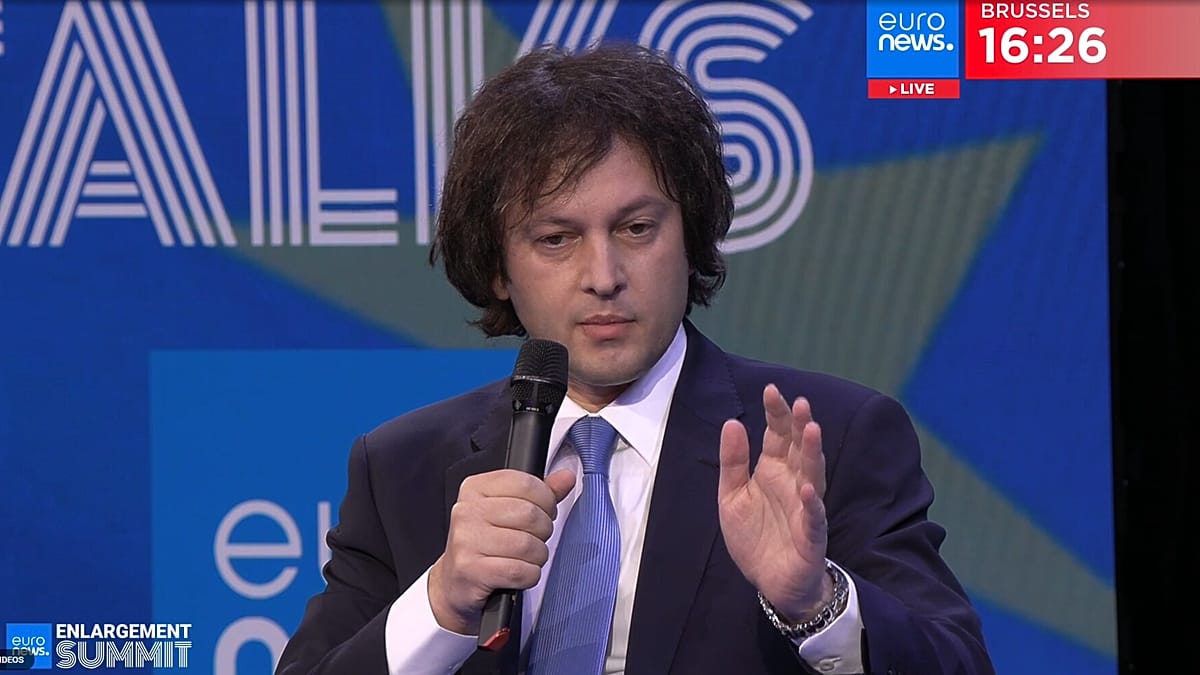
Moldovan Prime Minister Vasile Tofan has told Euronews that a foreign state is suspected of orchestrating a series of cyberattacks on his country's government databases, though he stopped short of naming any specific nation. Speaking via video link to the Euronews Enlargement Summit after cancelling his trip to Brussels due to the ongoing assault on government IT systems, Tofan revealed that hackers had breached civic registration systems and extracted personal identification numbers of Moldovan citizens.
"Civic registrations have been under attack, and about 750,000 data sets about two individuals have been extracted from databases," Tofan said. He added that authorities had received early warnings of the attacks and suspected a foreign state was responsible. "We suspect the state actor to be behind it, and seeing what’s happening in Europe, this will remain on the agenda of the European countries," he said. "At this point, you could only guess. But I don’t think the list of suspects is very long."
The breach, which targeted the personal identification numbers of a significant portion of Moldova's population, underscores the growing vulnerability of public institutions across the continent. Moldova, a candidate for EU membership, has been increasingly targeted by cyber operations as it deepens its integration with Western structures. The incident comes amid a broader pattern of cyberattacks across Europe, with several countries reporting intrusions into critical infrastructure and public services.
Wider European cyber threats
This week alone, seven European countries reported cyberattacks on supermarket refrigeration systems, causing food spoilage and supply chain disruptions. In a related incident, cyberattacks on supermarket fridges hit nine European countries, highlighting the cross-border nature of these threats. Additionally, emergency alert applications in Ukraine and Russia have been compromised, sending out false warnings to citizens. These incidents suggest a coordinated effort by malicious actors to destabilize European societies, with many experts pointing to Russia as a likely source, though definitive attribution remains elusive.
For Moldova, the timing is particularly sensitive. The country has been navigating a delicate geopolitical balancing act, with its pro-Western government pushing for EU accession while facing internal and external pressures. The cyberattack on its civic registry could have long-lasting implications for citizens' privacy and trust in state institutions. Tofan's remarks indicate that the government is taking the threat seriously, but the lack of a named suspect leaves many questions unanswered.
The European Union has been stepping up its cybersecurity cooperation among member states and candidate countries. The recent EU enlargement race has brought cybersecurity into focus as a key criterion for accession, with frontrunners like Moldova and Ukraine expected to align with EU digital standards. The attack on Moldova's databases may accelerate efforts to bolster cyber defenses across the region, as European leaders recognize that no country is immune to such threats.
As Tofan noted, the list of suspects is not long, but the implications are vast. The breach of personal data of hundreds of thousands of Moldovans could be used for identity theft, disinformation, or further destabilization. The Moldovan government is now tasked with not only securing its systems but also restoring public confidence in its ability to protect citizens' data.
The incident also raises questions about the broader security landscape in Europe. With air raid apps in Ukraine and Russia hit by cyberattacks, the line between state and non-state actors becomes increasingly blurred. European nations are on high alert, and the Moldovan case may serve as a wake-up call for the entire continent to invest more in cybersecurity infrastructure and international cooperation.
For now, Moldova is left to deal with the aftermath of a significant breach, while the international community watches closely. The coming weeks may reveal more about the perpetrators, but as Tofan hinted, the answer may already be known behind closed doors.