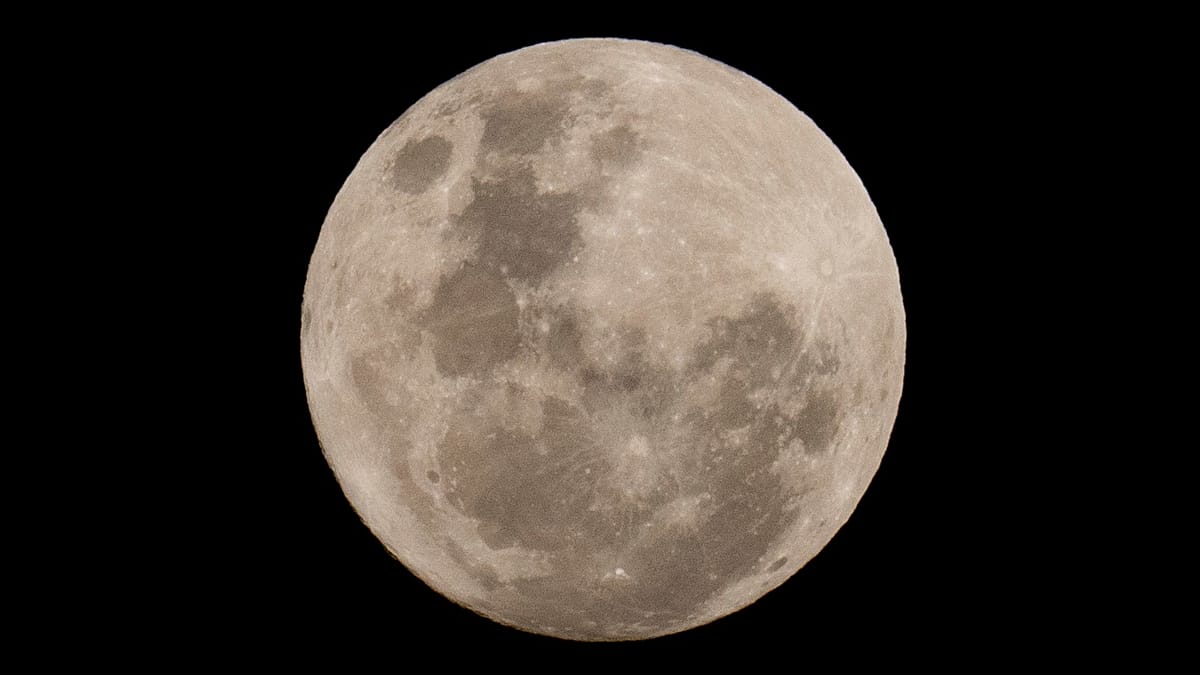
Early Wednesday morning, a stray piece of a SpaceX Falcon 9 rocket slammed into the lunar surface, marking the second known accidental crash of a rocket stage into the Moon. The 4-tonne component, roughly the length of a London bus, was traveling at an estimated 8,700 kilometers per hour—seven times the speed of sound—when it struck the western limb of the Moon, a region bathed in sunlight at the time.
Astronomers had been tracking the object since it was launched on January 15, 2025, as part of a mission to deploy two lunar landers. The upper stage had been drifting in space for over a month, and its trajectory made a collision with the Moon increasingly likely. Despite the impact, experts stress that there is no risk to Earth. The crash is expected to have carved a crater roughly 27 meters in diameter and 5 meters deep.
Because the impact flash lasted less than a second and was likely too faint to observe from Earth, scientists were unable to confirm the collision immediately. No spacecraft orbiting the Moon was positioned to witness the event live, so images of the crash are not yet available. NASA, however, has stated that the incident provides a valuable opportunity to collect lunar data and refine techniques for tracking objects in space.
An avoidable accident
Space experts point out that the crash was not inevitable. If the upper stage had been nudged into a heliocentric orbit—around the Sun—the collision could have been prevented. This oversight has reignited the debate over space debris, a problem that is growing as more objects crowd Earth's orbit and the cislunar space around the Moon.
The incident comes at a pivotal moment for lunar exploration. The Moon's South Pole is emerging as the next frontier, with NASA's Artemis program aiming to land astronauts there later this decade. SpaceX is a key partner in that effort, building the lunar lander that will be tested during the Artemis III mission. As robots and humans prepare to return to the Moon, scientists argue that improved debris monitoring and traffic management are essential to avoid collisions and ensure the safety of future missions.
The crash also lands at a delicate time for SpaceX. The company released its first earnings report as a public entity on Wednesday, and while it beat Wall Street's revenue expectations, its shares have been volatile. The event adds to the scrutiny of the company's operations, even as it remains a central player in the commercial space race.
This is not the first time a rocket stage has unintentionally hit the Moon. In 2022, a Chinese rocket segment did the same, raising similar concerns. With more launches planned by both governmental agencies and private companies, the risk of such incidents is likely to increase unless stricter guidelines are adopted.
For now, the Moon's new crater serves as a reminder of the challenges ahead. As European space agencies and commercial partners push forward with their own lunar ambitions, the need for coordinated space traffic management has never been more urgent. The European Space Agency has already called for greater international cooperation on debris mitigation, and this event underscores that call.
While the crash itself is not a threat, it highlights the broader issue of space sustainability. As SpaceX's financial debut shows, the commercial space sector is booming, but with growth comes responsibility. The next steps in lunar exploration—whether through Artemis or other programs—will depend on our ability to manage the debris we leave behind.