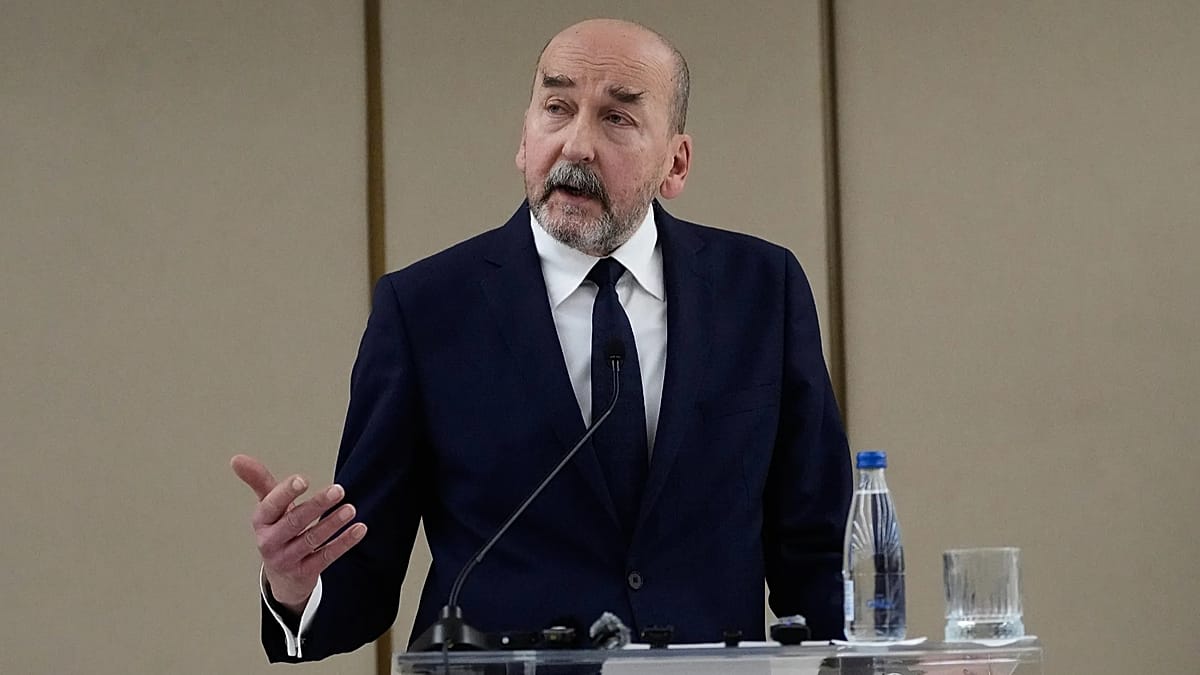
Serbia's student movement has formally nominated Professor Radomir Saičić, a distinguished chemist and academician, as its candidate for the presidential election scheduled for December 27. The choice, while not unexpected, signals a deliberate attempt to offer voters an alternative to the political style that has dominated the country for over a decade.
Saičić, known for his quiet demeanor and deep religious faith, is not a conventional politician. His reputation rests on academic achievements, personal integrity, and the respect he commands among colleagues. The movement sees him as embodying a break from the cult of personality that has characterized Serbian politics under Aleksandar Vučić.
“I entered the movement believing that a change of government makes sense only if it also brings a change in the system of values, including the way those in power treat citizens. That is why I will advocate a sovereign Serbia in which the Constitution is respected and every citizen can live with dignity,” Saičić said.
He added: “As President, I will respect the limits of my constitutional powers, publicly explain my decisions, and demand the same accountability from other holders of public office. It is time to restore dignity to the office of the President of Serbia. Faith gives me the moral strength and the obligation to keep my word. Science teaches me to ask questions and seek evidence, while life has taught me to take responsibility when things are most difficult. I am ready to take that responsibility now.”
A different kind of candidate
The nomination is more than a personal choice; it is a statement about the kind of leadership the student movement wants to promote. Saičić's profile—expertise, modesty, and moral authority—stands in stark contrast to the political ambition and centralized power that have defined the Vučić era. The movement hopes this will resonate with voters weary of corruption and institutional decay.
The presidential election will take place on December 27, with the final deadline for candidacies set for December 6, according to the official electoral timetable. The campaign is expected to focus on the rule of law, anti-corruption measures, and restoring public trust in state institutions. A central promise will be a comprehensive review of contracts and agreements signed by Vučić's governments, particularly those involving major public investments.
Uncertainty over SNS participation
One of the biggest unknowns is whether the Serbian Progressive Party (SNS), which ruled under Vučić for more than a decade, will even field a candidate. Vučić has openly favored boycotting the election, citing internal divisions within the party. “There are different views: some want to support an independent candidate, others want the SNS to put forward its own candidate, while some, like me, want us simply to ignore the elections and let them boast that they have taken everything and won 94 per cent of the vote,” he said, describing the vote as “the most meaningless elections in history.”
A boycott could undermine the election's legitimacy, but it also reflects the SNS's reluctance to risk another defeat after losing the October parliamentary elections. Meanwhile, Serbia remains in a tense political atmosphere. Although the previous government is formally still in office, arrests and investigations involving senior figures from the former administration continue. Vučić accuses the new parliamentary majority of political persecution, while the student movement insists that accountability must apply to everyone.
The broader European context adds another layer. Serbia's path toward EU integration has been complicated by recent political shifts, as new leaders ask for time while questions mount over Brussels' expectations. The country's absence from the recent EU-Western Balkans summit has also delayed a key foreign policy test, highlighting the challenges ahead.
For the student movement, Saičić's candidacy is an attempt to redefine the nature of political power in Serbia. After 14 years of centralized presidential authority, they promise a functioning state where institutions serve citizens, officials are accountable, and power is exercised within constitutional limits. Whether this vision resonates with voters remains to be seen, but the movement has already changed the terms of the debate.



