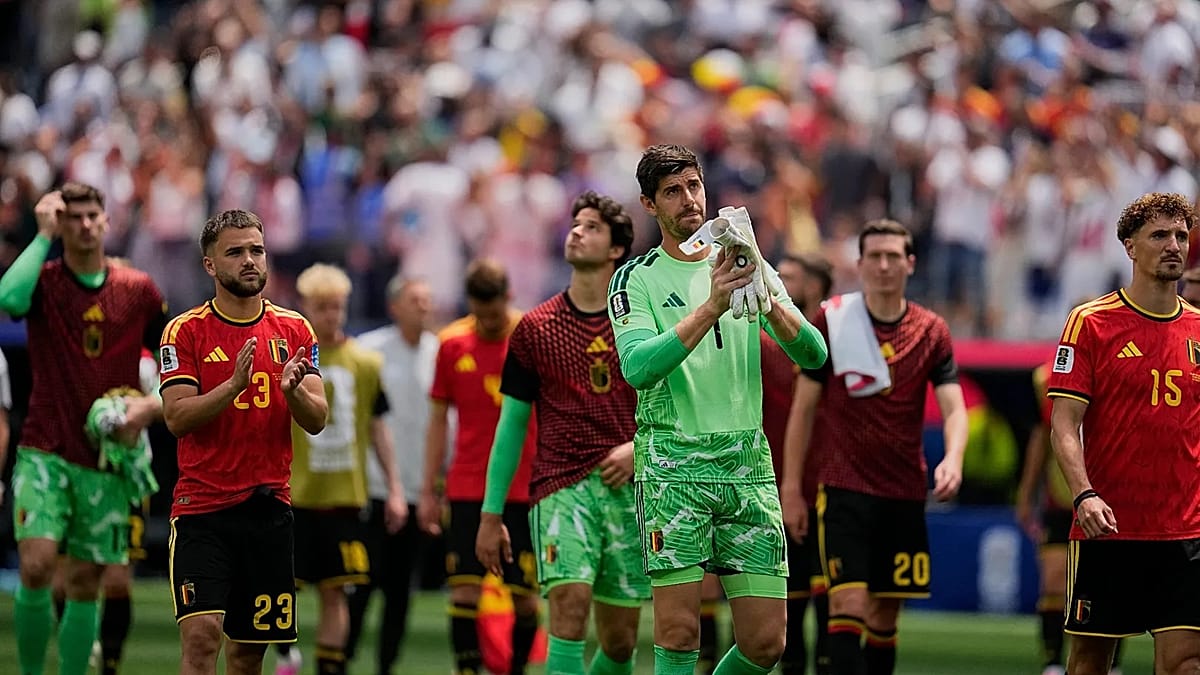
Rade Bogdanović, a former striker who played for Atlético Madrid and Werder Bremen, has apologised after making racist remarks during a World Cup match broadcast on Serbian state television. The incident occurred on Sunday during coverage of the Group G fixture between Belgium and Iran, which ended in a goalless draw.
While working as a pundit for RTS, Bogdanović said: "I've always said those players — and I'm really not racist — but Black players lack the concentration to last more than 60 to 80 minutes." He added: "When we played, we sometimes had to protect our own players to stop them making mistakes."
Another pundit on the panel pushed back against the remarks, but Bogdanović continued, claiming that while he was generalising, "the majority lack concentration." The comments quickly sparked outrage on social media, with many calling for accountability.
Apology and Fallout
Bogdanović and RTS have since issued apologies for the incident. The former Yugoslavia international, who made three appearances for his country after debuting in 1997, acknowledged the harm caused by his words. However, the episode has reignited debates about racism in European football broadcasting, particularly in the Balkans.
Belgium, a multicultural nation with a significant diaspora population, has faced its own struggles with racism in sport. The match itself was a tense affair, with both sides struggling to break the deadlock. The result left Belgium and Iran on two points each, with one game remaining in Group G. Egypt currently leads the group after a 3-1 victory over New Zealand in Vancouver.
The controversy comes amid broader discussions about diversity and inclusion in European football. In recent years, several high-profile incidents have prompted leagues and broadcasters to adopt stricter anti-racism protocols. For example, French cities imposed curfews on minors during the World Cup after violence, highlighting the tensions that can arise around major tournaments.
Bogdanović's comments also echo a pattern of racial stereotyping that has long plagued the sport. Critics argue that such remarks, even when followed by apologies, reinforce harmful biases and undermine efforts to create a more inclusive environment. The Serbian broadcaster's swift apology suggests an awareness of the reputational risks, but some observers question whether the response goes far enough.
Belgium, meanwhile, continues to navigate its own complex relationship with race and identity. The country's colonial history in the Congo and its contemporary multicultural makeup often intersect in debates about representation. Belgium's recent decision to grant visas to a Taliban delegation for EU migration talks in Brussels underscores the geopolitical dimensions of such discussions.
As the World Cup progresses, the incident serves as a reminder that football remains a powerful lens through which European societies confront issues of race, nationalism, and belonging. For now, Bogdanović's apology may close the immediate chapter, but the broader conversation about racism in the sport is far from over.