On a cool Madrid evening, tens of thousands of fans stream into a purpose-built stadium in the south of the capital. They come in purple wigs, coin skirts, and glitter. They are Colombian, Venezuelan, Peruvian, Spanish, German, Dutch, and Danish. For a few hours, they are all she-wolves.
Shakira has not returned to Spain with a simple concert. After an eight-year absence, the Colombian superstar has chosen Madrid for the only European stop of her Las Mujeres Ya No Lloran world tour: twelve shows, more than 600,000 tickets, and a temporary venue that holds around 55,000 people a night.
Around the stage, she has built a mini-city called Macondo Park, a nod to Gabriel García Márquez's fictional town. It offers food, music, literature, children's areas, exhibitions, and a second stage. The gates open hours before Shakira appears; this is not just a concert but a festival celebrating Latin culture, which she has exported for over three decades.
A symbolic return
The choice of Madrid is deliberate. Shakira has said she wanted to celebrate a city with a huge Latin American community, where Latin culture is part of everyday identity. But there is another layer: Madrid and Barcelona share a historic rivalry that goes beyond football. Barcelona was Shakira's home for over a decade, where she lived with her ex-partner, football star Gerard Piqué, and where her children grew up. After a painful break-up, she left for Miami. Now her only major European landing is in Madrid.
The symbolism is hard to miss. The woman who left Barcelona under difficult circumstances returns to Spain, taking over the rival city for four weekends. She seems to relish it. "Good evening, Madrid. I can't believe I'm here," she tells the crowd. Then she recalls a comment made before her return: "With the face you left with, just look at the face you've come back with."
From heartbreak to anthem
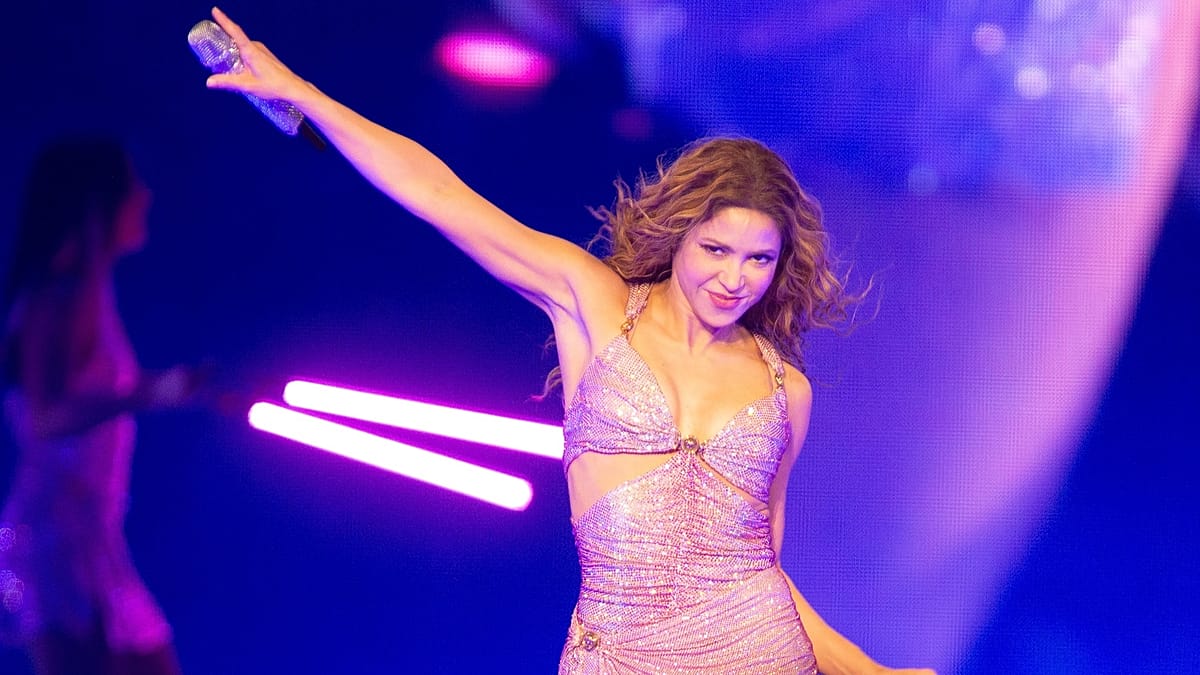
The show opens with 'La fuerte', followed by 'Girl Like Me', 'Las de la intuición', and 'Estoy aquí'. In minutes, the Shakira of the 90s, the global Latin pop star, and the woman who turned a break-up into music share the same stage. A digital Shakira rebuilds herself from sand; then the real one makes her way through the crowd. "There is nothing like when a she-wolf is reunited with her pack," she says.
The pack responds with every word of 'La tortura', 'Te felicito', 'TQG', and 'Hips Don't Lie'. They sing 'Waka Waka'. The night's theme becomes clear: falling does not mean staying on the floor. Shakira acknowledged that the last few years "have not been easy" and called her return to Spain "a gift." Then she dances again.
A feminine space
There is something profoundly feminine about the night—not because it is only for women, but because women can take up all the space. They can be loud, sensual, silly, angry, vulnerable, and strong. They can wear violet wigs, shake their hips for two hours, and dance with strangers. A line by Chilean writer Isabel Allende appears on screens: "Women on their own are vulnerable, but together we are invincible." It resonates with mothers dancing with daughters, groups of friends hugging, and women of all ages and countries singing together.
For Latin women, the show feels familiar: pop, reggaeton, salsa, batucada, percussion, and hips. Barranquilla is present even in Madrid. The era's defining line is blunt: "Women no longer cry, women cash in." And cash in she does.
Business and empowerment
The residency is a massive business operation. Twelve nights over four weekends, more than 600,000 tickets, a venue built for the occasion, and an estimated €150–200 million in direct spending for Madrid. Instead of touring Europe, Shakira has convinced fans from dozens of countries to travel to her. The line born from a break-up takes on a literal meaning: women cash in, too.
As the concert nears its end, the screens display the ten commandments of the she-wolves: independence, freedom, sisterhood. The message is clear—this is not just a comeback; it is a declaration. And Madrid, a city already grappling with housing protests and social tensions, has become the stage for a celebration of resilience and Latin pride.