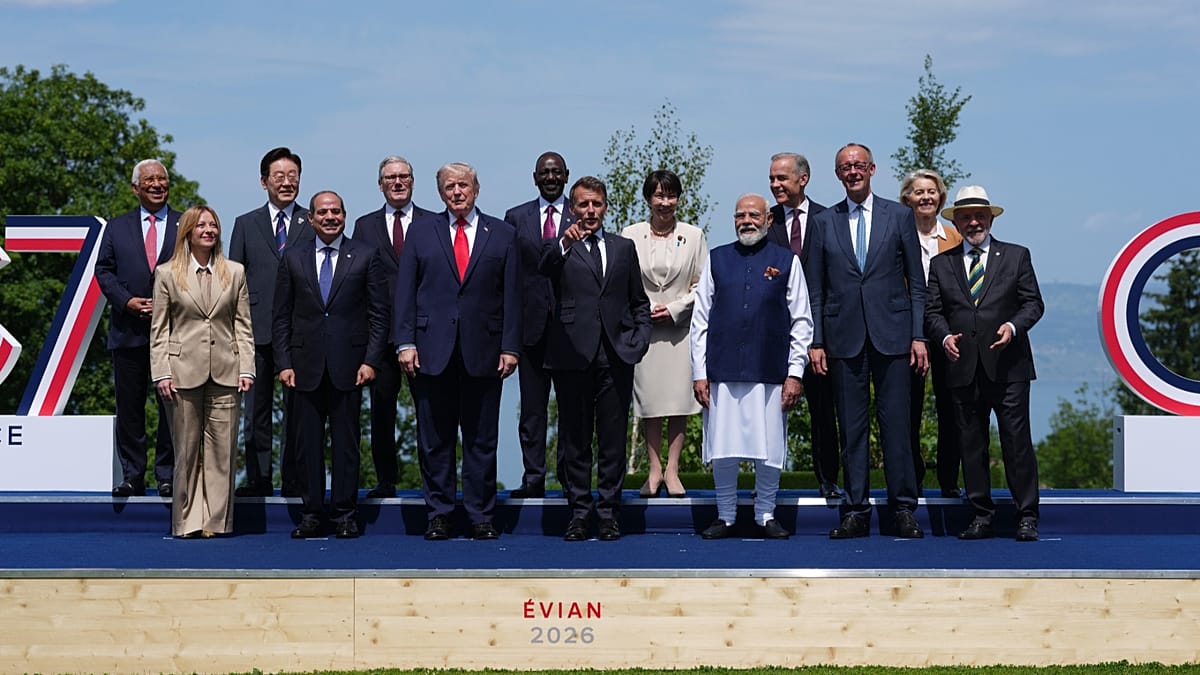
Leaders of the world's largest economies gathered in Évian-les-Bains, France, for three days of talks that covered Ukraine, the Middle East, artificial intelligence, and global economic imbalances. The summit, hosted by French President Emmanuel Macron, was marked by a tone of cautious optimism, with diplomats repeatedly using the word "convergence" to describe the discussions. Here are the six most significant takeaways.
1. Ukraine: Stronger Support, but No Breakthrough with Trump
Ukraine emerged as a clear winner from the summit, with G7 leaders issuing a robust statement of support for Kyiv. They pledged to accelerate deliveries of air defence systems, bolster Ukraine's energy infrastructure, and tighten sanctions against Russia. Notably, the leaders said they were "ready to consider" granting Ukraine licences for military production, a critical step for Kyiv, which urgently needs US-made Patriot systems to counter Russian bombardment.
However, Ukrainian President Volodymyr Zelenskyy did not secure a full bilateral meeting with US President Donald Trump. Trump merely said he would "take a look" at the idea of licensing, a shift from his earlier outright dismissal. In a notable change of tone, Trump also stated that it is Russia, not Ukraine, that "should make a deal," and suggested Washington might "soon" reinstate sanctions on Russian oil and gas, which had been temporarily waived to ease global energy pressures linked to the conflict in Iran.
2. Middle East: A Fragile Truce and Unexpected Remarks
The Middle East dominated discussions, particularly after the US and Iran announced a framework agreement to finalise a peace deal. The key provision: Tehran would never acquire nuclear weapons and would reopen the Strait of Hormuz toll-free, in exchange for the lifting of all sanctions and unfreezing of its assets. Western leaders welcomed the memorandum of understanding, hoping it would quickly reopen the strait, whose closure has driven up energy prices and strained European economies.
In unprecedented remarks, Trump said Israel "could do better" against Hezbollah and called for moderation in southern Lebanon, even suggesting that Syria might be more effective in dismantling Iran's proxy while causing fewer civilian casualties. These comments marked a notable departure from his usual pro-Israel stance.
3. China: The Elephant in the Room
China was a central, if unspoken, focus of the summit. A discussion on "promoting balanced, shared and sustainable economic growth" was widely seen as diplomatic code for addressing the shockwaves of Beijing's state-led, subsidy-intensive economic model. The joint statement warned that "global imbalances can have adverse economic impacts, especially on the poorest countries," and urged "countries with large and persistent external surpluses"—a clear reference to China—to strengthen domestic growth and avoid "distortive policies with negative spill overs."
Yet the statement stopped short of specifying concrete actions, suggesting that G7 allies will continue to pursue their own approaches for now.
4. AI Takes Centre Stage
Artificial intelligence was a major topic, with CEOs of Anthropic, OpenAI, and other leading tech companies joining leaders for a working lunch. Discussions focused on ensuring AI uptake while limiting risks. Washington's recent decision to block foreign nationals from accessing Anthropic's most powerful models loomed large, as Western allies realised they too could be cut off from US advanced technology at a moment's notice.
The summit also produced a joint declaration on online safety for children, specifically flagging risks from conversational chatbots and synthetic child sexual abuse material. G7 members broadly agreed on the need for tech companies to prioritise child safety in design, though divisions remain over whether a social media ban is the most effective approach.
5. Macron's Diplomatic Victory
The summit was a personal success for host Emmanuel Macron, who managed to steer discussions toward areas of agreement. His ability to keep Trump engaged and cooperative was widely noted, especially given the tensions that had marked previous G7 meetings. Macron's emphasis on multilateralism and European unity resonated with many delegates, reinforcing France's role as a key diplomatic player on the global stage.
6. A Rare Moment of Unity
Overall, the summit was notable for its relative harmony. Unlike previous gatherings, where divisions over trade, climate, and security were stark, this year's meeting saw leaders converge on several key issues. The joint statement reflected a shared commitment to supporting Ukraine, addressing global economic imbalances, and regulating AI. While challenges remain—particularly on China and the Middle East—the summit demonstrated that the G7 can still function as a forum for collective action when the stakes are high.