A blaze that destroyed a mental health ward at Malton Hospital in North Yorkshire, England, on 8 July has been attributed to solar panels as the likely cause. All 15 patients were evacuated safely, and no injuries were reported. A full investigation is expected in the coming weeks.
This incident follows three fires at primary schools in Suffolk over the past year, all blamed on solar panels. In response, around 80 schools in the county temporarily switched off their panels as a precaution. Suffolk County Council has stated that each school fire appears to have had a distinct cause rather than a common fault.
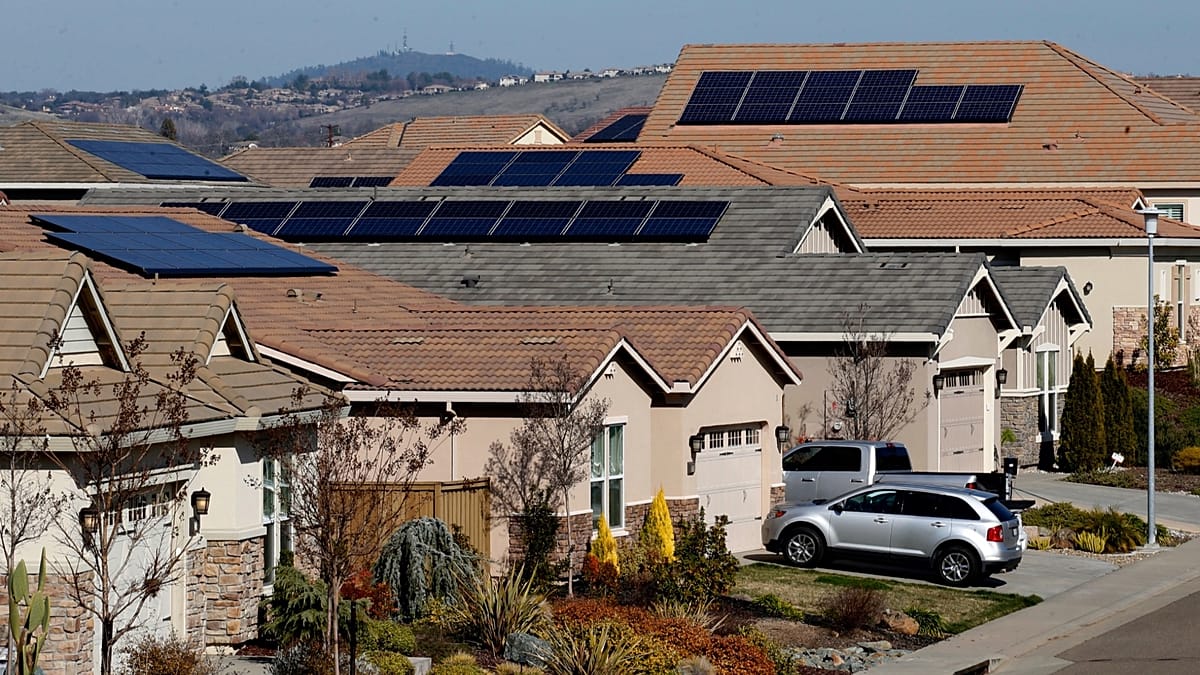
These events have drawn attention to the potential dangers of rooftop solar installations on public buildings and homes across Europe. But how significant is the risk, and what can be done to minimise it?
Are solar panel fires becoming more common?
Solar photovoltaic (PV) panels have become the most competitive source of electricity in many parts of the EU. According to Eurostat, renewables supplied 47.5 per cent of the bloc's electricity in 2024, with solar PV accounting for nearly a quarter of that share (23.4 per cent).
The rapid expansion of solar capacity has naturally led to more fire incidents and greater media coverage. However, the per-system risk remains extremely low. Data from the Dutch research institute TNO shows that between 2015 and 2018, only 27 fires occurred on buildings with PV systems in the Netherlands, 23 of them on residential properties. With 170,000 new residential PV installations in 2018 alone, that represents less than 0.014 per cent of homes with solar panels.
In Germany, the Fraunhofer ISE institute reported that between 1993 and 2013, only 0.006 per cent of PV installations caused a fire with major damage. Of the country's 1.3 million solar PV systems in 2013, 350 were involved in fires, and 120 were identified as the direct cause.
Data collection across Europe remains patchy. A study published in Science Direct last month analysed national statistics from four countries and found incident rates ranging from 5–22 per 100,000 installations in the UK, Italy, and Sweden, to 75 in Slovenia. The authors noted that these differences are likely influenced by variations in data collection methods and inclusion criteria.
The same study found that about 68 per cent of fires remained confined to the PV equipment, while 24 per cent caused damage to adjacent surfaces such as the roof. Significant fire spread occurred in 5 per cent of cases, and complete destruction of buildings accounted for only 3 per cent.
What causes solar panels to catch fire?
The European Commission states that solar panel fires occur at a rate “significantly lower” than that of many common household appliances. “When issues do arise, they are typically linked to poor installation or faulty components, not the solar technology itself,” the Commission adds.
Across the EU, strong safeguards are in place. All panels, whether imported or produced within the bloc, must meet strict technical requirements. The Renewables Directive requires member states to have certification schemes for solar PV installers and designers, including training programmes and public lists of certified professionals.
Common causes of fires include loose electrical connections, damaged wiring, and defective inverters. Ageing systems and lack of maintenance also increase risk. Inverters, which convert direct current from panels into alternating current for household use, should be wall-mounted on non-flammable surfaces and kept away from debris or stored materials.
How to reduce the risk
To minimise fire risk, experts recommend using only accredited installers and avoiding DIY rooftop attachment. Regular inspections, especially for older systems, can identify potential issues early. Panels should be kept clean and free of leaves or bird nests that could trap heat.
While the overall risk remains low, the growing number of installations across Europe means that vigilance is warranted. As the continent accelerates its renewable energy transition, ensuring safe deployment is essential. For more on how Europe is tackling fire risks in other contexts, see our coverage of Galicia's use of AI and satellite detection to combat wildfires, or the Dutch students' solar-powered ambulance project.