Spanish Prime Minister Pedro Sánchez and World Health Organization (WHO) Director-General Tedros Adhanom Ghebreyesus have jointly described the evacuation of passengers from the hantavirus-affected MV Hondius cruise ship as a success. The vessel docked on Monday at the port of Granadilla in Tenerife, Canary Islands, after days of uncertainty and a storm that forced it to seek shelter.
Speaking at a press conference in Madrid on Tuesday, Sánchez defended his government's handling of the outbreak, calling the operation a "success" and expressing pride in Spain's response. Tedros thanked Spain not only for meeting its legal obligations under international law but also for what he termed its "moral duty" to show solidarity with the passengers and crew.
Operation Praised as Humanitarian Model
Tedros acknowledged the difficult situation for those aboard the ship, who had been confined for days, and addressed concerns among residents of the Canary Islands. "Not to have allowed them to evacuate would have been inhumane," he said. He added that Spain's leadership and coordination could serve as a model for other nations. "I know this is a model, and I hope other countries also learn from this. Not just the obligation part, but the compassion and solidarity that Spain has shown."
The WHO chief avoided direct confrontation with Fernando Clavijo, president of the Canary Islands, who had earlier expressed reservations about the evacuation. Instead, Tedros stressed that health surveillance remains the priority and that the Spanish government will remain "attentive to the development of the disease." He defended the protocol of successive PCR tests for passengers and crew as a guarantee to protect public health.
As of Tuesday, 12 May, the WHO has identified 11 cases of hantavirus among passengers, nine of them confirmed, and three deaths. No fatalities have been recorded since 2 May, when the WHO was first notified. Tedros stated, "There is nothing that indicates that there will be a major outbreak." However, he cautioned that due to the virus's long incubation period, more cases could emerge in the coming weeks. All suspected and confirmed cases have been isolated under strict medical supervision, minimizing the risk of further transmission.
The WHO recommends a 42-day quarantine for exposed individuals, starting from 10 May, either at home or in a designated facility. Tedros noted that each country has the sovereignty to adapt these guidelines to its national context. Many passengers have already returned home across Europe, as reported in our earlier coverage.
Spanish Patient Shows Symptoms
Health authorities confirmed that a Spanish passenger who had provisionally tested positive for hantavirus and is being treated at the Gómez Ulla Central Defence Hospital in Madrid began showing symptoms compatible with the disease early Tuesday morning. The patient remains isolated, and the room has been disinfected. Clinical monitoring continues.
Tedros warned that "the work is not finished" and called for any new cases to be isolated immediately. The incident has also drawn attention to the risks faced by medical personnel; earlier, twelve Dutch hospital workers were quarantined after a protocol breach involving a hantavirus patient.
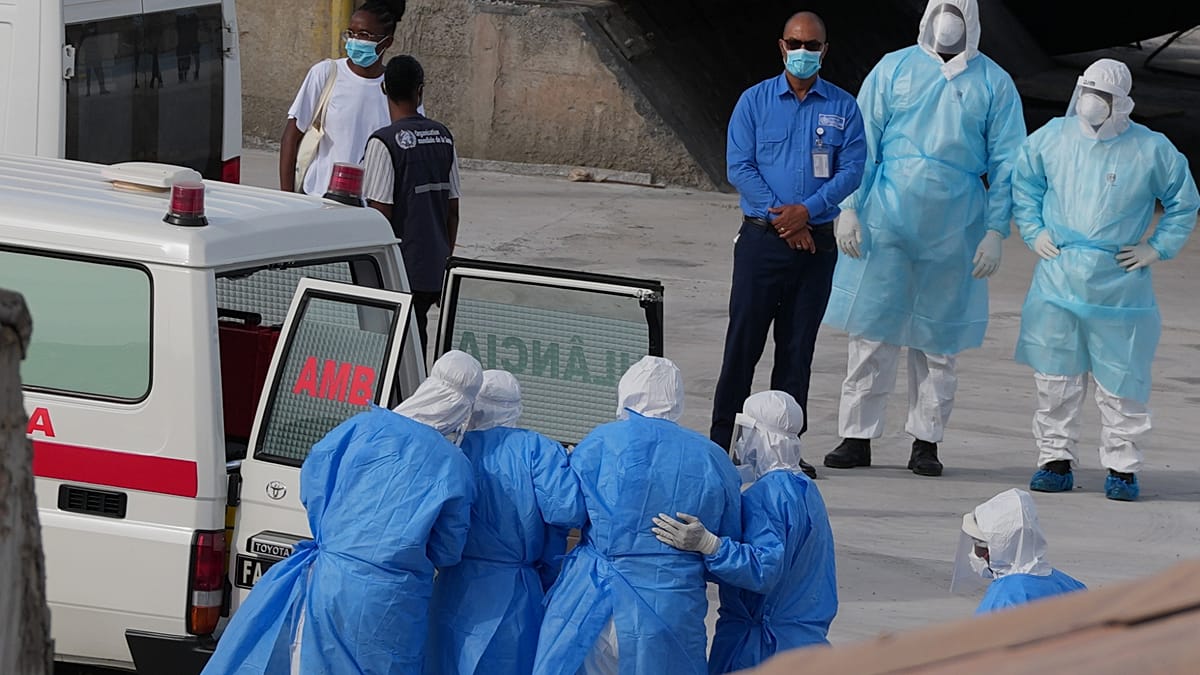
The MV Hondius, operated by the Dutch company Oceanwide Expeditions, had been on a voyage from Cape Verde when the outbreak occurred. Three passengers were evacuated earlier in Cape Verde, as previously reported. The ship's docking in Tenerife was complicated by a storm, which forced it to seek shelter in the Canary Islands.
The WHO and Spanish authorities continue to monitor the situation closely, emphasizing that while the immediate crisis has been managed, the long incubation period of hantavirus means vigilance must persist for weeks to come.