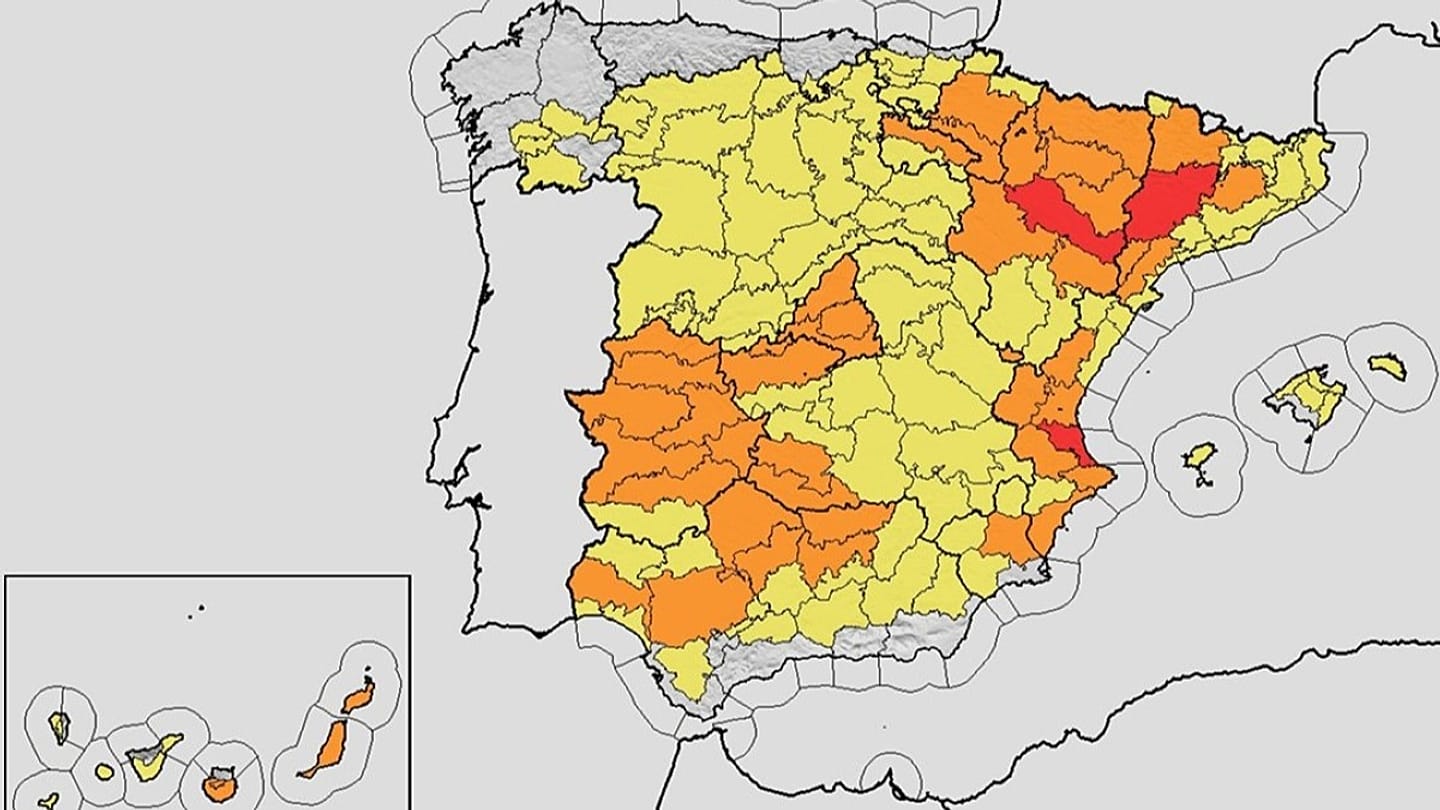
Spain is preparing for its second heatwave of the summer, with the national meteorological agency AEMET issuing orange alerts across much of the country. From Sunday to Tuesday, temperatures are expected to climb to between 42 and 44 degrees Celsius in several regions, marking a significant spike in what has already been a warm season.
The alert covers large parts of the southern and eastern mainland, including the Guadalquivir valley in Andalucía, the Ebro basin in Aragón, and areas around Madrid. The Canary Islands and the Balearic Islands are also under advisory, though with slightly lower temperature forecasts. AEMET has warned that the heatwave could exacerbate existing drought conditions and increase the risk of wildfires, particularly in rural and forested zones.
This follows a pattern seen across southern Europe in recent years, where heatwaves have become more frequent and intense. The Iberian Peninsula, in particular, has experienced a series of extreme temperature events, with 2023 and 2024 setting records. The current heatwave comes as Spain and Italy have already deployed firefighting aircraft to Portugal, where wildfires have been spreading under similar conditions.
Regional Impacts and Precautions
Local authorities in affected areas have activated heatwave protocols, opening cooling centers and advising residents to stay indoors during peak hours. In cities like Sevilla, Córdoba, and Zaragoza, where temperatures are forecast to hit 44°C, municipal services are distributing water and checking on vulnerable populations, including the elderly and those with pre-existing health conditions.
The health ministry has issued guidelines urging people to avoid strenuous outdoor activities, stay hydrated, and never leave children or pets in parked vehicles. Hospitals in the south are on standby for an expected increase in heat-related emergencies, such as heatstroke and dehydration.
Agriculture is also feeling the strain. The heatwave threatens crops in the Guadalquivir valley, a key region for olives, citrus fruits, and vegetables. Farmers are scrambling to irrigate fields and protect livestock, but water reserves are already low after a dry spring. The Spanish government has announced emergency measures to support the sector, including temporary water-use exemptions.
Tourism, a vital part of Spain's economy, is adapting as well. Hotels and resorts in coastal areas like the Costa del Sol and the Costa Blanca are advising guests to limit sun exposure and are offering indoor activities. The heatwave is expected to peak on Tuesday, with a gradual cooling from Wednesday onward, though AEMET cautions that temperatures will remain above seasonal averages.
This event underscores the broader challenge of climate adaptation in Europe. Spain, like many Mediterranean countries, is investing in early warning systems and urban cooling strategies, but the frequency of such extremes is testing infrastructure. The heatwave also highlights the interconnectedness of European weather patterns: the same high-pressure system that is baking Spain is contributing to wildfire risks in Portugal, where international firefighting aid has been mobilized.
As the continent grapples with rising temperatures, the need for coordinated responses becomes ever more apparent. For now, Spaniards are bracing for a few days of intense heat, with authorities urging vigilance and common sense.