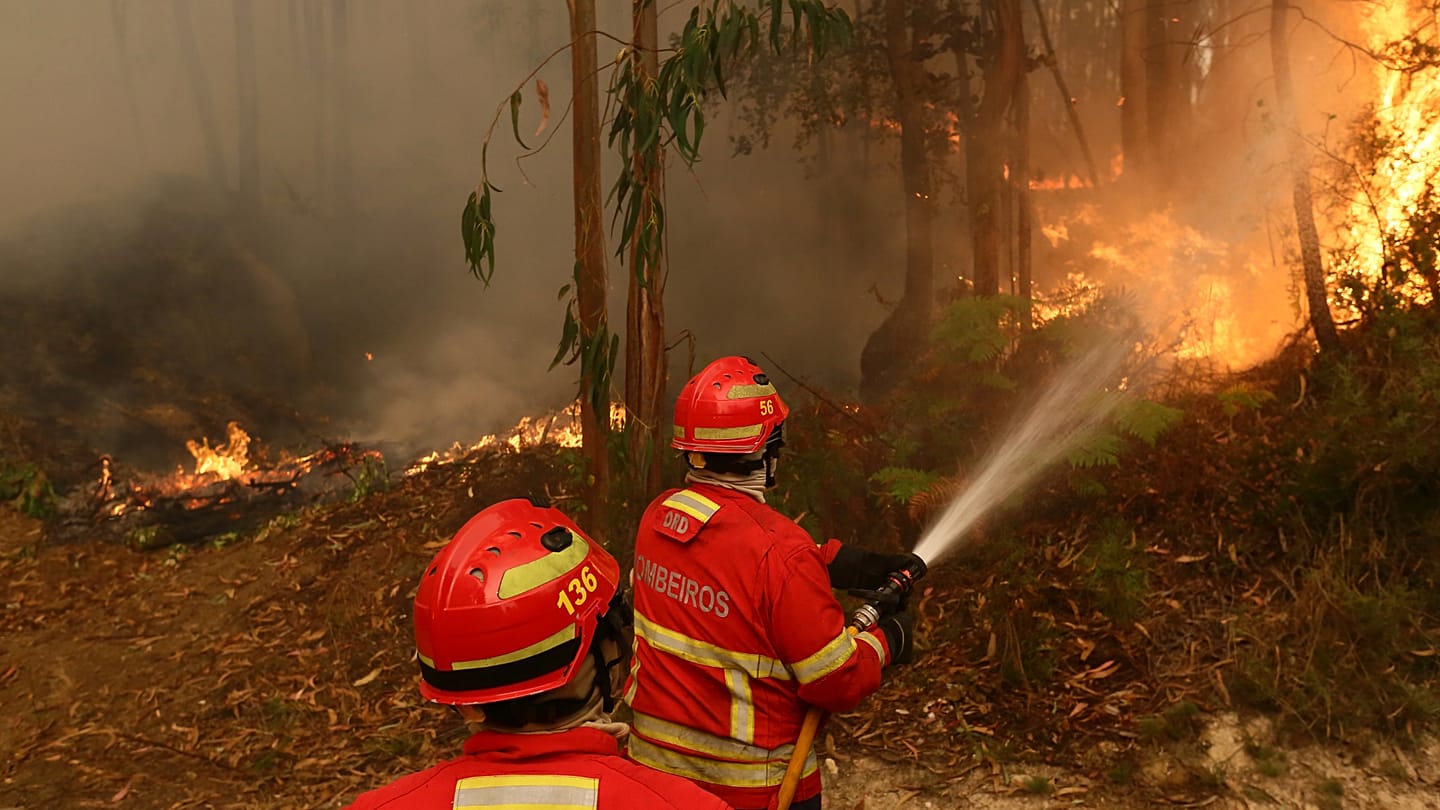
Portugal is battling a series of wildfires that have been exacerbated by a recent heatwave, prompting the government to call for international assistance. In response, Spain and Italy have deployed firefighting aircraft and personnel to help contain the blazes, with the Vouzela fire in the Viseu District emerging as the most critical threat.
The Portuguese National Authority for Emergency and Civil Protection (ANEPC) confirmed that the Vouzela blaze, which broke out on Tuesday, has already consumed hundreds of hectares of forest and scrubland. Over 1,000 firefighters are currently on the ground, supported by water-bombing planes and helicopters. The fire is burning in rugged terrain, complicating containment efforts.
International Solidarity in Action
Spain has dispatched two Canadair CL-215 amphibious aircraft from its fleet, along with a coordination team, to assist Portuguese crews. Italy has contributed a pair of firefighting helicopters and a team of specialists. Both countries are part of the European Union's Civil Protection Mechanism, which facilitates cross-border aid during emergencies.
“We are grateful for the rapid response from our neighbours,” said Portuguese Minister of Internal Administration, Margarida Blasco, in a statement. “This cooperation is vital in protecting lives and property.” The aid comes as Portugal faces its most severe wildfire season in recent years, with over 30,000 hectares already burned in 2026.
The heatwave, which has pushed temperatures above 40°C in parts of the country, is expected to persist for several more days. The Portuguese Institute of the Sea and Atmosphere (IPMA) has issued red alerts for several districts, warning of extreme fire risk. The situation is reminiscent of the devastating fires of 2017, which claimed over 100 lives.
In neighbouring Spain, the heatwave has also triggered nine regions under alert as temperatures near 42°C. The Spanish government has warned that the fire risk remains high across much of the country, particularly in the north-west. Meanwhile, Italy is also experiencing above-average temperatures, though no major fires have been reported there yet.
The European Commission has praised the coordinated response, noting that the Civil Protection Mechanism has been activated multiple times this summer. “This is a clear example of European solidarity in action,” said a Commission spokesperson. “We stand ready to provide further support if needed.”
Local authorities in Vouzela have urged residents to remain vigilant and follow evacuation orders if necessary. The fire has already forced the closure of several roads and the evacuation of a handful of villages. No casualties have been reported so far, but the situation remains fluid.
Portugal's wildfire season typically peaks in July and August, but climate change is lengthening the danger period. Scientists warn that hotter, drier conditions are making fires more frequent and intense across southern Europe. The 2026 wildfire season in Spain has already seen 50,000 hectares burned, with Cantabria the worst-hit region.
As the fires continue to burn, the focus remains on containment and protecting communities. The arrival of Spanish and Italian resources provides a welcome boost, but officials caution that the battle is far from over. “We are doing everything we can,” said a local fire chief in Vouzela. “But the weather is not on our side.”