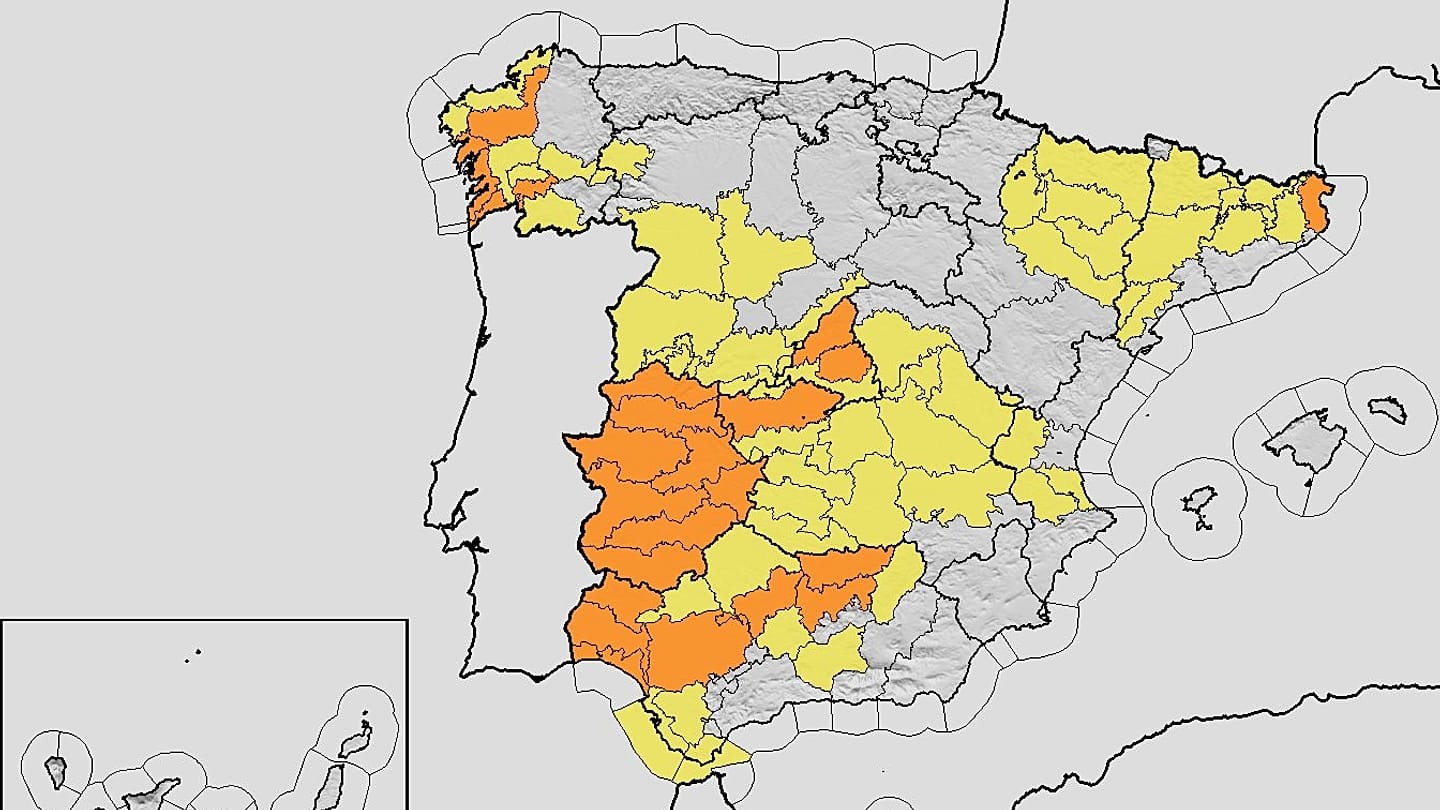
Spain is bracing for its second heatwave of summer 2026, with the national weather service (AEMET) extending orange-level warnings across nine regions. Temperatures are forecast to approach 42°C in parts of Andalucía, Extremadura, and the Tagus valley this weekend, marking a significant escalation in what has already been a punishing summer for the Iberian Peninsula.
The orange alerts, which indicate a high risk to health and infrastructure, cover much of southern and central Spain. Cities such as Seville, Córdoba, and Badajoz are expected to see the most extreme conditions, with thermometers potentially exceeding 40°C from Friday through Sunday. AEMET has warned that nighttime temperatures will remain elevated, offering little respite.
Regional Impact and Public Health Concerns
Local authorities in affected areas have activated heat emergency protocols, opening cooling centers and advising residents to stay indoors during peak hours. The elderly, young children, and those with pre-existing conditions are particularly vulnerable. In Andalucía, health officials have urged people to avoid outdoor activities between noon and 6 p.m.
This heatwave follows closely on the heels of an earlier event in late June, when temperatures also soared above 40°C. As reported previously, that first wave prompted similar alerts and strained energy grids as air conditioning use surged.
Wildfire Risks Escalate
The combination of extreme heat, low humidity, and dry vegetation has raised the specter of wildfires. Spain's 2026 wildfire season has already been devastating, with more than 50,000 hectares burned, particularly in Cantabria. The current conditions could exacerbate the situation, especially in forested areas of Extremadura and Andalucía.
Earlier this month, Spain and Italy deployed firefighting aid to Portugal as a separate heatwave fueled blazes there. The cross-border cooperation underscores the shared vulnerability of southern European nations to climate-driven extreme weather.
Broader European Context
Spain is not alone in facing intense heat this summer. Parts of Italy, Greece, and the Balkans have also experienced prolonged high temperatures, prompting discussions in Brussels about a coordinated EU response to heatwaves. The European Commission has emphasized the need for member states to share best practices on public health warnings and infrastructure resilience.
For travelers, the heatwave poses practical challenges. Those planning trips to southern Spain should monitor local advisories and consider adjusting itineraries. The phenomenon is part of a broader trend reshaping European travel, as extreme weather and responsible tourism increasingly influence destination choices.
As the weekend approaches, AEMET will continue to update its warnings. The agency has not ruled out the possibility of red alerts—the highest level—if temperatures exceed 44°C in localized areas. For now, the focus remains on mitigation and public safety across the nine affected regions.