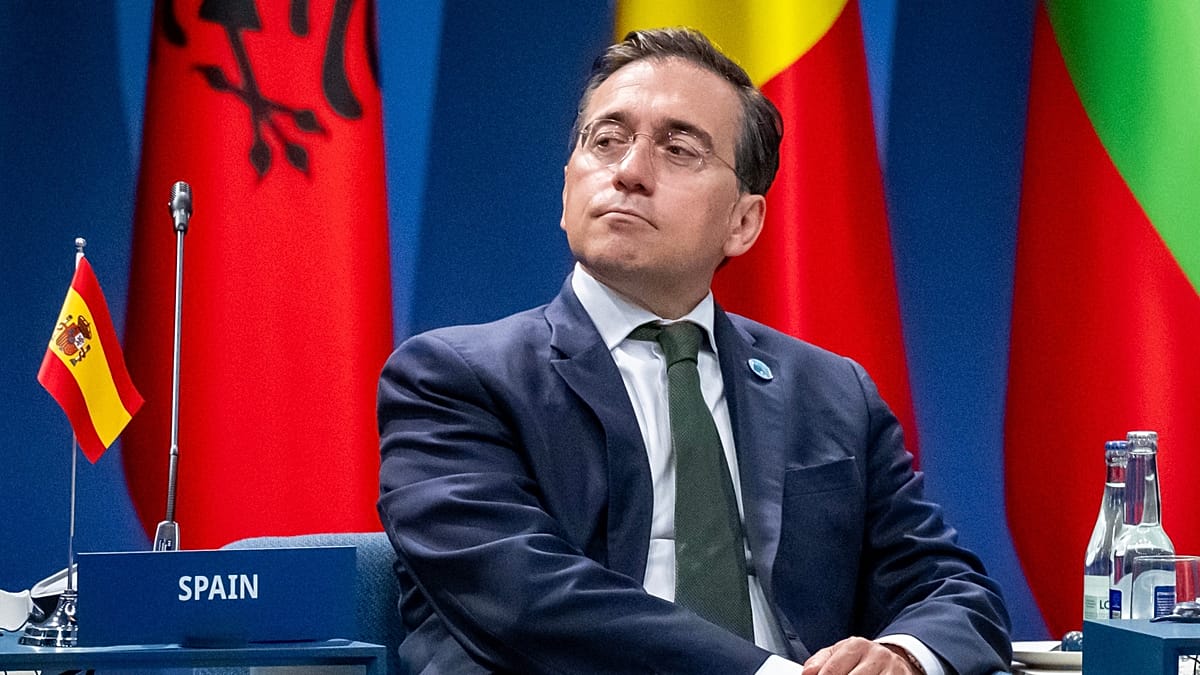
Spain will use an extraordinary meeting of European Union interior ministers on Tuesday to press for a collective response to the migration emergency in Ceuta, pushing back against sharp criticism from Italy and Denmark over Madrid's handling of the situation.
In an interview with Spanish public broadcaster TVE on the eve of the talks, Foreign Minister José Manuel Albares said Spain expects "solidarity from all the member states of the European Union" and warned that governments refusing to show it "are working against Europe." He stressed that Ceuta and Melilla are not merely Spanish territory but external borders of the Union, making their protection a shared responsibility.
Albares singled out Italy for particular criticism, framing Rome's attacks on Spain's crisis management as part of what he called a "reactionary international" seeking to exploit migration for political gain and undermine the European project. He insisted that "the integrity of the Schengen area is absolutely guaranteed" and called for an end to what he described as "deliberate confusion" over how the border-free zone operates.
Disputed death toll and a crisis of confidence
The Brussels meeting follows days of friction between Madrid and Rome, after Italian proposals to impose tougher measures on Spain in the wake of the Ceuta episode. The crisis has reopened a long-running debate within the EU about external border management and the fair sharing of responsibility for migration policy.
Spanish officials said on Monday that at least 88 people died during the recent mass influx of migrants into Ceuta from Morocco. Moroccan authorities later presented a lower estimate, adding another layer of contention to an already volatile situation. The discrepancy echoes earlier disputes over the scale of the tragedy, with Madrid and Rabat having previously offered conflicting figures.
Most of the estimated 60,000 people who entered Spain's North African territory—many by swimming—have since returned to Morocco, according to Spanish authorities. The episode is widely regarded as the largest mass migrant crossing into Ceuta in decades.
Albares acknowledged Morocco's cooperation in stemming the flow of migrants toward Ceuta and again thanked the Moroccan authorities for their support since the crisis began. At the same time, he condemned the rapid spread of false information about the situation in the autonomous city, accusing certain international actors of fueling disinformation around border management.
The emergency meeting will examine the consequences of the crisis, possible support measures for Spain, and the coordination of a European response to future episodes of pressure on the bloc's external borders. Ministers are also expected to discuss the broader implications for the Schengen area, which has already seen Italy reinstate border checks on arrivals from Spain.
European Commission President Ursula von der Leyen has sought to reassure member states that no migrant from Ceuta reached mainland Spain or the wider EU, a point that Madrid hopes will ease concerns about secondary movements. Yet the political fallout continues to reverberate, with some governments questioning whether the bloc's existing mechanisms are adequate for such shocks.
The crisis has also exposed deeper divisions over migration policy, pitting southern frontline states like Spain and Italy against northern members that have often resisted mandatory solidarity schemes. Albares's blunt language reflects Madrid's frustration with what it sees as a lack of support from partners who are geographically distant from the EU's southern borders.
As the EU grapples with the aftermath, the Ceuta episode serves as a stark reminder of the human cost of irregular migration and the political fragility of the bloc's border regime. The meeting on Tuesday will test whether the Union can move beyond rhetoric and craft a genuinely common approach—or whether the cracks exposed by this crisis will widen further.